Marc Skinner's Departure and the Future of Manchester United Women
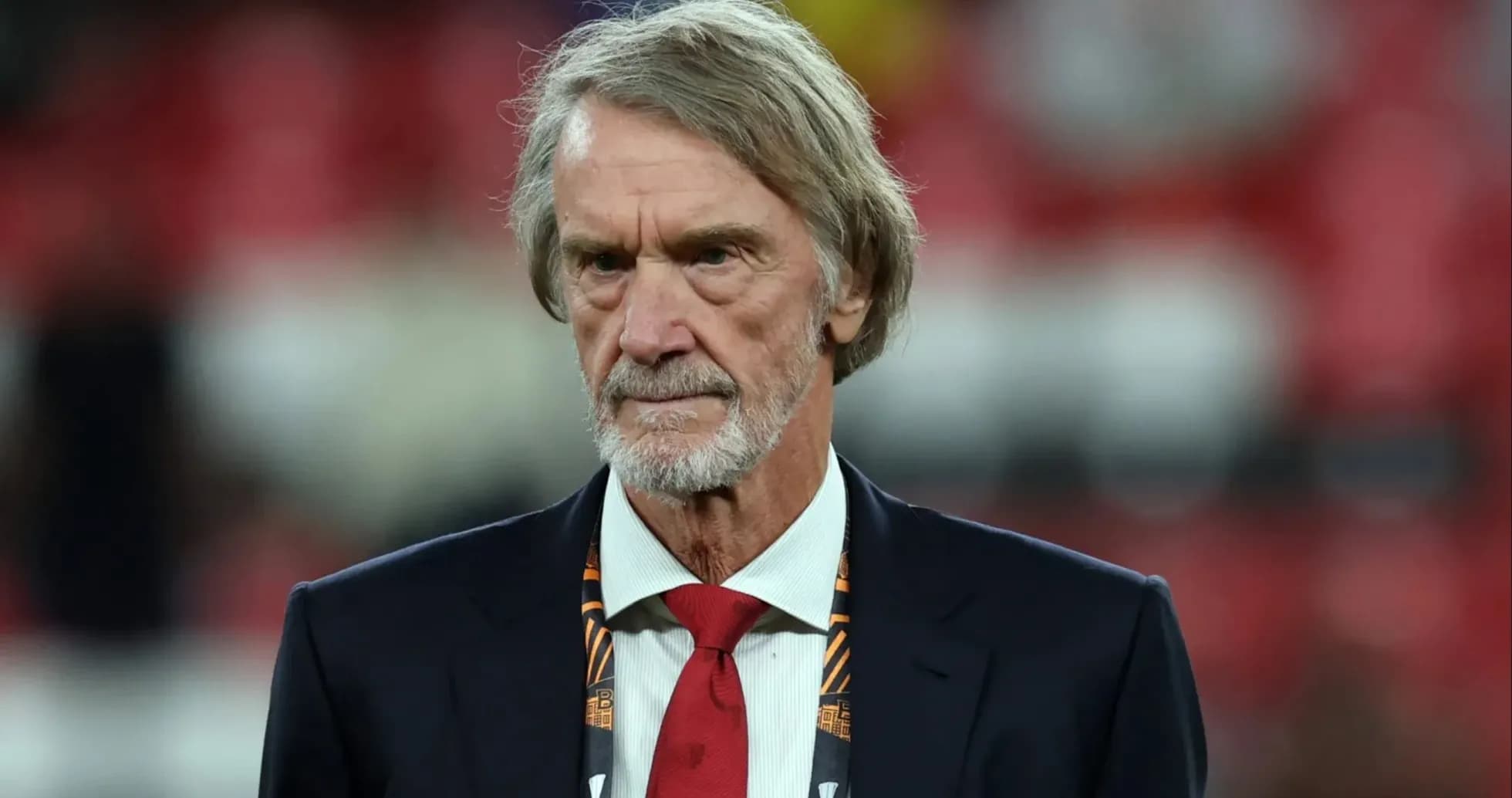
Marc Skinner’s abrupt Manchester United exit, a month before the new WSL season, is more than a managerial change. It is a blunt statement of priorities from Sir Jim Ratcliffe and INEOS – and, right now, the women’s team is nowhere near the top of that list.
That is the charge from talkSPORT’s women’s football correspondent Angelina Kelly, who sees a pattern, not a coincidence, in how United keep losing managers who ask for backing and are told to make do.
Overachievement, under-resourcing
Skinner’s reign has always been a contradiction. Turbulent, yes. But also, by most objective measures, successful.
“He has actually overachieved,” Kelly told talkSPORT’s Darragh MacAnthony and Alex Crook, pointing straight at the financial gulf between United and the WSL’s serial investors. Arsenal, Chelsea, Manchester City – they spend. United, by comparison, scrape.
Yet Skinner still delivered landmarks. The club’s first major trophy in the FA Cup. A first-ever Champions League qualification. League finishes of fourth, third, fifth, second, fourth in a division where the top three are meant to be locked up by the established powers.
On paper, that looks like a manager squeezing every drop out of a limited squad. On the terraces and online, the picture was less forgiving. Fans questioned his selections. They bristled at big-game decisions. United reached four domestic cup finals under him and lifted just one trophy; the other three were lost to Chelsea, 6-0 on aggregate. That kind of gap is hard to explain away.
So when he walked, it felt like a split verdict. Half expected, half shocking.
‘The powers that be aren’t backing you’
Kelly drew a sharp parallel: “His departure is kind of similar to the Eddie Howe situation.” Not the current Newcastle version, but the earlier version of a coach working at his ceiling without the tools to go higher.
Within the women’s game, Skinner is respected. Ex-professionals speak well of him. Kelly describes him as polite and respectful in person. Yet respect only goes so far when you’re staring down another season with a thinner squad and fewer stars.
Last season’s problems were clear: lack of depth, not enough players capable of turning big occasions. This summer, instead of reinforcement, United have sold. The squad is lighter. The holes are bigger.
“He’s looking at it and thinking, I’m not going to be able to do anything with this team,” Kelly said. For a coach conscious of his own reputation, the calculation becomes brutal. Stay and risk sinking with a weakened group, or walk away before the decline is pinned to your name.
The message he has read from above is simple. The hierarchy is not willing to invest at the level required. The powers that be aren’t backing you.
The twist is that this is now the second time it has happened. Casey Stoney, the former England defender and Skinner’s predecessor, also left in 2021 after clashing with the club over recruitment and resources. Two coaches, same problem.
That stops looking like bad luck. It starts looking like policy.
Ratcliffe’s words, and what they say
For a brief moment, it looked like United Women were edging towards serious investment. In the summer before Ratcliffe arrived in 2023, the club lost Alessia Russo and Ona Batlle on free transfers but responded with intent. Brazilian forward Geyse arrived for a then club-record fee. Melvine Malard, Hinata Miyazawa and Irene Guerrero followed. It felt like a club trying to catch up.
Then came Ratcliffe’s public missteps.
He faced heavy criticism for remarks about the women’s team that were widely seen as dismissive. Worse, on a visit to the training ground, he asked then-captain Katie Zelem what her role was at the club. The owner-in-waiting didn’t know the captain of his women’s side.
Peterborough United chairman Darragh MacAnthony tried to frame it in hard business terms on talkSPORT. “At the end of the day,” he said, the men’s team is the one bringing in the “mass amount of revenue” worldwide.
Kelly didn’t dispute the revenue reality. She went straight to the optics.
“It doesn’t help matters when you don’t even know who your women’s team captain is. You don’t even know her name. It’s going to come across as a bit disrespectful.”
The contrast with other clubs is stark. Arsenal, Chelsea, Brighton – and owners like Tony Bloom and Michelle Kang – are pouring money into their women’s setups without waiting for immediate profit. Brighton are building a stadium specifically for their women’s team. That is not a side project. That is a statement.
United, by comparison, “just about turned a profit” on the women’s side last season, Kelly said. Roughly breaking even. Other clubs are losing money and still pushing on, because they see the women’s game as an investment, not a cost centre.
A ‘sustainable’ plan – or a cost-cutting exercise?
The transfer window has exposed United’s stance. While rivals move, United retreat.
Lyon defender Alice Sombath has joined Tottenham. London City Lionesses, who finished sixth last season in the Championship, have pulled off a staggering coup by signing two-time Ballon d’Or winner Alexia Putellas. That is a mid-table second-tier side acting like a club with a plan to disrupt the order.
United? They have sold Malard to Chelsea for around £850,000 and pivoted to a new strategy: build around home-grown youth.
On paper, that fits the club’s historic identity. Develop your own. Trust the academy. Kelly has no issue with the concept. The issue is what sits behind it.
“I think the issue is that sources are claiming that the club feel that spending is not sustainable in the women’s academy,” she said. The emphasis now is on “sustainability with homegrown players”, framed as a long-term vision.
Pressed on whether “homegrown” is just code for “cheaper”, Kelly didn’t hold back. If you want to attract and develop elite young talent, you need something to sell them. A project. A competitive squad. A sense that the club is genuinely pushing.
“At the moment, they have absolutely nothing going into this new season,” she said.
United still have quality. A top-class goalkeeper. A captain in Maya Le Tissier who already looks like one of the league’s standout centre-backs. Ella Toone, the club’s biggest star. Jess Park, impressive since arriving from Manchester City.
But beyond that spine? Kelly’s verdict is brutal: “There is nothing else to show that they really care about this club and that they are building around those players to actually achieve something.”
All the while, London City Lionesses are spending heavily, bringing in a two-time Ballon d’Or winner. The contrast in ambition is glaring.
Smarter than everyone – or simply not interested?
This leaves Ratcliffe’s strategy open to two stark interpretations.
“So the thing is either Sir Jim Ratcliffe is going down this sustainable route as far as we understand, and he believes he is smarter than the Arsenal owners, than Tony Bloom, then Michelle Kang, etc, etc,” Kelly said. “He genuinely believes he’s onto something, or perhaps this is a situation where they realise that they don’t want to put the money into it.”
To Ratcliffe, the women’s side may simply not be “viable” right now. Something to be pushed to the margins while INEOS focuses on reviving the men’s team and reshaping the club’s infrastructure.
The irony is that Manchester United Women only returned to senior status in 2018. For years before that, the pathway was broken. Young girls came through the system, reached a certain point, and then hit a dead end.
“Even someone like Ella Toone,” Kelly pointed out, “she had to play football when she was younger at Blackburn and Manchester City because it wasn’t there” at United.
The club is now talking about a seamless youth system that can compete with Arsenal and Chelsea. But the question lingers: where is the evidence?
The cost of ambition – and the cost of neglect
Kelly’s numbers are damning. What would it take to give United Women a genuine shot at competing with the WSL elite? Her estimate: around £10 million.
“Which is what? Less than Mason Mount earns a year?” she said. Not as a literal transfer of funds from one contract to another, but as a comparison of scale. This is not hundreds of millions. This is a rounding error on the men’s side.
And yet that sum, spread smartly across infrastructure, recruitment and wages, could transform the women’s team from plucky overachievers into genuine contenders.
It would also help keep fans engaged. Modern supporters follow players as much as clubs. Alessia Russo left United for Arsenal, and some fans inevitably followed her. If United stop signing big names and stop competing for titles, how do they hold the next generation of supporters?
“You still need to be bringing in big players,” Kelly warned. “You still need to be putting on a little bit of a show.”
Right now, United have “a couple of decent players, and that’s about it.” That might not just cost them trophies. It could cost them their fanbase.
A club without a clear map
Strip away the rhetoric about sustainability and identity, and one question hangs over Old Trafford.
“So I just struggle to understand what the plan is at Manchester United,” Kelly admitted. She is not alone.
What does a serious, fully backed Manchester United Women project look like? A ring-fenced budget? A long-term recruitment strategy? A dedicated stadium, as Brighton are building? A commitment that the next Marc Skinner or Casey Stoney will not walk away for the same reasons?
Or is this it – a holding pattern, dressed up as philosophy, waiting for the rest of the game to move on without them?
United have the badge, the platform, the global reach. They need around £10 million and a clear decision: are they in, or are they out?