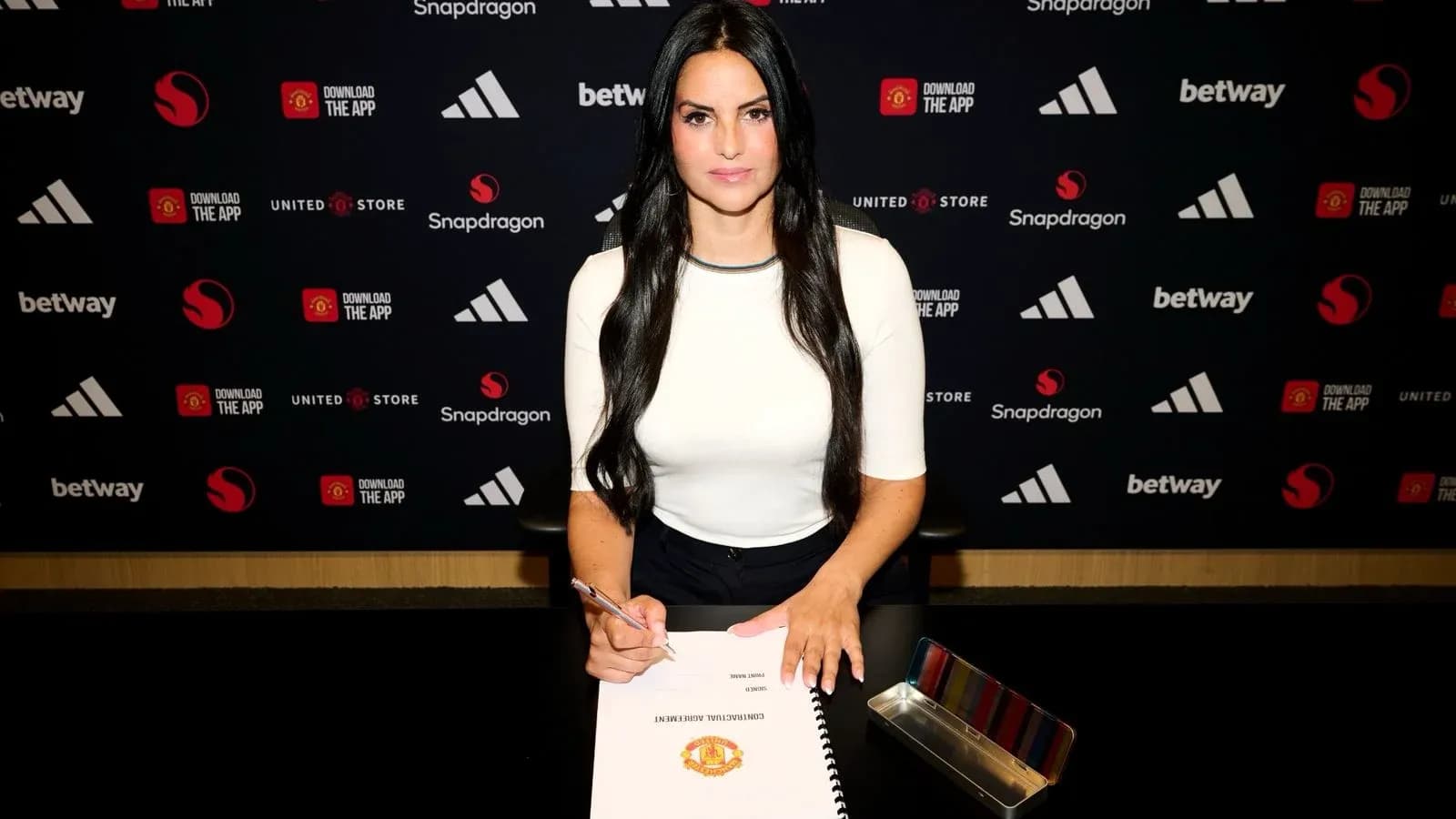
Manchester United Women Appoint Eva Olid as Head Coach
Manchester United Women have turned a page. Eva Olid is the new name on the door, the Spaniard handed the task of reshaping a team just weeks before the new WSL season kicks off.
She steps into a role vacated by Marc Skinner on Monday, ending his five-year spell in charge barely a month before United open their league campaign against London City Lionesses on September 4, live on Sky Sports. The timing is ruthless. The intention is not.
From Hearts history-maker to Old Trafford project
Olid arrives from Hearts with a reputation forged on overachievement and clear ideas. She spent five years in Edinburgh, joining in 2021 and leaving this summer having delivered the club’s first Scottish title. That alone would have turned heads.
Her final season in the Scottish Women's Premier League underlined her impact. Hearts edged Rangers by two points to lift the SWPL crown, and also reached their first Scottish Cup final in 2024, losing to Rangers on the day but confirming their rise as a serious force.
By April, it was already agreed she would depart by mutual consent at the end of the season. She left on a high, with a trophy in the cabinet and a reputation for building competitive sides without throwing money at the problem. That profile fits neatly with what Manchester United now want to be.
“The opportunity to become head coach of Manchester United Women is a dream come true,” Olid said on taking the job. She pointed to the “outstanding infrastructure”, the “excellent training facility”, a productive academy and an “exceptional group of support staff” as the foundations for what comes next.
The club sees her as the right coach at the right moment: a developer, not just a tactician. Someone who can improve the current squad while accelerating the pathway from academy to first team.
A shift in philosophy – and in budget
This appointment is not just about a new face in the dugout. It signals a deeper change in direction.
When Sir Jim Ratcliffe and INEOS arrived, the message around the women’s team was bold: win the WSL by 2028. That target framed everything. Recruitment, spending, short-term pressure.
That vision has been quietly rewritten.
The club now intends to lean heavily into its academy and internal development, trusting a longer route to silverware rather than chasing the market. Investment will still be there, but the balance has tipped. United believe that pouring ever more money into big-name signings and high wages has not delivered the return they expected, and that the cost of staying in a WSL title arms race is spiralling.
They are not alone in that concern, but few have been as explicit in their response. The new strategy is clear: build, don’t buy. Or at least, buy smarter and less often.
There is a romantic logic to it. Manchester United’s men’s side has a rich history of winning with academy products at its core. From the Busby Babes to the Class of ’92, the club’s identity is tied to youth.
In the women’s game, that blueprint is untested at the very top. United are about to find out how transferable that tradition really is.
Skinner’s legacy and the risk of patience
All this unfolds against the backdrop of what Skinner actually achieved. His tenure was not empty.
Under his watch, United Women reached four major finals – three in the FA Cup and one in the League Cup – and finally lifted their first major trophy in the 2023/24 season. They broke into Europe, reached the quarter-finals of the Champions League last term and, crucially, became the only side to consistently trouble the WSL’s established “big three”.
On paper, that is progress. On the balance sheet, it was expensive. The club’s hierarchy has decided that chasing the final step with marquee signings and escalating salaries is no longer sustainable.
That decision carries risk. Youth takes time. Development is rarely linear. A squad tilted towards academy graduates might not deliver the same immediate, year-on-year consistency that United have grown used to under Skinner.
But this is the gamble: accept a slower climb in exchange for a more stable peak.
Olid’s task: build, blend, believe
Into that tension walks Olid. Her job is not simply to coach a team for the next matchday. She must knit together a squad that can compete now while giving minutes, responsibility and belief to a new generation coming through Carrington.
She has already shown at Hearts that she can create a winning culture without the comfort of a chequebook. In Manchester, the scale is bigger, the scrutiny sharper, the expectation unforgiving. The margin for error is smaller, even as the club preaches patience.
The WSL opener against London City Lionesses will arrive quickly. The league will not wait for United’s academy players to grow into their roles. Nor will Chelsea, Arsenal or Manchester City ease off while United recalibrate.
But the club has nailed its colours to the mast. They want a women’s team that looks and feels like Manchester United at its core: ambitious, homegrown, built on development rather than dependency.
Olid is the architect chosen to draw those lines. The question now is not whether she can work with youth. She has already proved that. It is whether this bold shift can keep United in the fight for trophies while the next generation learns how to win.