Manchester United vs Aston Villa: Premier League Clash for Champions League Spots
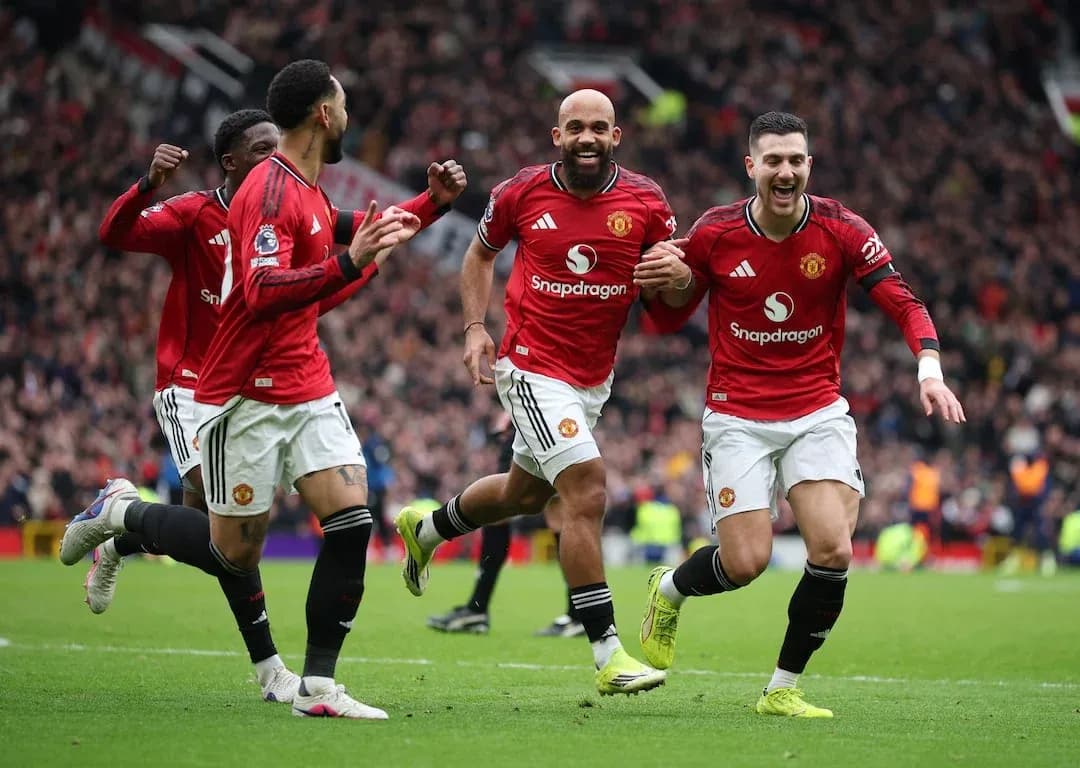
On 15 March 2026, Old Trafford stages a heavyweight Premier League clash with a distinctly European feel as Manchester United host Aston Villa in a direct shoot-out for Champions League positioning. Both sides sit locked on 51 points after 29 matches, United third and Villa fourth, separated only by goal difference. With nine games to play, this feels like a six-pointer in the race for the top four.
Referee Anthony Taylor will take charge in Manchester, where the margins are razor-thin: United boast a goal difference of +11, Villa +5, and both know that a win here could create vital daylight in a congested upper half of the table.
Form guide and statistical edge
The table tells you this is tight; the underlying numbers suggest United might just have the sharper tools at Old Trafford.
United’s home record is imposing: 9 wins, 3 draws and only 2 defeats from 14 league games in Manchester, with 27 goals scored and 16 conceded. That works out at 1.9 goals scored and 1.1 conceded per home game. Erik ten Hag’s side have turned Old Trafford back into a venue where they usually find a way, with only 2 home blanks and 4 clean sheets.
Aston Villa, though, travel with a resilient profile. Unai Emery’s team have taken 6 wins, 4 draws and 4 defeats from 14 away matches, scoring 18 and conceding 19. They average 1.3 goals scored and 1.4 conceded on the road, and have kept 3 away clean sheets despite failing to score in 5 away fixtures. Villa’s away games tend to be cagey, controlled affairs compared to their more expansive outings at Villa Park.
Recent form hints at a subtle momentum swing. United’s league run of LWWDW over their last five suggests a side that has largely steadied itself, while Villa’s LLDWD shows a team that has cooled after an outstanding mid-season surge. Villa still own the league’s longest winning streak this term (eight straight), but that spell feels a touch more distant now.
Head-to-head: Old Trafford factor vs Villa’s belief
The recent head-to-head record is fascinating and finely balanced across venues.
The last meeting came at Villa Park on 21 December 2025, where Aston Villa edged a 2-1 victory. A 1-1 scoreline at half-time gave way to a narrow home win, a result that underlined Villa’s capacity to go toe-to-toe with United in big moments.
Old Trafford, however, has recently tilted red. On 25 May 2025, United beat Villa 2-0 in Manchester, having gone in 0-0 at the break before pulling clear in the second half. Before that, on 26 December 2023, Old Trafford witnessed a wild 3-2 comeback: United trailed 0-2 at half-time but roared back to win 3-2, a night that still stings for Villa and feeds United’s belief that they can overwhelm this opponent late on.
At Villa Park, the narrative is more even. On 6 October 2024, the sides played out a 0-0 stalemate, a rare tactical stalemate between two attack-minded coaches. Earlier, on 11 February 2024, United left Birmingham with a 2-1 win after leading 0-1 at half-time, another example of their knack for managing tight away games against Villa.
Across this closed set of five recent league meetings, United have three wins, Villa have one, and there has been one draw. Yet Villa’s 2-1 success in December 2025 ensures they arrive without psychological baggage; they know they can hurt United, even if Old Trafford has not been kind to them lately.
Tactical battle: systems, spaces and key match-ups
United’s season data shows a team comfortable in both a back three and a back four, with 3-4-2-1 used 18 times and 4-2-3-1 eleven times. At home, the 3-4-2-1 has often allowed them to dominate territory, push wing-backs high and flood the half-spaces with their two attacking midfielders behind the striker. Against a Villa side that typically lines up in a 4-2-3-1, that shape could be crucial.
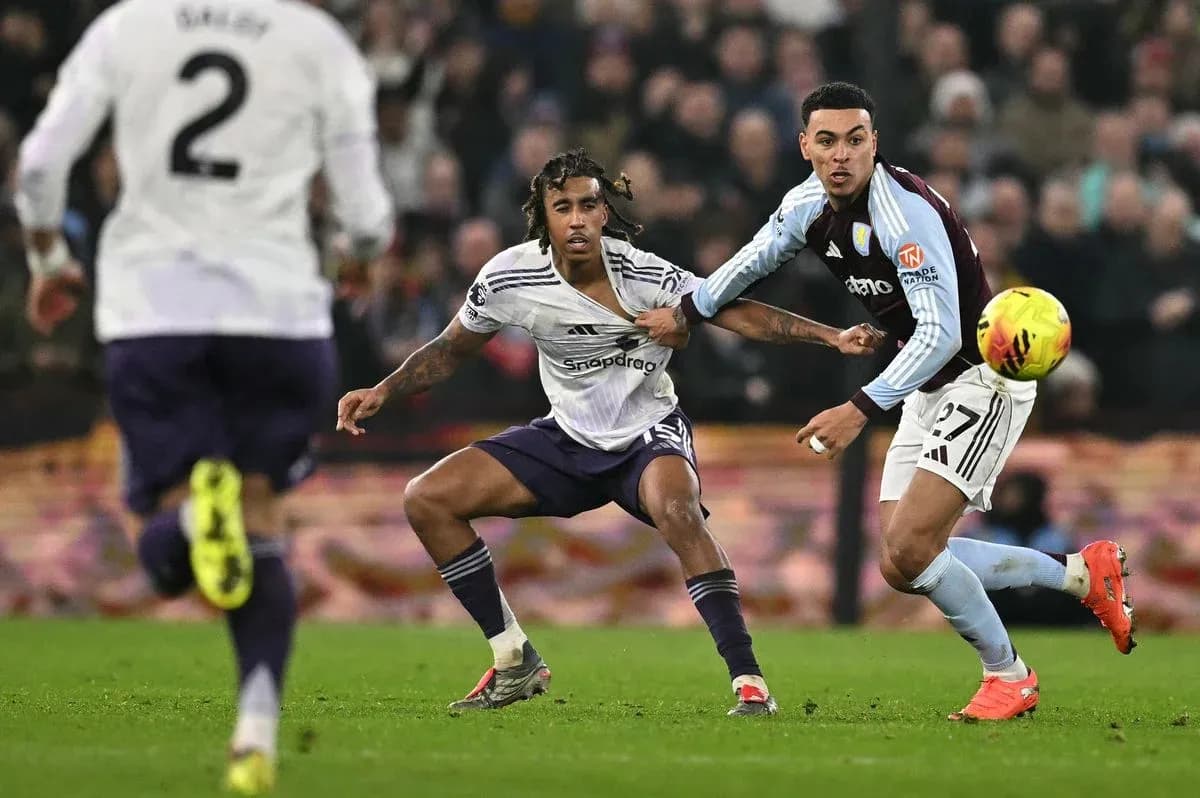
Villa’s 4-2-3-1 under Emery is built on structured pressing and rapid vertical attacks. With that shape used in 25 league games, it is clearly the foundation of their identity. They like to draw opponents into the middle third, then spring through the likes of Morgan Rogers and Ollie Watkins, who combine work-rate with direct threat.
United’s attacking edge at home – 27 goals in 14 matches – has been driven in large part by Bryan Mbeumo and Benjamin Šeško. Mbeumo has 9 league goals and 3 assists, offering relentless movement from the right or as an inverted forward, while Šeško has contributed 8 goals despite starting only 13 times. Šeško’s aerial presence and willingness to run the channels complement Mbeumo’s sharper, more intricate game between the lines.
For Villa, Rogers and Watkins are the twin pillars of their attack. Both have 8 league goals; Rogers adds 5 assists and a huge workload between the lines, while Watkins remains the classic Emery forward: stretching defences with runs in behind, occupying centre-backs and finishing ruthlessly when chances come. Their partnership will test United’s defensive structure, especially with United’s back line carrying some important absences.
Team news and selection dilemmas
United’s defensive resources are stretched. P. Dorgu (hamstring) and M. de Ligt (back) are ruled out, weakening both depth and flexibility in the back three or four. L. Martinez is questionable with a calf problem, a potentially huge blow given his importance in United’s build-up and aggression. J. Moorhouse and M. Mount are also doubtful, which may limit ten Hag’s options in midfield rotation and late-game changes.
Villa have their own headaches. H. Elliott (injury), A. Garcia (muscle), B. Kamara (knee) and Y. Tielemans (ankle) are all out, removing significant technical and defensive quality from central areas. Kamara’s absence in particular deprives Villa of their best screening midfielder, exactly the profile you want away at Old Trafford. J. Sancho is unavailable due to loan agreement rules, denying Emery a potentially narrative-rich return to his former club. M. Cash is listed as questionable with a knock; if he does not make it, Villa lose one of their most aggressive outlets on the right flank.
These absences tilt the tactical picture. United’s back line may be lighter on senior centre-backs, but Villa’s midfield is without Kamara and Tielemans, which could hand United control in central zones. Expect United to try to pin Villa back with wing-backs and high attacking midfielders, forcing Villa’s double pivot to defend for long stretches.
Discipline and late-game patterns
Both teams show a tendency to pick up cards in the second half. United’s yellow-card peak comes between minutes 76-90, while Villa’s spikes between 46-60 and again in added time. In a high-stakes, top-four battle, that hints at a frenetic final half-hour, where tactical fouls and transition defending could shape the outcome.
United have 5 clean sheets in the league, Villa 8, but the scoring averages – 1.8 goals for and 1.4 against per game for United; 1.3 for and 1.2 against for Villa – point more towards a match with goals at both ends than a sterile stalemate.
The verdict
This is as close as it gets on paper: level on points, both in Champions League positions, both armed with in-form forwards and tactically astute coaches. Yet the context matters. Old Trafford has been a stronghold, United are marginally the more free-scoring side, and Villa arrive without several key midfielders and with slightly wobblier recent form.
Expect Villa to be compact and dangerous in transition, with Rogers and Watkins always one pass away from turning the game. But over 90 minutes, United’s home firepower and variety in attacking shapes should just about tell.
Edge to Manchester United, in a high-quality, tense encounter that could be decided by a single moment of quality – or a single defensive lapse – in the final third.