Manchester United's Elite Status Under Threat
The boos came first. Then something worse for any club that calls itself elite: indifference.
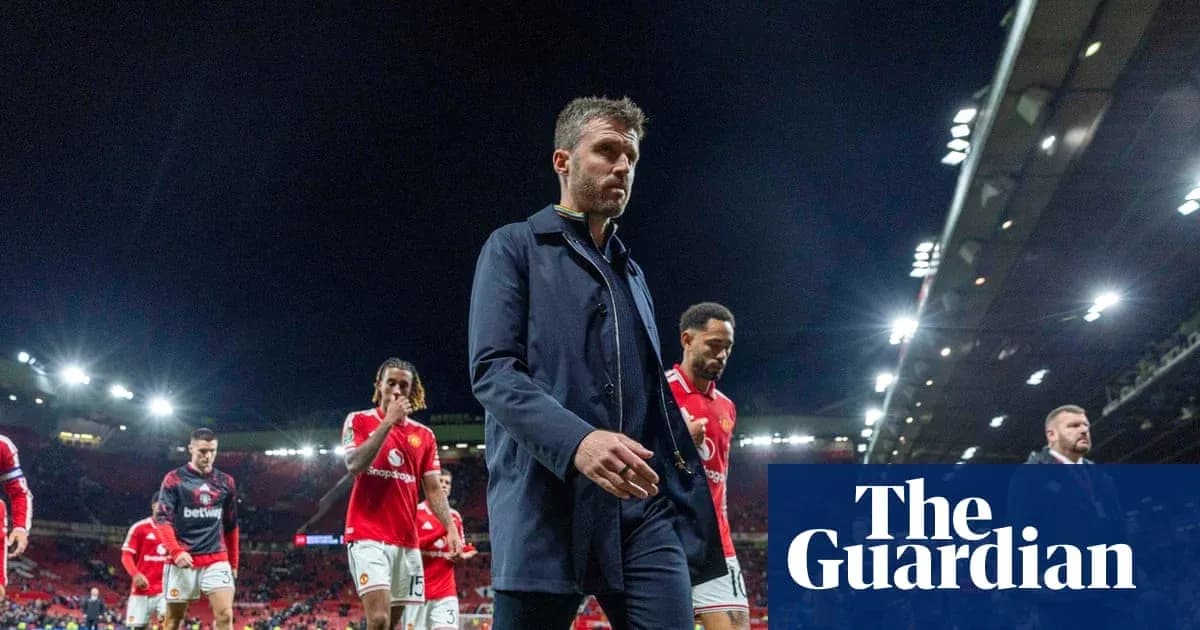
As Manchester United slipped out of the Carabao Cup on Wednesday, the soundtrack at Old Trafford was a mix of jeers and a hollow quiet that said as much about the wider state of the club as the 90 minutes just gone. Michael Carrick, expression fixed and sombre, walked towards the tunnel as the lightning rod. His players felt it too. Up in the directors’ box, Jason Wilcox did not look amused. He shouldn’t be. Nor should anyone above him.
Because this is how football works. Supporters judge in real time. They see what is good, what is bad, and they let those they believe they pay – on the pitch and in the dugout – know about it. Carrick and his squad are the public face: they front the cameras, they sell the sponsors, they absorb the anger.
Yet the idea that the head coach is responsible for everything, from the balance sheet to the back four, is a comforting myth. The reality at United is far more tangled.
A club out of excuses
Carrick only came back in January. The long-term strategy, such as it is, has been shaped by others. He works inside a structure built above his head. Still, the pressure is his to wear. Lose at Fulham on Sunday and that pressure will spike again.
United’s fans are not naïve about where power really lies. Protests against the Glazer family and Sir Jim Ratcliffe are now part of the club’s modern matchday routine. They know 90 minutes of chaos is not solely on the head coach or the 11 in red. The boos target the performance. The apathy? That’s for the project.
It stings all the more when a club back in the Champions League watches newly promoted sides outspend them in the summer. Years of financial mismanagement have left United operating under constraints that once felt unthinkable. Every pound now has to land.
On the pitch, the warning signs flash in neon. United were two goals up against Brighton after 10 minutes, then spent the next 80 barely participating as they slumped to a deserved defeat. That kind of collapse speaks to something deeper than form. Carrick knows it.
Brighton arrived with a much-changed side yet still bristling with talent, assembled through smart scouting and a global recruitment network. This summer alone they brought in players from clubs in seven different countries. United? Four signings, all from fellow Premier League teams. While others gamble smartly and move with energy, Old Trafford feels stuck in a loop of caution and repetition.
The irony is sharp. Last summer’s most effective signing, in terms of value and reliability, was Senne Lammens from Royal Antwerp – a rare example of United looking beyond their domestic comfort zone.
Money spent, questions unanswered
Carrick and Wilcox cannot be fully judged until Carlos Baleba, the most expensive of the three summer buys, is available. On paper, his athleticism should address United’s glaring lack of mobility in midfield. Targeting central midfielders after Casemiro’s departure and Manuel Ugarte’s shortcomings made sense. It just wasn’t the only problem area.
Inside the club, there was no illusion about the squad’s overall weakness. Yet the way they tried to fix it felt strangely narrow. Three big-money midfielders, £155m spent, and little variety in the positions addressed. That is now being brutally exposed.
Signing from within the Premier League often brings inflated fees, but it does reduce adaptation time. Even then, the choices invite scrutiny. With a shortage at left-back and Joshua Zirkzee struggling to convince, opting for a cheaper midfield option than the £50m Andrey Santos might have freed resources to strengthen elsewhere.
Someone above Carrick should be explaining that strategy. Why three players in essentially the same area? Why so little cover where everyone expected problems, especially with Luke Shaw’s injury record hardly a secret? Instead, Carrick is left to cobble together a Plan B while the rest of football tries to guess what the plan ever was.
Wilcox has spoken publicly, but only on his own terms. On 30 October 2025, after three straight wins, he laid out the long-term vision in an in-house interview. Two months later, Ruben Amorim was sacked and that vision lay in pieces. Since then, beyond the formal statements that accompany dismissals, Wilcox has gone quiet.
A pattern of missteps
Wilcox came from Southampton in 2024, initially as technical director. He helped argue for Erik ten Hag to stay on after an eighth-placed finish, only for Ten Hag to be removed when the following season started badly. Amorim arrived from Sporting with a clear tactical identity that never matched the squad he inherited, and with no budget for the overhaul required. United drifted to 15th and lost meekly to Tottenham in the Europa League final.
When Amorim’s reign ended after 14 underwhelming months, Wilcox was given another chance to get it right. That chance is now being tested.
Carrick is not shielded from criticism. This United side are underperforming, and heavy wins over promoted Ipswich and Azerbaijani side Sabah do little to disguise the wider problems. The defence has leaked seven goals in four league games. Against Brighton, the central pairing of Leny Yoro and Ayden Heaven looked badly off the level required. Up front, the attack has rarely looked like a coherent unit.
Wilcox’s reputation from his time as Manchester City’s head of academy was strong. Those who worked with him rated him highly and saw him as ideal for that sphere. At United, operating higher up the chain, his decisions face a harsher glare. If JJ Gabriel leaves, frustration among supporters will grow, but in that case Wilcox could fairly point to the efforts he has made behind the scenes, including engagement with the teenager’s inner circle, to try to keep him.
One man on the hook
At United, power carries weight, but not everyone carrying it seems to share the same exposure. Ten Hag paid with his job. Amorim did too. Others remain in place, their roles less scrutinised, their accountability less public.
Carrick and Wilcox are both heavily invested in making this work. Yet as the table sours and the mood darkens, it feels like only one of them will truly bear the cost if United stumble again at Fulham and the season’s slide continues.