Manchester United Triumphs Over Chelsea in Tactical Clash
Under the Stamford Bridge lights, this felt like a meeting of two clubs travelling in opposite emotional directions. Following this result, the table says Manchester United sit 3rd on 58 points, Chelsea 6th on 48, but the 1–0 scoreline only hints at the tactical story that unfolded in west London.
I. The Big Picture – Identity vs. Efficiency
Both sides arrived with clearly defined seasonal DNA. Chelsea, under Liam Rosenior, have been a 4-2-3-1 team by design – they have used that shape in 29 league games – and he stuck to type again. The Blues’ campaign has been built on volume and volatility: overall they score 1.6 goals per game and concede 1.3, with a total goal difference of +11 (53 for, 42 against). At Stamford Bridge they are less explosive: 1.4 goals for and 1.2 against on average, a profile that suits long, attritional games rather than wild shootouts.
Michael Carrick’s Manchester United arrived as a more flexible unit, split almost evenly between a 3-4-2-1 and a 4-2-3-1 across the season. Here, he mirrored Chelsea’s 4-2-3-1, trusting his side’s superior overall numbers – 1.8 goals scored and 1.4 conceded per match, with a total goal difference of +13 (58 for, 45 against). On their travels United have been slightly more cautious and more fragile: 1.6 goals scored and 1.5 conceded away, suggesting that a one-goal game like this was always a plausible outcome.
The first half followed the standings logic. United, with the more stable form line (WLDWL heading in), were comfortable without having to dominate the ball. Chelsea, whose recent run (LLLLW in the table snapshot) hinted at a team oscillating between promise and panic, struggled to convert territory into incision.
II. Tactical Voids – The Absences That Shaped the Night
This was not a full-strength heavyweight clash; it was a test of squad architecture.
Chelsea’s absentee list was brutal in certain zones. L. Colwill (knee), R. James (hamstring) and F. Jorgensen (groin) stripped Rosenior of left-footed balance and right-sided leadership at the back. Joao Pedro – 14 league goals and 5 assists, one of the division’s leading scorers and creators – was missing with a muscle injury, leaving a gaping hole at the top of the structure. M. Mudryk’s suspension removed a direct, high-speed outlet on the flank, while J. Gittens’ muscle injury further thinned the wide options.
Those voids explain the starting configuration. J. Hato and W. Fofana were paired centrally, with M. Cucurella and M. Gusto as full-backs. Without James and Colwill, Chelsea’s back four lost both its natural right-sided playmaker and its progressive left-footed distributor. Higher up, the creative burden fell on E. Fernandez and C. Palmer, with Estêvão and P. Neto asked to stretch the pitch behind L. Delap, a forward more about physical presence than penalty-box craft.
United’s defensive absences were, if anything, even more dramatic on paper. H. Maguire (suspended), L. Martinez (red card), L. Yoro (injury), M. de Ligt (back injury) and P. Dorgu (hamstring) left Carrick without his established centre-back core. In their place, N. Mazraoui and A. Heaven formed an improvised pairing, shielded by Casemiro and K. Mainoo.
The disciplinary profile of the season added an undercurrent. Casemiro arrived as one of the league’s most card-prone players, with 9 yellows and a yellow-red, while for Chelsea, M. Caicedo (9 yellows, 1 red) and E. Fernandez (8 yellows) sit high on the caution charts. Both midfields were always likely to live on the edge of the referee’s tolerance, and Michael Oliver’s presence ensured the line would be clearly drawn.
III. Key Matchups – Hunter vs Shield, Engine Room Wars
The headline duel was supposed to be Joao Pedro against United’s defence, but his injury rewrote the script. The “Hunter vs Shield” dynamic instead tilted towards United’s attacking trident against Chelsea’s makeshift back line.
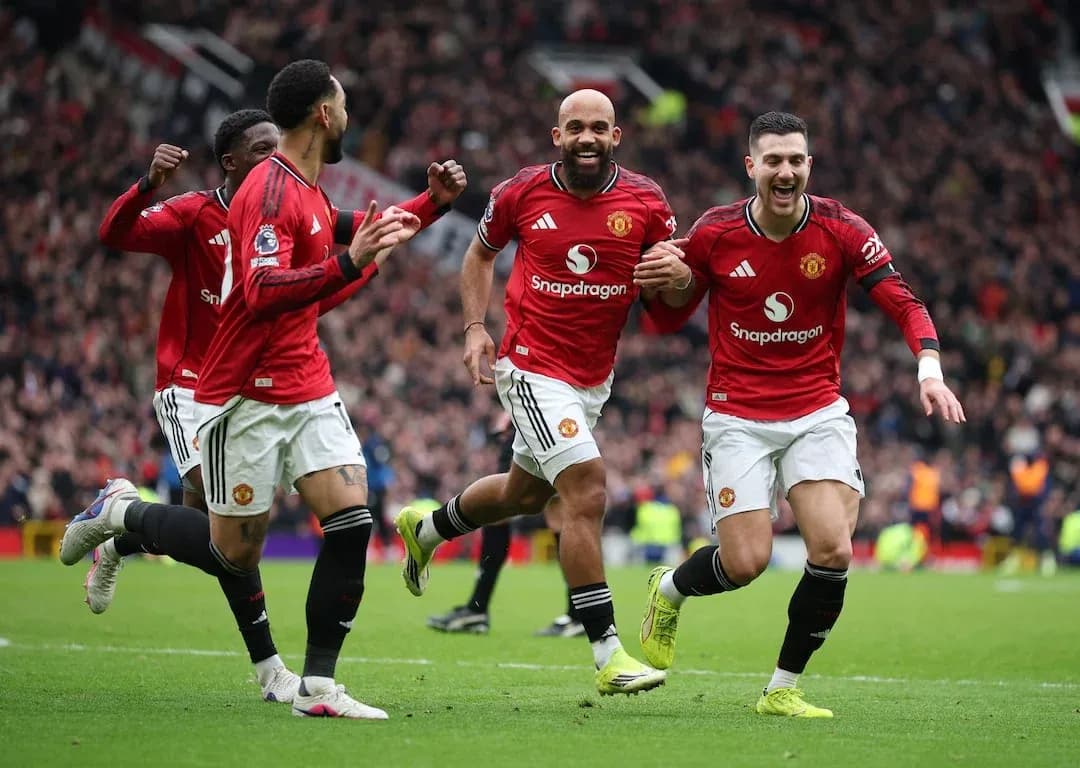
Bryan Mbeumo, with 9 league goals and 3 assists, was the primary wide hunter. Operating from the right in the 4-2-3-1, he targeted Cucurella and Hato, combining direct running with delivery. His season data – 52 shots, 30 on target – underlines his volume threat, and his 41 key passes speak to a dual role as creator and finisher. Alongside him, B. Sesko brought penalty-box presence, also on 9 league goals, a classic focal point for Bruno Fernandes to feed.
Bruno himself was the game’s central chess piece. With 8 goals and a league-leading 18 assists, plus 109 key passes, he is the competition’s most prolific chance architect. His tendency to drift between the lines tested the spatial discipline of Caicedo and Fernandez. Chelsea’s double pivot has impressive defensive metrics – Caicedo with 79 tackles and 53 interceptions, Fernandez with 49 tackles and 20 interceptions – but their aggression can be a double-edged sword. Caicedo’s 43 fouls committed and 9 yellows, combined with Fernandez’s 8 bookings, meant that every late step towards Bruno risked a free-kick in a dangerous pocket.
This was the “Engine Room” confrontation in pure form: Bruno and Mainoo seeking to dictate tempo and vertical passes, Caicedo and Fernandez trying to suffocate those channels while still progressing the ball. In wide zones, Mbeumo vs Cucurella and Dalot vs Neto formed subplots – United’s full-back stepping high to pin Chelsea’s winger, while Cucurella balanced his overlapping instincts against the need to guard the channel against counters.
IV. Statistical Prognosis – Why United’s Edge Held
Following this result, the numbers still frame United as the more reliable machine. They have scored in 30 of their 33 league games, failing to find the net only 3 times overall, and just once away. Their goal timing profile reveals a clear late-game surge: 24.56% of their goals arrive between 76–90 minutes, with another 19.30% between 31–45. They grow into matches, and they finish them.
Defensively, their biggest vulnerability is also late: 28.26% of goals conceded come in the 76–90 window. That should have invited a Chelsea storm. Yet the Blues’ attacking pattern – only 1.4 goals per game at home, and 6 total clean sheets for United this season – suggested that if United could manage the first wave and control transitions, a single goal might be enough.
Chelsea’s season-long profile is that of a side that needs chaos to thrive: high card counts, a strong penalty record (7 from 7, 100% conversion), and a willingness to trade blows. Without Joao Pedro and Mudryk, the chaos lacked teeth. United’s more mature xG profile – consistently above 1.5 goals per match across the campaign – and their defensive structure, even patched together, were enough to protect a narrow lead.
In narrative terms, this was a night where squad depth and defined roles trumped raw talent gaps. United’s hunters – Mbeumo, Sesko, Bruno – found just enough incision, while their makeshift shield held. Chelsea’s young core showed flashes, but the absences in both boxes told in the end, and the table now reflects the difference between a side chasing the Champions League and one still learning how to live with its own volatility.