
Manchester City Faces Major Transition Under Enzo Maresca
Manchester City stand at a crossroads, and not just on the touchline.
A decade of Pep Guardiola has given way to Enzo Maresca, a coach steeped in the same positional-play doctrine but inheriting a club bracing for something far more jarring than a tactical tweak: a full-blown reset of the dressing room.
Four starters from the Treble-winning side of 2022-23 have already gone. Manuel Akanji, Nathan Ake, Bernardo Silva and John Stones – pillars of a historic season – have all departed this summer. In their place, City have pushed £116m towards Elliot Anderson and taken a calculated leap on 17-year-old Jeremy Monga.
This is not a gentle evolution. It is surgery on a champion.
Rodri: The Piece Everyone Wants
At the centre of it all sits Rodri, the player City can least afford to lose and the one Europe’s elite would most like to steal.
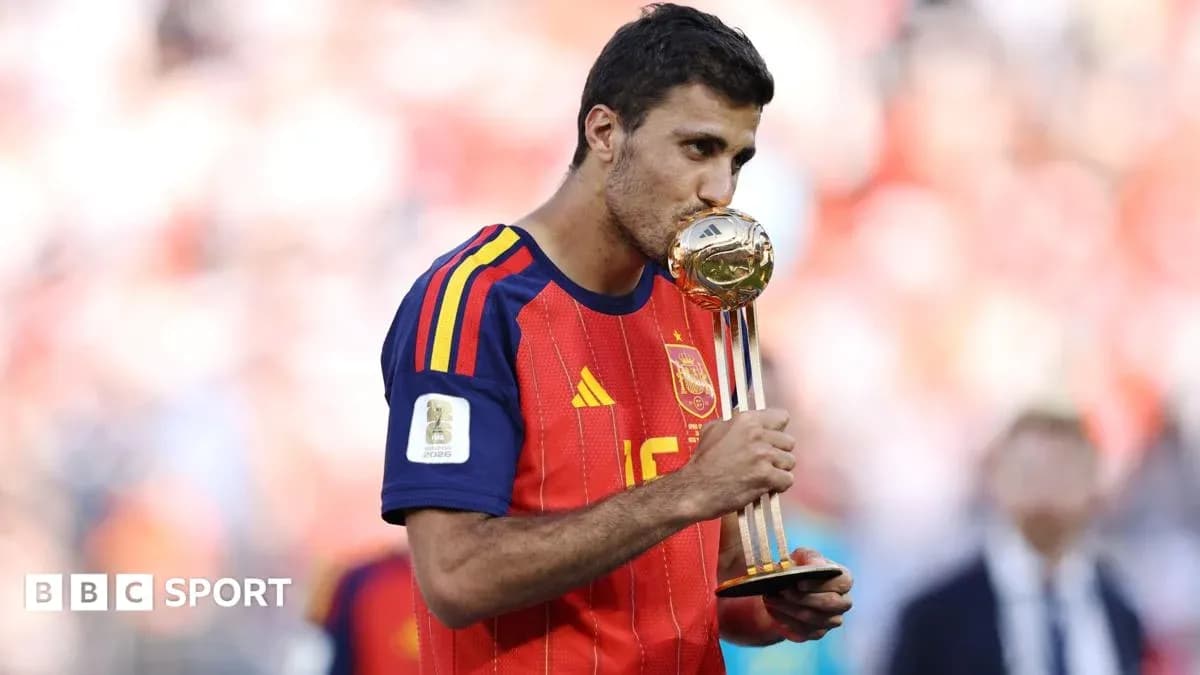
He returns from captaining Spain to World Cup glory as the tournament’s Golden Ball winner, the dominant midfielder on the biggest stage. On Monday he goes under the knife for back surgery, with just a year left on his contract and a swirl of noise around his future. Real Madrid are reported to be operating on the assumption he will eventually land in their midfield.
Maresca, at least in public, is having none of it.
“I think every manager wants to have Rodri because he is a top player,” he said on Friday. Clear, firm, no ambiguity. Then the reality check: surgery, rest, recovery. Only then, back with City.
The intention from the new man is obvious: keep him. Build around him. Do not cash in.
But football rarely bends to intention alone. A 30-year-old, world champion, Ballon d’Or-level midfielder with one year on his deal is not a quiet storyline. Somewhere in the Etihad boardroom, the question hangs: sell when he’s fit, or double down on the manager’s stance and risk losing leverage?
Maresca’s Board, Rodri’s Brain
To understand why Maresca is so adamant, you have to understand the way he sees the game.
He talks about football like chess. Not in the lazy cliché, but in the specifics: positional play, strategy, counter-moves, the deliberate arrangement of pieces. His sides attack in an on-the-ball shape that often resembles a 3-2-2-3. The numbers are less important than the principles: occupation of zones, rotations, constant rebalancing.
Rodri is built for that world.
During the World Cup, he slipped seamlessly between roles. When Aymeric Laporte stepped out with the ball, Rodri dropped into the back line. When Spain needed control, he sat as the holding midfielder, dictating tempo. When space opened up, he advanced, breaking lines and pinning opponents back.
That is the value: a player who doesn’t just stand in a position, but understands the whole map.
Maresca has already shown how powerful that can be. During City’s Treble-winning season, when he worked as Guardiola’s assistant, John Stones stepped from centre-back into midfield alongside Rodri, giving City that 3-2-2-3 structure in possession. At Chelsea, Maresca’s twist was to use Moises Caicedo at right-back out of possession, then slide him into midfield when they attacked.
Same pattern, different pieces. The shape stays, the roles rotate.
Rodri, with his grasp of positioning, timing and risk, is the ideal pivot in that system. Anderson, for all his promise, and any future signings will need time to see the game that quickly. It took Rodri himself seasons to fully adapt, learning under Fernandinho and absorbing Guardiola’s demands.
Life With – Or Without – the Anchor
City’s plan, on paper, is straightforward: keep one of the best players in world football and build Maresca’s model around him. But contingency is no longer a luxury; it’s a necessity.
Anderson offers one option. City are also tracking 18-year-old Lille midfielder Ayyoub Bouaddi, who caught the eye with Morocco at the World Cup. Both fit the profile of players who can be moulded into Maresca’s structure, but neither arrives with Rodri’s authority or certainty.
If Rodri stays, Maresca can accelerate his ideas. A ready-made organiser in the middle, a player who can drop into defence, step into the second line, or surge beyond it, all within the same move. The 3-2-2-3 becomes less of an abstract drawing and more of a living, breathing mechanism.
If he goes, the project shifts tone. Maresca’s track record suggests he won’t panic. He has already shown a knack for reimagining players’ roles: Stones into holding midfield, Caicedo into full-back, Marc Cucurella pushed into attacking midfield. He sees possibilities where others see fixed positions.
That eye for reinvention might be what carries City through a post-Rodri landscape. The structure will remain. The question is which pieces he trusts to inhabit it.
A Bigger Squad, A Different City
One of the quieter but more telling changes under Maresca may come in the size of the squad itself. Guardiola preferred a tight group, a core he could drill relentlessly and lean on in decisive moments. Maresca appears more open to a broader cast, more pieces to move around his board.
That matters in a season of upheaval. With Stones, Bernardo, Ake and Akanji gone, with Rodri’s future unresolved and new signings still learning the script, flexibility becomes a weapon. The more options Maresca has, the more routes he can find to that elusive “working formula”.
City are not collapsing. They are recalibrating. The champions have lost experience, certainty and familiarity, but they have not lost ambition. They have a coach who sees the pitch like a puzzle and a squad in the middle of being taken apart and rebuilt.
Whether Rodri stands at the heart of that rebuild or becomes the most painful sale of the era will shape everything that follows.
Maresca has his board. Now he waits to see which of his pieces are still there when the first move of the season is played.



