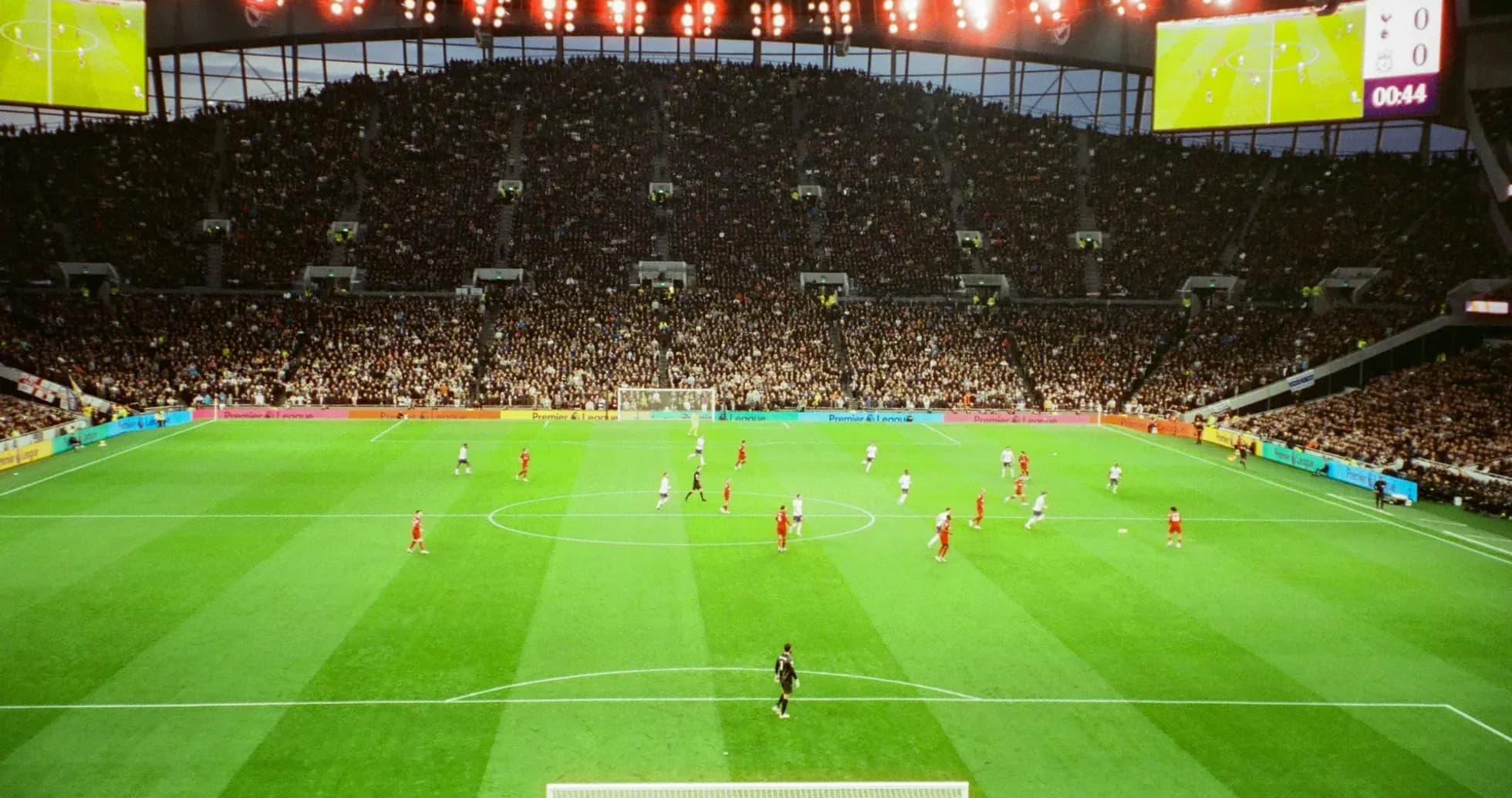
Manchester City's Possession Strategy Overcomes Leeds' Defensive Block
This was a classic territory-versus-space contest. Manchester City dominated the ball with 67% possession, circulating through a 4-1-3-2 structure built on Rodri’s control and a 90% pass accuracy (587 of 655). Leeds, in a 5-4-1, ceded the ball intentionally, completing just 311 passes at 74%, and focused on protecting central spaces. City controlled the rhythm and territorial occupation, but Leeds controlled depth, keeping their back five compact and forcing City to work primarily in front of them. The 1-0 scoreline reflects City’s territorial dominance but also Leeds’ success in limiting clear breakthroughs despite long spells without the ball.
Offensive Efficiency
Both sides finished with 14 total shots, but the shot profile reveals the game plan. City generated 11 shots inside the box versus Leeds’ 7, underlining their patient, possession-based approach to penetrate the penalty area. Their 5 shots on target and xG of 2 suggest they created several high-quality openings from structured attacks rather than speculative efforts, aided by only 3 corners, which indicates more open-play construction than set-piece reliance.
Leeds’ 14 shots were more evenly split between inside and outside the box (7 each), pointing to a mix of counters and longer-range attempts once they advanced. However, only 2 shots on target from those 14 and an xG of 1.49 show a lack of cutting edge in the final action. The 5 corners hint at some territorial pressure in spells, particularly after substitutions around 65–76 minutes when attacking changes like Lukas Nmecha and Daniel James came on, but they struggled to convert this into truly dangerous chances. City were more purposeful with similar volume, turning possession into better-quality looks rather than sheer quantity.
Defensive Discipline & Intensity
The match was relatively controlled rather than chaotic. Leeds committed 10 fouls to City’s 8, indicating a disciplined mid-to-low block rather than an overly aggressive pressing game. The absence of yellow cards for Leeds supports the idea of a structurally compact, non-reckless defensive approach.
City, despite seeing more of the ball, picked up 3 yellow cards, including cautions for Savinho and Rayan Aït-Nouri, reflecting game management and tactical fouling to disrupt Leeds’ late pushes. Goalkeeper involvement was modest: Karl Darlow made 4 saves for Leeds, Gianluigi Donnarumma 2 for City, aligning with City’s slightly superior chance quality but not an onslaught. Furthermore, City's defense had to block 5 of Leeds' shots, while Leeds' defenders threw themselves in the way to block 4 of City's attempts, reinforcing that both defensive units were active and this was a controlled, tactically tight encounter rather than an end-to-end shootout.
Conclusion
Ultimately, Manchester City’s structured possession, higher-quality box entries (11 shots inside) and marginally better offensive efficiency outweighed Leeds’ deep, compact 5-4-1. City’s control of the ball and space turned sustained pressure into the decisive edge, while Leeds’ reactive plan lacked the precision to punish them in transition.