
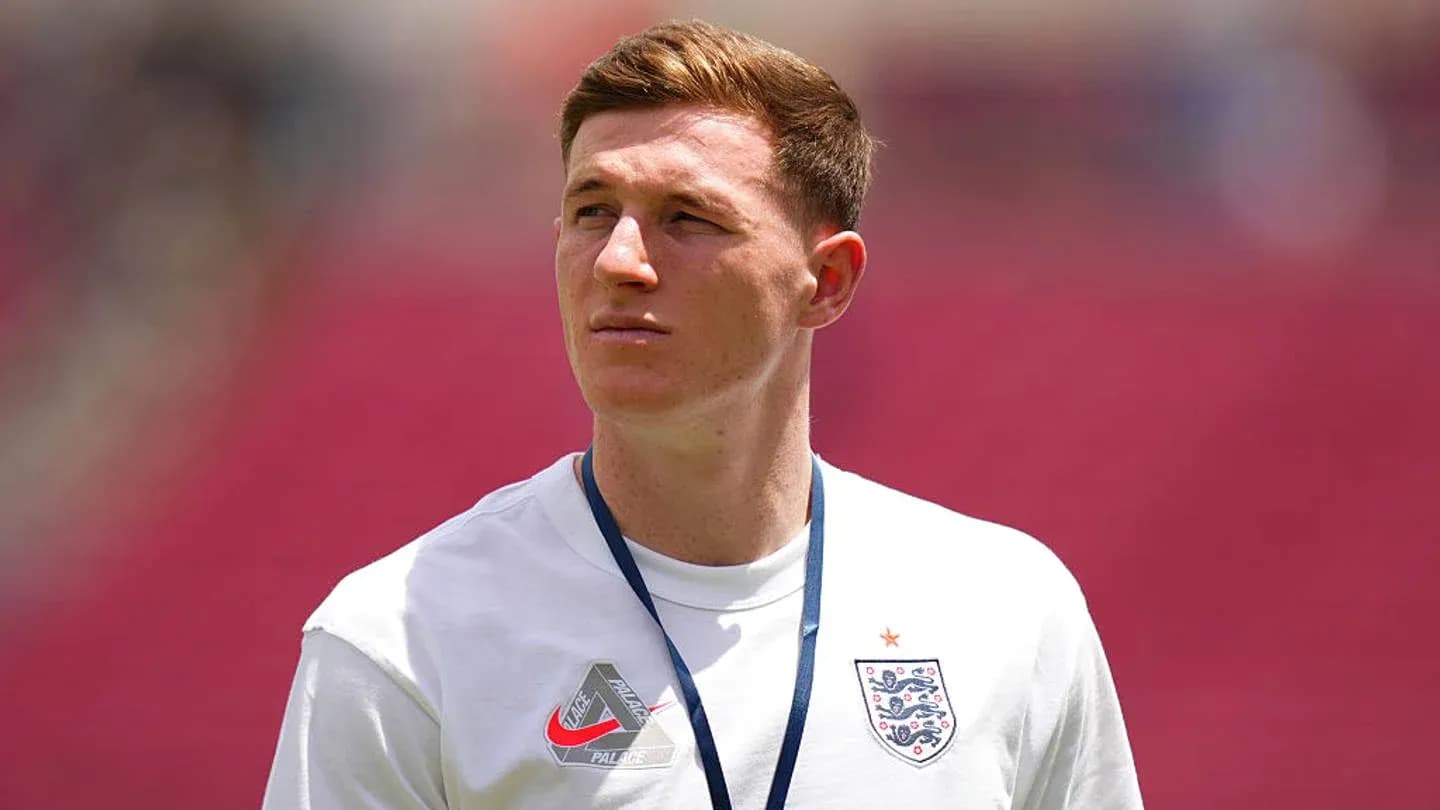
Manchester City Pursues Record-Breaking Transfer of Elliot Anderson
Manchester City are testing the outer limits of the transfer market again, and this time the spotlight falls on Elliot Anderson.
The Premier League champions have moved to make the Nottingham Forest midfielder the most expensive English player in history, tabling an offer that underlines both their faith in his talent and the scale of the battle to prise him away from the City Ground.
City’s Record-Breaking Gamble
Anderson exploded in 2025–26. By the end of the season he had gone from promising talent to one of the league’s standout midfielders, forcing his way into the England squad in time for the 2026 World Cup. At 23, with three years left on his Forest contract, he represents exactly the kind of long-term pillar Manchester City want in the post-Pep Guardiola era.
City’s proposal reflects that. According to Fabrizio Romano and The Athletic’s David Ornstein, the bid starts at $141.7 million (£106 million) guaranteed and climbs with conditional add-ons to more than $160.4 million (£120 million).
The guaranteed element alone nudges past Arsenal’s 2023 outlay on Declan Rice, the current benchmark for an English player. City are not just flirting with a record; they are effectively rewriting the going rate for a homegrown midfielder in his prime.
And yet, it still isn’t enough.
Forest Dig In
Forest have seen the numbers and shrugged. From their side of the table, the issue is simple: they want more money guaranteed, less tied to performance or appearance clauses.
Ornstein points to the 2025 transfer of Alexander Isak from Newcastle United to Liverpool as the key reference point. Liverpool paid $167.1 million guaranteed, with only minor add-ons. That deal set the bar for a Premier League transfer fee.
Forest believe Anderson belongs in that bracket at the very least. Surpass Isak’s fee and you have a new Premier League record. Only Neymar and Kylian Mbappé have ever commanded more before add-ons. That is the company Forest are placing their midfielder in.
They can do it because they hold almost all the cards.
Anderson is under contract for three more years, nowhere near free agency. He has delivered big performances against both Manchester clubs in recent months, and his trajectory suggests there is still more to come. Forest know exactly what they have: a player who can anchor their midfield for seasons or bankroll a rebuild.
From their perspective, it is a rare win-win. Either no one meets the valuation and they keep an elite midfielder for at least another year, or they cash in at a level that was supposed to be prohibitive and reshape the squad with “mega” funds.
The Market That Made Anderson’s Price
Forest’s stance doesn’t exist in a vacuum. The market built this number.
Clubs have watched recent deals and adjusted their expectations. Rice’s move to Arsenal, Enzo Fernández’s switch to Chelsea, Moisés Caicedo’s record-breaking fee — all in 2023 — pushed the ceiling higher for top-tier midfielders. Caicedo’s case was not just Chelsea overspending in isolation; Liverpool also had a similar offer accepted for the Ecuadorian.
Since then, elite football has only grown richer. Broadcast deals, commercial income, prize money — the tide keeps rising, and with it the transfer fees. What looked extraordinary in 2023 is edging towards normal in 2026.
Through that lens, Forest’s valuation of Anderson, creeping towards $170 million, stops looking wild and starts looking like the next logical step in a market that keeps moving the goalposts.
This is not new territory for Forest either. Back in 1993, they sold Roy Keane to Manchester United for what was then a British record fee of £3.75 million, with Blackburn Rovers having offered even more. The numbers have changed beyond recognition, but the principle is the same: if someone is willing to pay, the “record” simply becomes the new reality.
Why City Are Willing to Push
So why are City prepared to go this far?
Because they see Anderson as a decade-long solution. He turns 24 in November. Sign him now, and he could anchor their midfield until the mid-2030s. Spread the best part of $170 million over that kind of timespan and the investment starts to look more like a strategic foundation than a splash.
City’s recent history backs that thinking. Their era of dominance has been built on expensive signings who then stayed and delivered for years: David Silva, Yaya Touré, Sergio Agüero, Kevin De Bruyne, John Stones, Bernardo Silva. The club does not shy away from big fees, but when they get a transfer right, the player’s longevity and impact often dwarf the initial outlay.
Of course, there are no guarantees. Anderson still has to prove he can carry that weight of expectation, adapt to a new system, and sustain his level in a squad stacked with talent. But City’s recruitment department rarely misfires, and their willingness to escalate the offer shows how convinced they are of his fit in the next iteration of their team.
United Watching from Across Town
Lurking in the background are Manchester United. They also admire Anderson and see him as a potential centrepiece of their own midfield rebuild. For now, though, they are watching City set the pace in a race that could reshape the balance of power in the middle of the pitch for years.
If United decide to enter the bidding seriously, Forest’s position only strengthens. If they don’t, City still have to decide how far they are prepared to go to close the gap between their proposal and Forest’s demands for guaranteed money.
The numbers are already eye-watering. The stakes, for club, player and market, are even higher.
At what point does a midfielder stop being just another signing and become the emblem of a new era? Manchester City seem ready to find out.



