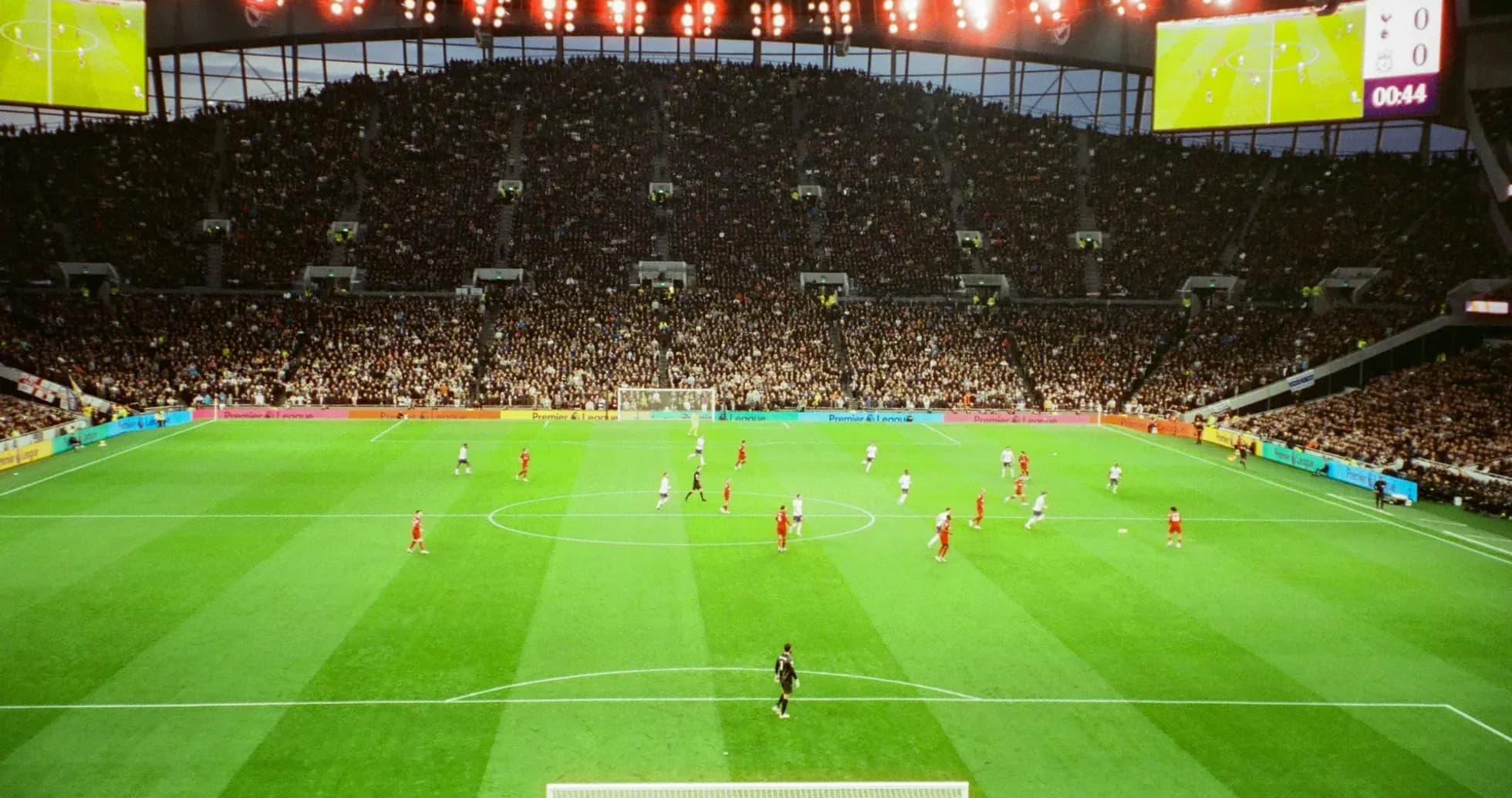
Manchester City 3-0 Crystal Palace: Tactical Mastery at the Etihad
Under the Etihad’s floodlights, this was Manchester City at their most ruthless and most experimental, a 3-0 dismantling of Crystal Palace that said as much about squad depth and structural evolution as it did about the scoreline itself.
I. The Big Picture – City’s new shape, same control
Heading into this game, the table already framed the contest starkly. Manchester City sat 2nd in the Premier League on 77 points, with a towering overall goal difference of +43 (75 scored, 32 conceded). At home they had been close to flawless: 14 wins from 18, just 1 defeat, scoring 44 and conceding only 12. Crystal Palace arrived in Manchester in 15th on 44 points, their overall goal difference a fragile -9 (38 for, 47 against), and their recent form line (“LDLLD”) betraying a side drifting rather than driving toward the finish.
Yet what unfolded at the Etihad was not a routine iteration of City’s familiar 4-3-3 or 4-2-3-1. Pep Guardiola rolled out a 4-2-2-2, a double-striker system that tilted the pitch in the final third. G. Donnarumma anchored the back, with a back four of M. Nunes, A. Khusanov, M. Guehi and J. Gvardiol – a blend of ball progression and front-foot defending. Ahead of them, B. Silva and P. Foden formed a double pivot in possession, morphing into staggered eights, while Savinho and R. Ait-Nouri operated as narrow attacking midfielders behind a front two of A. Semenyo and O. Marmoush.
Across from them, Oliver Glasner abandoned his usual back three template, sending Palace out in a conservative 5-4-1. D. Henderson was protected by a five-man line of D. Munoz, C. Richards, M. Lacroix, J. Canvot and T. Mitchell, with B. Johnson and Y. Pino wide, W. Hughes and J. Lerma inside, and J. Mateta isolated as the lone outlet.
The scoreline – 2-0 at half-time, 3-0 by full-time – reflected not only City’s attacking superiority but the structural mismatch between City’s fluid box midfield and Palace’s flat, reactive 5-4-1.
II. Tactical Voids – Life without Rodri, and Palace’s missing spine
The absences list was more than a footnote; it shaped the game’s geometry.
For City, Rodri’s groin injury removed their metronome and primary defensive screen. In his place, Guardiola trusted Bernardo Silva and Foden to share responsibility for first-phase build-up and rest defence. It was a bold call against a side whose main threat, Mateta, thrives on quick counters and physical duels. Yet City’s season numbers suggested they could absorb the risk: overall they concede just 0.9 goals per game, and at home that drops to 0.7, underpinned by 9 home clean sheets from 18. This match, another shut-out, reinforced the idea that City’s defensive security is now systemic rather than reliant on a single pivot.
Palace’s voids were even more glaring. C. Doucoure’s knee injury stripped the midfield of its most robust ball-winner, while the simultaneous absence of E. Guessand, E. Nketiah and B. Sosa removed rotation options in both boxes. Without Doucoure, Lerma and Hughes were forced to cover huge horizontal distances against City’s rotating box of Silva, Foden, Savinho and Ait-Nouri. That strain told as Palace dropped deeper and deeper, their 5-4-1 becoming a 5-5-0 out of possession.
Disciplinary profiles hinted at where tension might flare. Bernardo Silva, with 10 yellow cards in the league, is City’s leading offender, and City’s own yellow-card timing shows a pronounced spike between 46-60 minutes and 76-90 minutes (20.31% in each window) – periods when counter-pressing intensity rises and tactical fouls become a tool. Palace, meanwhile, have shown a worrying red-card pattern: both of their league reds this season have come in the 46-75 minute band, precisely when fatigue and frustration intersect. With M. Lacroix already carrying one red card this season and committing 33 fouls, the risk of a decisive disciplinary moment was always present once City turned the screw after the break.
III. Key Matchups – Hunter vs Shield, Engine Room vs Enforcer
Even starting on the bench, E. Haaland’s shadow hung over the contest. With 26 league goals and 8 assists, plus 3 penalties scored but 1 missed, he is the division’s apex predator. City’s overall scoring rate of 2.1 goals per game – rising to 2.4 at home – is heavily underwritten by his presence. Palace’s defence, conceding 1.3 goals per game overall and 1.4 on their travels, were always living on a fine margin: one slip in the box, and Haaland’s penalty record and volume of shots (101 total, 58 on target) threaten to tilt the xG ledger irreversibly.
On the other side, J. Mateta was Palace’s “Hunter”, with 11 league goals and a perfect penalty record (4 scored, none missed). His duel profile – 283 contests, 107 won – speaks to a forward who thrives on chaos. But against a City side that dominates territory and concedes only 0.7 goals per game at home, his task was less about volume of chances and more about maximising the rare breakaway. The 5-4-1, though, left him starved of support, his pressing runs often ending in isolation as City recycled the ball through Khusanov, Guehi and Gvardiol.
The true battleground, however, was the “Engine Room”. Rayan Cherki, one of the league’s top creators with 12 assists and 61 key passes, began on the bench but loomed as the ultimate tempo-changer. His ability to receive between the lines and commit defenders would have been particularly punishing for a Palace midfield missing Doucoure’s bite. Against him stood Lerma and Hughes, functional rather than flamboyant, tasked with compressing the central lane and denying City’s creators the half-spaces.
Behind them, Lacroix was the Shield. His defensive numbers – 59 tackles, 17 successful blocks, 42 interceptions – describe a proactive defender who steps out rather than simply holds the line. But that same aggression, combined with his disciplinary history (4 yellows, 1 red, and 2 penalties conceded), made him vulnerable once City’s rotations dragged him into wide or high zones. Every time Savinho or Ait-Nouri inverted and Marmoush or Semenyo pulled wide, Lacroix faced a decision: follow and risk space behind, or hold and concede time on the ball. Over 90 minutes, City’s structure ensured those decisions accumulated into cracks.
IV. Statistical Prognosis – xG tilt and defensive gravity
Even without explicit xG figures, the season data and tactical patterns point toward a heavily City-favoured shot and chance profile. A side scoring 2.4 goals per home game and conceding 0.7, facing an opponent that scores only 1.1 on their travels and concedes 1.4, is structurally set up to generate a higher volume and quality of chances.
City’s clean-sheet record (16 overall, 9 at home) and Palace’s tendency to fail to score (12 league matches without a goal, 5 of them away) intersected brutally here. Donnarumma’s evening was more about distribution than shot-stopping, while Henderson was repeatedly exposed by the sheer variety of City’s attacking lanes: cut-backs from Savinho, underlapping runs from Foden, and the looming threat of Haaland and Doku off the bench.
Following this result, the 3-0 scoreline felt like the logical outcome of a contest where one squad’s depth, structure and statistical profile aligned perfectly against another’s absences, caution and fragility. City’s 4-2-2-2 may have been a wrinkle, but the underlying story remained familiar: at the Etihad, their squad is not just deeper; it exerts a gravitational pull on the game that few Premier League sides, least of all a depleted Crystal Palace, can resist.