Manchester City's Dominance Over Brentford: A Tactical Analysis
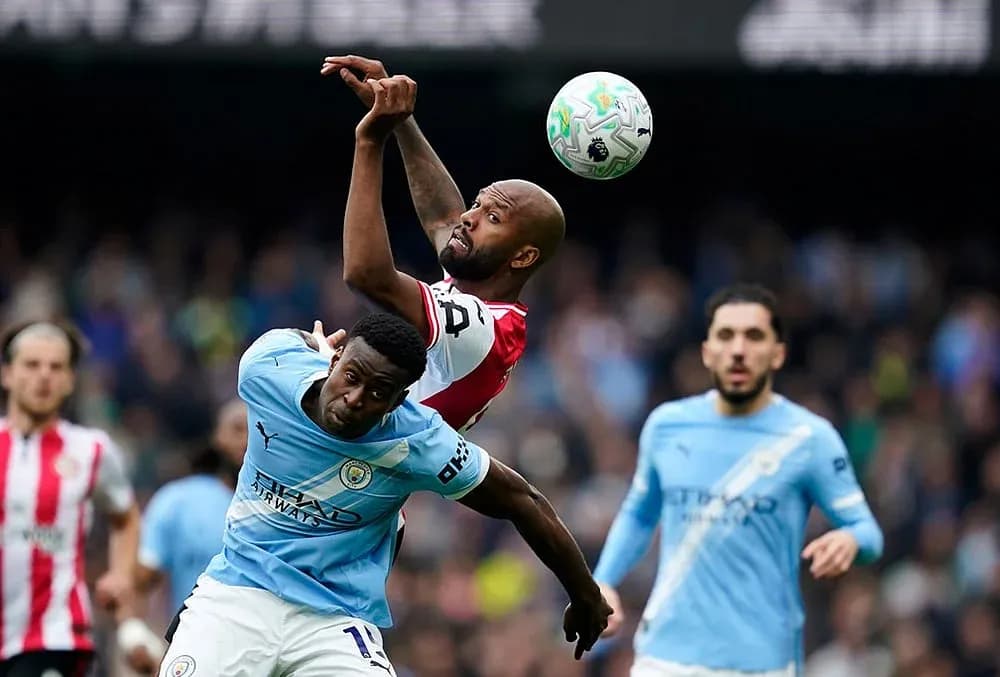
Under the late‑afternoon lights at the Etihad Stadium, this felt less like a routine league outing and more like a statement. Following this result, Manchester City’s 3‑0 dismantling of Brentford in Round 36 of the Premier League was the performance of a side chasing perfection, not merely points. A second‑placed team with 74 points and a goal difference of 40 reasserted its identity against an eighth‑placed Brentford side that has punched above its weight all season.
City came into the day with a total of 35 league matches behind them, built on control: 22 wins, 8 draws, only 5 defeats, and a total scoring profile of 72 goals for and 32 against. At home, their numbers are even more ruthless: across 17 matches at the Etihad, they had 13 wins, 3 draws and just 1 loss, scoring 41 and conceding 12. Brentford arrived with a total of 36 matches played, 14 wins and 9 draws, their total goal difference a narrow +3 (52 scored, 49 conceded). Away from home, though, the foundations were far shakier: 6 wins, 2 draws and 10 defeats, with 21 goals scored and 30 conceded.
What made this match fascinating before a ball was kicked were the absences. Manchester City were without J. Gvardiol and Rodri, both ruled out as “Missing Fixture” with a broken leg and groin injury respectively. Losing Rodri, the metronome and shield, often strips City of their natural rest‑defence and passing rhythm. Gvardiol’s absence also removed a progressive outlet from the back line. Brentford, for their part, were missing F. Carvalho, R. Henry and A. Milambo, depriving them of depth on the flanks and in midfield – a significant issue against a side that lives on width and overloads.
Pep Guardiola’s selection leaned into flexibility. Gianluigi Donnarumma anchored the side in goal, with a back four built from Matheus Nunes, Marc Guéhi, Nathan Aké and Nico O’Reilly. It was an unconventional defensive unit on paper, but one designed to be comfortable stepping into midfield. Ahead of them, Tijjani Reijnders and Bernardo Silva formed the technical base, with Antoine Semenyo, Rayan Cherki and Jérémy Doku floating behind Erling Haaland.
Across the season, City’s tactical DNA has been clear. Heading into this game, they were averaging 2.4 goals at home and 2.1 in total, while conceding just 0.7 at home and 0.9 overall. Their most used structures – 4‑1‑4‑1, 4‑3‑2‑1 and 4‑3‑3 – all revolve around dominating the middle third and then creating wide 1v1s. Here, even with no explicit formation listed, the behaviour was familiar: Reijnders dropping to form a back three in build‑up, Bernardo drifting into half‑spaces to connect with Cherki, and Doku given licence to isolate his marker and drive.
Cherki’s influence was always going to be pivotal. With 11 assists in total this Premier League season and 59 key passes, he has become City’s creative hinge between the lines. His chemistry with Haaland – who entered the fixture as the league’s leading scorer with a total of 26 goals and 8 assists – shaped City’s attacking patterns. Haaland’s 101 total shots (58 on target) and 3 penalties scored from 4 attempts underline a striker who constantly tests the defensive line. Against a Brentford side conceding an average of 1.7 goals on their travels, the “Hunter vs Shield” duel tilted heavily towards the Norwegian.
Brentford, under Keith Andrews, set up with Caoimhin Kelleher in goal, a back line of Michael Kayode, Kristoffer Ajer, Nathan Collins and Keane Lewis‑Potter, and a midfield of Yehor Yarmoliuk, Mathias Jensen, Aaron Hickey and Mikkel Damsgaard behind Kevin Schade and Igor Thiago. Their seasonal identity has been defined by verticality and directness. Igor Thiago, with a total of 22 goals and 1 assist, is not just a finisher but a physical reference point, having engaged in 499 duels and winning 195. His 8 penalties scored from 9 attempts (1 missed) show reliability from the spot, but Brentford’s problem is getting him into enough high‑quality situations, especially away.
Their away averages – 1.2 goals scored and 1.7 conceded – framed the tactical gamble: could they absorb City’s pressure long enough to unleash Thiago and Schade in transition? Schade’s profile, with 7 goals, 3 assists and a red card already this season, speaks to a winger who plays on the edge. Brentford’s disciplinary pattern reinforced that volatility: 27.69% of their yellow cards come in the 76‑90 minute window, a late‑game surge that often coincides with chasing matches or hanging on. Against City, that late‑match aggression risked turning into desperation once the scoreboard tilted.
City’s own card distribution hinted at where the battle might become scrappy. Their yellow‑card profile peaks at 46‑60 minutes and again at 76‑90, each accounting for 20.31% of their bookings. Without Rodri, the responsibility for tactical fouls and tempo control fell more on Bernardo and Reijnders. Bernardo, already on 10 yellow cards in total this campaign, is the emotional barometer of this side; his willingness to press and to foul at the right moment underpins City’s counter‑press.
In the end, the 3‑0 scoreline felt like a logical extension of the underlying numbers. City’s total clean sheet count of 15 before this game – 8 at home – reflected a team that not only scores freely but strangles opponents’ chances. Brentford, with 10 total clean sheets and 12 matches where they failed to score, walked into a venue where City almost always impose their Expected Goals edge and territorial dominance.
The tactical preview for any future meeting between these sides is now sharply drawn. City, even when stripped of key structural pieces like Rodri and Gvardiol, can lean on the Haaland–Cherki–Doku triangle to overwhelm an away defence that statistically concedes too much. Brentford’s route to upsetting the hierarchy will depend on compressing space around Cherki, denying Doku 1v1s, and giving Igor Thiago enough service to turn his physical presence into xG, not just duels. Until then, the Etihad remains a place where City’s numbers, structure and stars converge into something close to inevitable.