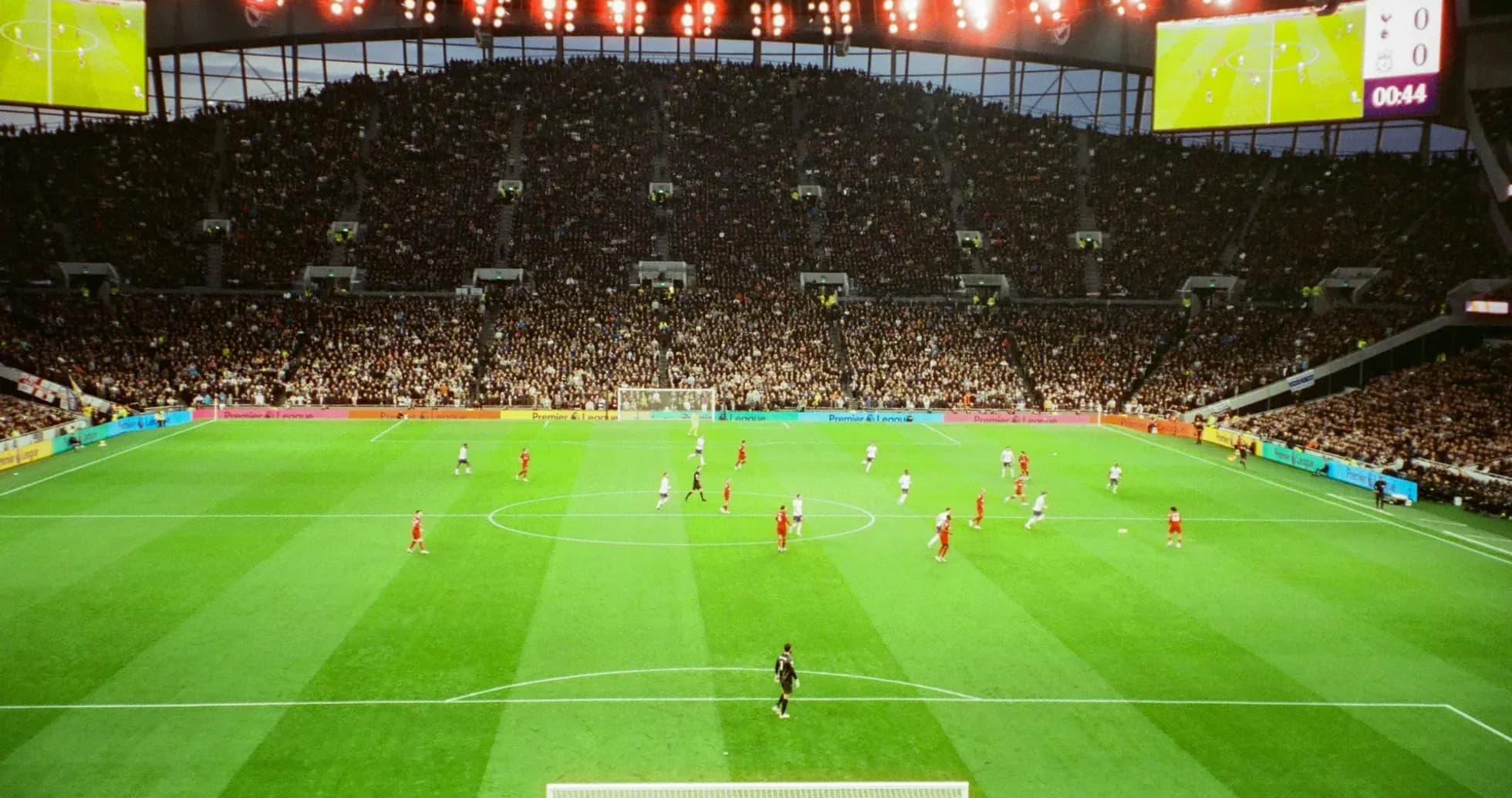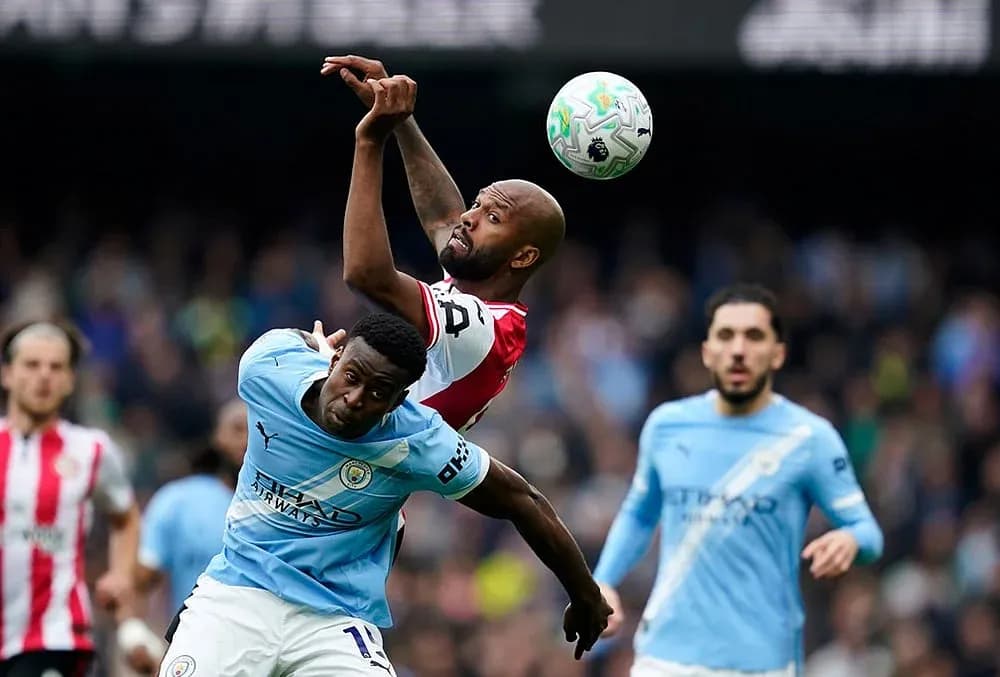
Manchester City Dominates Brentford in 3–0 Victory
Manchester City’s 3–0 win over Brentford at the Etihad Stadium in Premier League Round 36 was a controlled, methodical dismantling built on territorial dominance and structured pressure. With 59% possession, a 25–4 shot advantage and a 2.98–0.24 xG split, Pep Guardiola’s side converted sustained positional superiority into three second‑half goals while almost entirely denying Brentford access to dangerous zones.
Executive Summary
City’s approach was defined by an aggressive, high-possession structure that pushed Brentford deep and forced them into a reactive, foul-heavy game (14 fouls to City’s 8). The match remained goalless to half-time, but the underlying pattern was clear: City circulating the ball with 86% passing accuracy, Brentford pinned in and reliant on Caoimhin Kelleher, who made seven saves and still conceded three. Second-half adjustments, particularly the introduction of Omar Marmoush and Phil Foden, sharpened City’s vertical threat and finished the contest.
Scoring Sequence & Disciplinary Log
Disciplinary log (chronological, with reasons locked to data):
- 36' Bernardo Silva (Manchester City) — Argument
- 74' Nico O'Reilly (Manchester City) — Foul
- 80' Kristoffer Ajer (Brentford) — Foul
- 88' Matheus Nunes (Manchester City) — Argument
- 88' Jordan Henderson (Brentford) — Argument
- 90+5' Omar Marmoush (Manchester City) — Time wasting
Card totals: Manchester City: 4, Brentford: 2, Total: 6.
Scoring sequence (chronological):
- 60' Jérémy Doku (Manchester City) — Normal Goal
- 75' Erling Haaland (Manchester City) — Normal Goal
- 90+2' Omar Marmoush (Manchester City) — Normal Goal (assist: Erling Haaland)
The first half, despite City’s territorial control, passed without goals but with the first flashpoint: at 36', Bernardo Silva was booked for “Argument”, reflecting early emotional tension as Brentford tried to disrupt City’s rhythm. The deadlock broke on 60' when Jérémy Doku struck, immediately followed by a structural reshuffle via a double substitution: Rayan Cherki (OUT) was replaced by Omar Marmoush (IN), and Tijjani Reijnders (OUT) by Phil Foden (IN), both for Manchester City at 60'.
Brentford responded with their own changes to regain midfield traction: at 61', Vitaly Janelt (IN) came on for Aaron Hickey (OUT), and at 68' Dango Ouattara (IN) replaced Mikkel Damsgaard (OUT). City, however, doubled their lead on 75' through Erling Haaland, consolidating their control. Brentford sought more stability at 79', bringing on Jordan Henderson (IN) for Yehor Yarmoliuk (OUT), but the disciplinary profile worsened: Kristoffer Ajer’s yellow card for “Foul” at 80' underlined the strain on their back line.
The closing minutes brought further friction. At 88', Matheus Nunes was cautioned for “Argument”, immediately mirrored by Jordan Henderson’s yellow, also for “Argument”, in the same minute. City then killed any remaining doubt when Omar Marmoush scored in added time at 90+2', assisted by Haaland. Deep into stoppage time at 90+5', Marmoush was booked for “Time wasting”, the final disciplinary note of a match City had long since decided. At 90', Savinho (IN) came on for Jérémy Doku (OUT), a late attacking rotation from Guardiola.
Tactical Breakdown & Personnel
City’s structure resembled a high-possession 4-3-3 morphing into a 2-3-5 in settled attack. Gianluigi Donnarumma, despite Brentford’s low xG of 0.24, still had to make 2 saves, but his main task was to act as an auxiliary outfield player, helping City reach 463 total passes and maintain compact rest-defence. Marc Guéhi and Nathan Aké anchored the back line, while Nico O’Reilly and Matheus Nunes operated as fullback/half-space hybrids, stepping into midfield to create overloads and hem Brentford in.
In midfield, Tijjani Reijnders provided early tempo and vertical passing from deep, complemented by Bernardo Silva’s roaming between lines and Antoine Semenyo’s energy. Bernardo’s yellow for “Argument” was less about defensive recklessness and more about the emotional temperature of City’s high-pressing game; still, City managed their discipline reasonably within an 8-foul total.
The front line of Jérémy Doku, Rayan Cherki and Erling Haaland was designed to stretch Brentford horizontally and vertically. Doku’s opener on 60' was the logical outcome of repeated 1v1 isolations on the flank, exploiting Brentford’s narrow defensive block. Cherki’s starting role gave City a left-sided technician to combine with overlapping defenders, but Guardiola’s decision to introduce Omar Marmoush at 60' shifted the dynamic: Marmoush offered more direct depth running, which later paid off with his 90+2' goal.
Phil Foden’s entrance for Reijnders at 60' was the key tactical pivot. Moving from a more classical holding midfielder to an advanced playmaker increased City’s presence between Brentford’s lines, accelerating tempo and making it harder for the visitors to step out. The second goal at 75', finished by Haaland, reflected this: with Brentford’s midfield stretched and their back line forced to defend deeper, City could feed their striker in more favourable positions, consistent with the near-3.0 xG figure.
Brentford, under Keith Andrews, started with a defensive 4‑4‑2/4‑5‑1 hybrid. Caoimhin Kelleher’s 7 saves and 1.5 goals prevented underline how exposed he was; without his interventions, the margin could have exceeded 3–0. The back four of Michael Kayode, Kristoffer Ajer, Nathan Collins and Keane Lewis-Potter spent long stretches in their own third, rarely advancing beyond the halfway line. The midfield quartet of Yehor Yarmoliuk, Mathias Jensen, Aaron Hickey and Mikkel Damsgaard struggled to maintain possession (41% overall, 76% pass accuracy), resorting frequently to tactical fouls — reflected in their 14 fouls and two bookings (Ajer for “Foul”, Henderson later for “Argument”).
Up front, Kevin Schade and Igor Thiago were largely isolated, with Brentford managing only 4 total shots and 2 on target. The substitutions of Janelt, Ouattara and Henderson were aimed at fresh legs and more composure in central areas, but City’s structural grip meant these changes had limited impact on chance creation.
The Statistical Verdict
The raw numbers confirm City’s dominance. Offensively, 25 shots to Brentford’s 4, with 10 on target versus 2, and an xG of 2.98 against 0.24, show a one-sided chance profile fully consistent with the 3–0 scoreline. City’s 59% possession and 463 passes at 86% accuracy reflect a side in complete control of tempo and territory, while Brentford’s 320 passes at 76% accuracy and only 2 corners underline their limited attacking presence.
From a defensive index perspective, City conceded just 4 shots and required only 2 saves from Donnarumma, indicating strong protection of the penalty area. Brentford’s defensive workload was far heavier: Kelleher’s 7 saves and 1.5 goals prevented highlight both his performance and the volume of high-quality chances faced. Discipline-wise, the 4–2 yellow card split (6 total) and 14–8 foul count show Brentford operating at the edge just to slow City down, whereas City’s bookings stemmed more from “Argument” and late-game “Time wasting” than systemic defensive desperation. Overall form indicators from this match suggest a City side peaking in control and chance creation, and a Brentford team forced into damage limitation for long stretches.