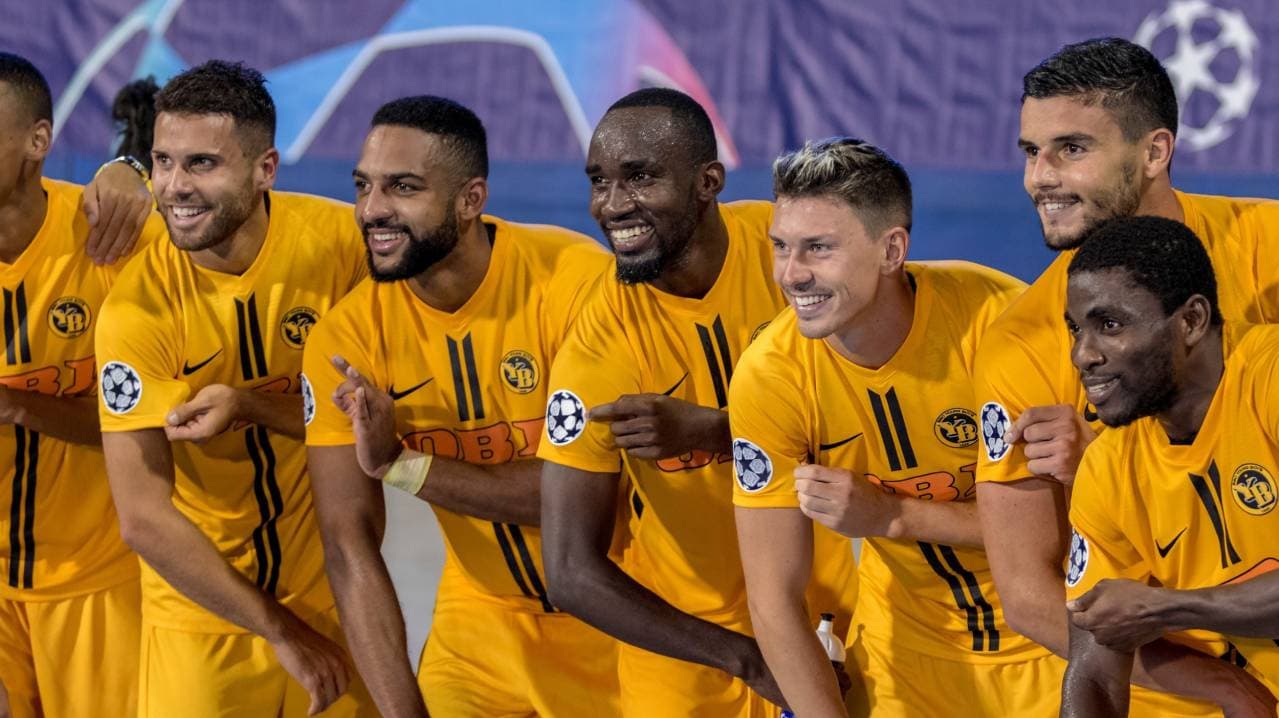
Lyon's Controlled Possession Beats Young Boys' Direct Approach
Lyon’s controlled possession edges Young Boys’ direct 4-2-3-1 in measured away win
The Strategic Battle
The match was defined by Lyon’s controlled dominance of the ball against Young Boys’ more direct, vertical approach. Lyon held 62% possession and completed 500 of 570 passes (88%), using their 4-3-3 to circulate through midfield and full-backs, especially in longer settled spells after taking the lead before half-time. Young Boys, in a 4-2-3-1, accepted just 38% possession and built shorter, more urgent attacks, with 336 total passes at 84% accuracy. Lyon largely controlled the space, pinning Young Boys back for long phases, while the hosts tried to compress the middle and spring transitions rather than engage in prolonged build-up.
Offensive Efficiency
Lyon’s plan was methodical rather than explosive. Their 13 total shots to Young Boys’ 7 underline territorial control, but the quality profile is telling: both teams had 7 shots inside the box, yet Lyon added 6 from distance, showing a willingness to finish moves rather than overplay. Despite more volume, Lyon’s expected goals were only 0.67, suggesting many of those efforts were from suboptimal positions. Young Boys, by contrast, generated 0.8 xG from fewer attempts, indicating that their rare incursions were slightly clearer chances.
The hosts’ offensive problem was a lack of final-third sharpness. Only 1 of their 7 shots hit the target, and all 7 came from inside the box, pointing to promising positions but poor execution under pressure. With just 3 corners, they struggled to sustain pressure or pin Lyon back through set pieces. Lyon matched that with 3 corners of their own, but their 4 shots on goal from 13 attempts show a more consistent ability to turn possession into testing efforts, enough to protect a narrow lead without overextending.
Defensive Discipline & Intensity
The game was competitive but not excessively violent. Young Boys committed 11 fouls, Lyon 10, and both sides collected 3 yellow cards each, many for arguments rather than purely tactical fouling, reflecting rising tension as the hosts chased the game. Young Boys’ back line blocked 4 Lyon shots, compared to Lyon’s 3 blocks, illustrating how often the Swiss side had to defend deep in their own box.
Goalkeeping was solid but not spectacular. Young Boys’ keeper made 3 saves, Lyon’s just 1, consistent with the shot-on-target numbers and Lyon’s control of risk. Neither side’s “goals_prevented” metric (0 for both) suggests there were no extraordinary saves; defensive structure and shot selection, rather than keeper heroics, dictated the low scoreline.
Conclusion
Ultimately, Lyon’s controlled possession, superior shot volume (13 to 7) and ability to manage territory outweighed Young Boys’ slightly better chance quality on paper. The French side’s measured, low-risk dominance ensured that their efficiency and game management trumped the hosts’ sporadic but insufficiently clinical attacks.