Luka Modric Reaches 200 Caps as Croatia Edges Panama
The numbers are cold. The moment was anything but.
On a tight, nervy night in Toronto, Croatia’s captain walked into football’s rarest air. Luka Modric, 40 years old and still running games, became only the fourth male player in history to reach 200 senior international caps, stepping into a club previously reserved for Cristiano Ronaldo, Lionel Messi and Bader al-Mutawa.
He didn’t need fireworks. He had a football.
An “Infinite Legacy” in real time
As the final whistle went, his teammates pulled on black T-shirts emblazoned with “Infinite Legacy” and the number 200. It was a simple gesture, but it fit the man. No choreographed lap of honour, no grandstanding. Just a quiet acknowledgement that a kid from Zadar now stands alongside the giants of the international game.
Manager Zlatko Dalic, who has built an era around Modric’s presence, didn’t hide his admiration.
“He is still influencing matches and to play for your country 200 times, that is a lot. We need to be very happy to have him in the team. Luka is very humble and this is why he is not for major celebrations. But I am very glad we marked this today in front of our fans.”
The words matched the performance. Modric did not dominate every minute, but in a match defined by tight margins and tactical chess, he remained Croatia’s metronome, nudging them through the gears when the pressure rose.
Panama’s plan, Croatia’s problem
For 45 minutes, Panama threatened to spoil the party.
Thomas Christiansen sent his side out in a compact 5-4-1 that pinched the space between the lines and refused to budge. Croatia’s passing patterns fizzled out on the edge of the box, crosses floated harmlessly away, and the game slid into exactly the kind of stalemate Panama wanted.
They weren’t just sitting in, either. When they broke, they did it with purpose. Jose Luis Rodriguez came closest, his header glancing off a defender and looping onto the underside of the bar, Dominik Livakovic scrambling and then watching the ball bounce out rather than in. It was a warning, and a reminder: this was not a testimonial for Modric. This was a survival match.
Croatia, beaten by England on the opening day, knew what another slip would mean.
Dalic rolls the dice
Something had to change. Dalic didn’t wait.
At half-time he turned to Ante Budimir, a striker built for penalty-box battles, and asked him to turn this from a chess match into a fight. The effect was immediate. Croatia suddenly had a reference point, a body to play off, a threat that dragged Panama’s back line deeper and wider.
The breakthrough, when it came in the 54th minute, carried the stamp of a team that had finally found its rhythm.
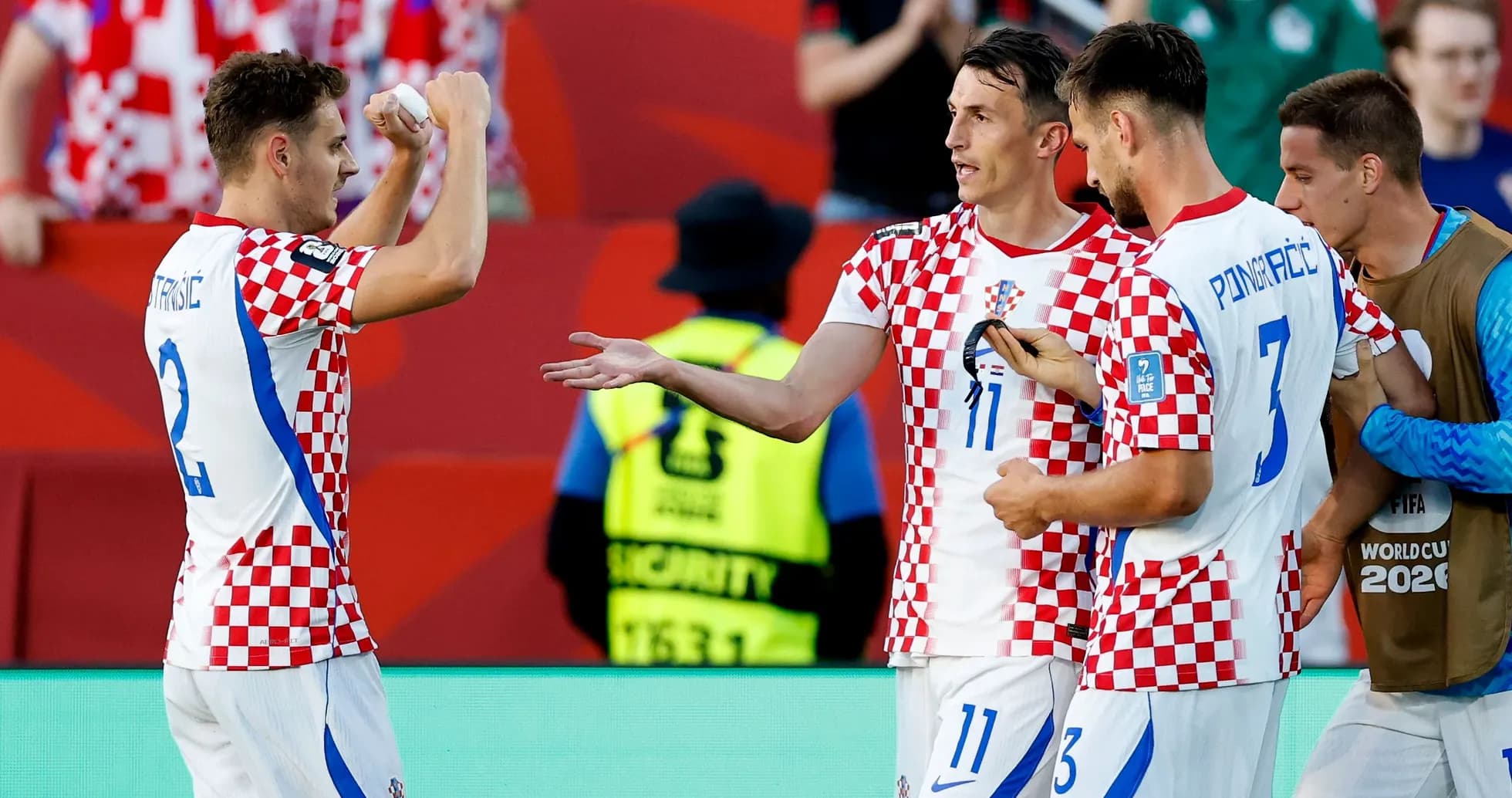
Marco Pasalic, sharper and braver after the interval, flicked a clever backheel into the path of the onrushing Josip Stanisic. The full-back drove low across the face of goal. At the far post, Budimir arrived with the calm of a man who has scored these finishes his whole life. Osasuna’s all-time top scorer just guided it in, side-footed and sure.
One chance. One touch. One release of pressure.
The Croatian end exploded, red-and-white shirts bouncing in the Toronto night. A match that had felt like a slow suffocation suddenly crackled with noise and belief.
Missed chances, rising tension
The goal opened the game up. Panama had to chase, and space finally appeared where there had been none.
Pasalic should have killed it. Slipped clear and one-on-one with Orlando Mosquera, he had the perfect chance to double the lead. The Panama goalkeeper stood tall, blocked the first effort, and Pasalic lashed the rebound over the bar. A huge moment wasted, and another invitation for anxiety to creep in.
Croatia never found a second goal. They found a way to suffer instead.
Panama, playing for pride and clinging to their last thread of hope in this tournament, threw themselves forward. They earned seven corners, hurled bodies into the box and forced Livakovic into a series of sharp interventions as the game tilted towards chaos. Every set piece felt like a test of nerve.
Christiansen, already resigned to elimination but not to surrender, could still hold his head high.
“They played with that hunger, with that dedication, with that spirit. That’s what we wanted of the team. I’m super proud of them. They [Croatia] put two shots on goal and scored one.”
The numbers told their own story. Panama fought. They just could not finish.
Panama out, Croatia alive
For Panama, the 1-0 defeat closes the door on their 2026 journey. Two games, no points, and a final group match against England that now carries only pride as a prize. The flashes were there – the organisation, the aggression, Rodriguez’s near-miss off the bar – but at this level, a team that cannot score eventually pays the price.
Croatia, by contrast, live to fight another day, even if the path remains narrow.
England’s 0-0 draw with Ghana earlier in the day has left Group L on a knife-edge. England and Ghana sit on four points, Croatia right behind on three. The arithmetic is brutally simple now: beat Ghana in Philadelphia and Croatia are in the last 32. Anything less, and they start reaching for calculators and praying Panama can produce a shock against England.
Inside the camp, the players know exactly what is at stake. Pasalic did not dress it up.
“We were pretty aware of our quality and the situation that we were in. What we didn’t do in the first half, we did in the second half. We’ve been relieved of the burden and now we can move on.”
The burden, for now, has shifted into something else: momentum.
Modric, still at the heart of it all
Through all of it, Modric remained the quiet centre of Croatia’s storm. Two hundred caps. Four World Cup cycles. One World Cup final. And still, in a must-win group game thousands of kilometres from home, he is the one Dalic trusts to steer them through.
He no longer sprints like the 2018 version. He doesn’t need to. He angles his body, takes the ball on the half-turn, chooses the right pass, and drags his team up the pitch with timing rather than speed. On nights like this, that experience is a weapon.
Croatia have not come to North America to stage a farewell tour for their captain. They have come to compete, to repair the damage of that opening defeat to England, to prove that the core of 2018 still has one more deep run in it.
They now head to Philadelphia with everything on the line, Modric’s “Infinite Legacy” stitched into the story and the margins as thin as ever.
One game to decide whether this landmark night becomes a footnote, or the start of another Croatian charge into the knockout rounds.