
Lucas Herrington's Heartbreaking Penalty Miss: A Night in Australian Football
Lucas Herrington did not deserve this. Not as a headline, not as a symbol, not as the face of a night that will sit in Australian football’s memory like a bruise that never quite fades.
Eighteen years old. The youngest starter the Socceroos have ever sent into a World Cup match. A teenager thrown into the biggest stage, and now forever tied to one of the game’s cruellest endings.
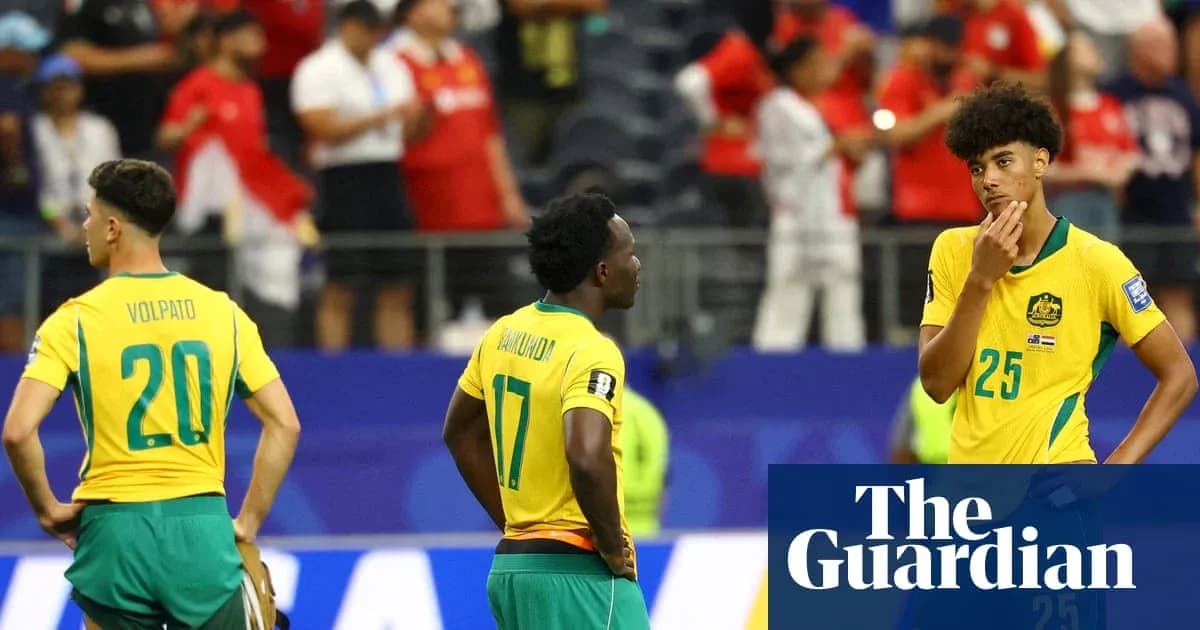
His penalty, side-footed and calm in intent, climbed when it needed to stay low. It kissed the crossbar and flew away, and with it went Australia’s shot at history. Awer Mabil sprinted to him first, instinctively, knowing that miss will replay in Herrington’s mind for years. When Egypt finished the job from the spot moments later, the youngster turned his back on the bar that had betrayed him, one hand in his mop of curls, shoulders folding in on themselves.
He bent over, trying to hide what everybody already knew. Jackson Irvine walked over and the look on his face said enough: those emotions were raw, and they cut deep. Nestory Irankunda, a foot shorter but no less burdened by what this meant, wrapped his arms around Herrington. These two are supposed to be the future of Australian football. On this night, they were dragged into its most painful present.
Australia will wait at least another four years for a first World Cup knockout win. The nagging thought will linger: they may not get a better chance than this for a long time.
Herrington was not alone in his torment. Harry Souttar, the defensive pillar who had emptied himself over 120 draining minutes, stepped up to take the first penalty. He looked spent. His run-up told its own story, and so did the outcome: the ball scooped over the bar, Egypt handed the early advantage without needing to make a save.
Tony Popovic played his late wildcard, sending on captain Maty Ryan in the dying stages specifically for the shootout. It changed nothing. Egypt were ruthless, converting all four of their penalties and ending the contest early, while Australia’s misses framed the night.
By then, the Socceroos had already dragged themselves out of a grim place. They had gone into half-time trailing 1-0, three hours into this tournament without a goal, their confidence somewhere below the foundations of this vast arena in Arlington. When Jordy Bos tried to test his left knee after a challenge and realised he could barely walk, that mood dipped even further. The first half had been a chess match played at arm’s length, both sides focused on dodging the press rather than breaking lines. A couple of half-chances were all Australia had to show.
Yet the opening exchanges had hinted at something brighter. Cristian Volpato had whipped a vicious effort that skimmed the crossbar. Bos had surged into the box with the swagger of a full-back who believes he can tilt a match. Then came the punch in the gut.
Australia’s press broke down on their right, ceding territory too easily. On the edge of the area, Irvine was caught out by Ziko and clipped him. The free-kick that followed, taken by Emam Ashour, smacked into Irvine in the wall, but the danger did not clear. The ball was recycled, Ashour drifted unnoticed to the back post, and the Egypt No 8 nodded in. One lapse, one punishment. Egypt had shown their edge, and the Socceroos were chasing.
Bos did not make it to the end. His withdrawal at the break forced a reshuffle and handed Kai Trewin a World Cup debut at right-back. Within 10 seconds, his direct opponent almost scored, a chaotic start to the second half that threatened to bury Australia before they could reset.
They held. They adjusted. And then, against the run of their own tournament, they struck back from behind.
The equaliser will go down officially as a Mohamed Hany own goal, but Aiden O’Neill deserved his name on the scoreboard. From the left side of the box he shaped a gorgeous, looping delivery into the danger area. It hung, inviting panic, and Hany provided it, diverting the ball into his own net. Australia finally had their goal, and a lifeline.
The setting could hardly have been grander. This roofed colossus in Arlington, ringed by 24,000 parking spaces, is a monument to American sport. On this night, it became a cathedral for football as well, though the spectacle did little to convert sceptics. The game stuttered and stalled, riddled with interruptions. After 100 minutes, there had been just four shots on target combined. For neutrals, it was a hard sell.
For Australians and Egyptians, it was agony. With the score locked at 1-1, every cross felt like a verdict. Patrick Beach punched clear under pressure. Egypt’s defenders, not the tallest line in the tournament, threw themselves at everything, scrambling and surviving.
Then Mo Salah woke up.
In the closing minutes of normal time, Egypt’s captain finally found his rhythm. He whipped in a cross that seemed tailor-made for Ramy Rabia, only for Beach to fling up a hand and tip it over. Salah then tried his own luck, forcing another nervous moment, before creating one more opening that Souttar blocked with a last-ditch intervention, the ball otherwise destined for the far corner.
Any doubts about Salah’s fitness evaporated in that spell, and in the grin he flashed at Souttar at the coin toss for extra time. Even he showed his limits, though, when a ricochet bounced kindly in the box early in the extra period and he lashed it over the bar.
The clock wound down. Egypt pushed harder, laying siege to the Australian goal in waves, but neither side could land the decisive blow. Both nations stood on the cusp of history, each chasing a first World Cup knockout win, each feeling it slip closer and then away again.
In the end, only the shootout could choose.
It chose Egypt. It chose clinical finishing over frayed nerves. It chose to etch Herrington’s name into a chapter no young player wants to own.
The Socceroos will talk about the progress, the promise of Irankunda and Herrington, the courage to stand up on a stage like this. But when they look back on this night, in this vast American cathedral of sport, they will know something harsher: the door to history swung open, and they could not walk through it.



