
Liverpool's Youth Gamble Faces Reality at Centre-Back
The first glimpse came in Qatar. Two teenagers, two centre-backs, catching Liverpool’s eye at the Under-17 World Cup. Within weeks, the club moved decisively: Mor Talla Ndiaye from Senegal and Austria’s Ifeanyi Ndukwe arrived for a combined £3.5m, the sort of under-the-radar deals that usually disappear into academy obscurity for a few years.
Instead, by July, they were starting a pre-season game together.
This is not how Liverpool drew it up.
A long-term plan collides with a short-term crisis
Under Matt Newberry, Liverpool’s head of global talent, the club has built a clear strategy: identify the best young defenders on the market and get them early. Ndiaye and Ndukwe are part of a wave that also includes Jeremy Jacquet, Giovanni Leoni and Noah Adekoya. The future, on paper, is heavily stocked.
The present is not.
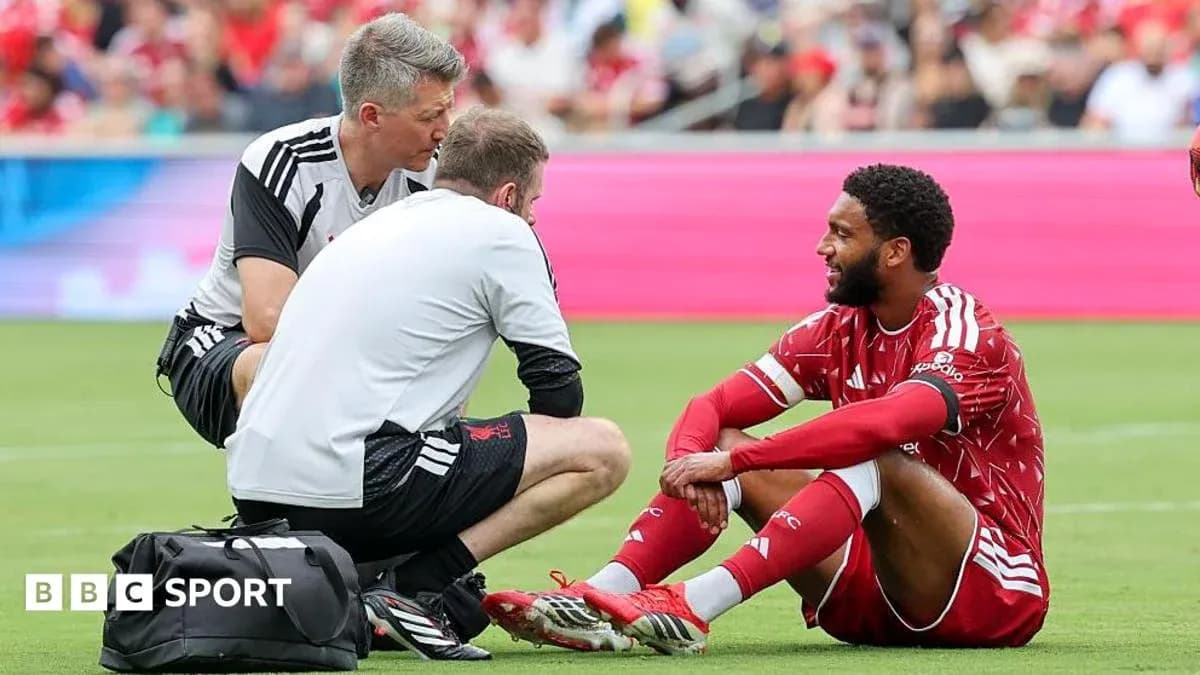
Joe Gomez lasted eight minutes against Sunderland before injury forced him off. Jacquet and Leoni were not fit to play. Suddenly, Liverpool’s opening pre-season fixture turned into a live experiment, with two 17-year World Cup standouts thrust together at the heart of the defence.
This was supposed to be a glimpse of tomorrow. It felt like an alarm for today.
Andoni Iraola had already sounded a warning. Even before Gomez’s setback, the new head coach described his defensive options as “very thin”. That was before the sight of his longest-serving player limping out of a low-key friendly and then missing training in Chicago on Sunday. The club expects an update on Gomez’s condition this week, but his history tells its own story.
Since joining from Charlton in 2015, Gomez has missed 225 games through injury, according to Transfermarkt. Every new issue now carries a familiar sense of dread.
Van Dijk alone – and not forever
Strip it back and the situation looks stark. Virgil van Dijk is Liverpool’s only fit senior centre-back.
He is 35. He played every minute of last season’s Premier League campaign. He remains Liverpool’s captain and defensive reference point, but he is no longer the all-conquering presence who once bent entire forward lines to his will.
Like Gomez, Van Dijk is also into the final year of his contract. There is a very real possibility that both could move on next summer. Liverpool are trying to plan beyond them, but they may have started that process a year too early for comfort.
One of the reasons the club felt able to let Ibrahima Konate leave on a free transfer for Real Madrid was their conviction that Jacquet and Leoni were the best young centre-backs in France and Italy. The fees back that belief up: £60m for Jacquet, £26m for Leoni.
Jacquet, 21, is in line to make his debut against Leeds on Sunday. Leoni, 19, will follow. On the training pitch, Liverpool see them as pillars of the next era. In games that matter, they are still learning the basics of Premier League life.
Just like Ndiaye and Ndukwe, they are prospects, not pillars.
“We need players. It’s fairly obvious.”
Robbie Fowler does not dress it up. “We need players. It’s fairly obvious,” the former Liverpool striker told BBC Sport in New York, where the Reds face Wrexham on Wednesday.
Fowler’s sympathy lies first with Gomez. “I’m very sad for Joe Gomez, who has been so unfortunate with injuries. This could have been a real chance to cement his place and for him to show that we don’t need another centre-half.”
Instead, his injury only sharpens the debate. “We’ve spent money on Jacquet and Leoni and the guidance that Joe and Virgil can give from their experience to the young lads is telling,” Fowler said. “We won’t see the best version of the young lads yet, but you do need that experience in the squad. And yes, the manager’s been on record saying that we need players and I would not be surprised if another centre-half is in that conversation.”
The message is clear: talent is not the issue. Timing is.
Missed chances and tight budgets
From the outside, Liverpool’s decision not to close a deal for Marc Guehi last summer now looks even more pointed. A ready-made Premier League centre-back slipped away, and a year on, the club are leaning on teenagers and injury-prone veterans.
They do have a buyback clause for Jarell Quansah, who joined Bayer Leverkusen for £35m last July, but there are no current plans to trigger it. The safety net exists only in theory.
The market context is unforgiving. Liverpool are pushing to sign Bradley Barcola, with Paris St-Germain valuing the forward at more than £100m. Inside the club, there is an acceptance that if that deal happens, it will place real limits on what else they can do this summer.
Jacquet and Victor Munoz have already cost £94.5m between them. Without major sales from Iraola’s current squad, nobody expects a repeat of last summer’s £450m splurge. The taps are not turned off, but they are no longer gushing.
So Iraola walks a tightrope: balance the books, refresh the attack, and somehow add experience at centre-back without the kind of blockbuster spend that solves everything in one move.
Depth, standards and a mentality gap
Fowler has watched Liverpool’s evolution from close quarters. His concern is not new, but it now feels more acute.
“When you look at Liverpool across the last decade, one of the problems that we’ve had is that the first 11 is more than capable but the argument that people have is the squad depth,” he said.
He believes depth drives standards. “I’m a big believer in getting the squad right because it gives everyone a lift and keeps people on their toes, knowing that if you’re not performing, someone else could do the job.”
He reaches back to the stories of Phil Neal’s era to make the point. “Go back to the days of Phil Neal and he’ll tell you stories about how players would never want to get injured because they knew that if someone else came, they wouldn’t get their place back.
You need that mentality and I think that has a real knock-on effect on standards.”
Right now, at centre-back, Liverpool do not have that. They have one fit senior player, one injured stalwart, a cluster of expensive youngsters and two teenagers fresh from the U17 World Cup.
The fear of losing your place only bites when there is someone proven waiting to take it.
A production line without a leader
Liverpool’s recruitment drive at the back has been relentless. From last summer through to January 2026, the club agreed deals for five centre-backs aged 20 or under at the time: Leoni, Ndiaye, Ndukwe, Adekoya and Jacquet. On a spreadsheet, the succession plan looks immaculate. On the pitch, it lacks a bridge between raw potential and top-level reliability.
Ndukwe underlined that potential against Sunderland. He impressed, showed personality, and did not look overawed. Yet he will have to continue his development elsewhere this season; he does not yet meet the criteria for a UK work permit and must go out on loan.
So another young centre-back leaves the building, at least temporarily, while the senior department thins out.
Liverpool can argue, with justification, that the long-term picture at centre-back is secure. They have invested heavily, scouted globally and stacked their academy and under-21 ranks with size, pace and technical quality.
What they do not have is experience in the here and now. In a league that punishes hesitation and naivety, that gap is glaring. The question is no longer whether Liverpool have enough talent at centre-back for the future. It is whether they dare to enter this season without one more grown-up in the room.



