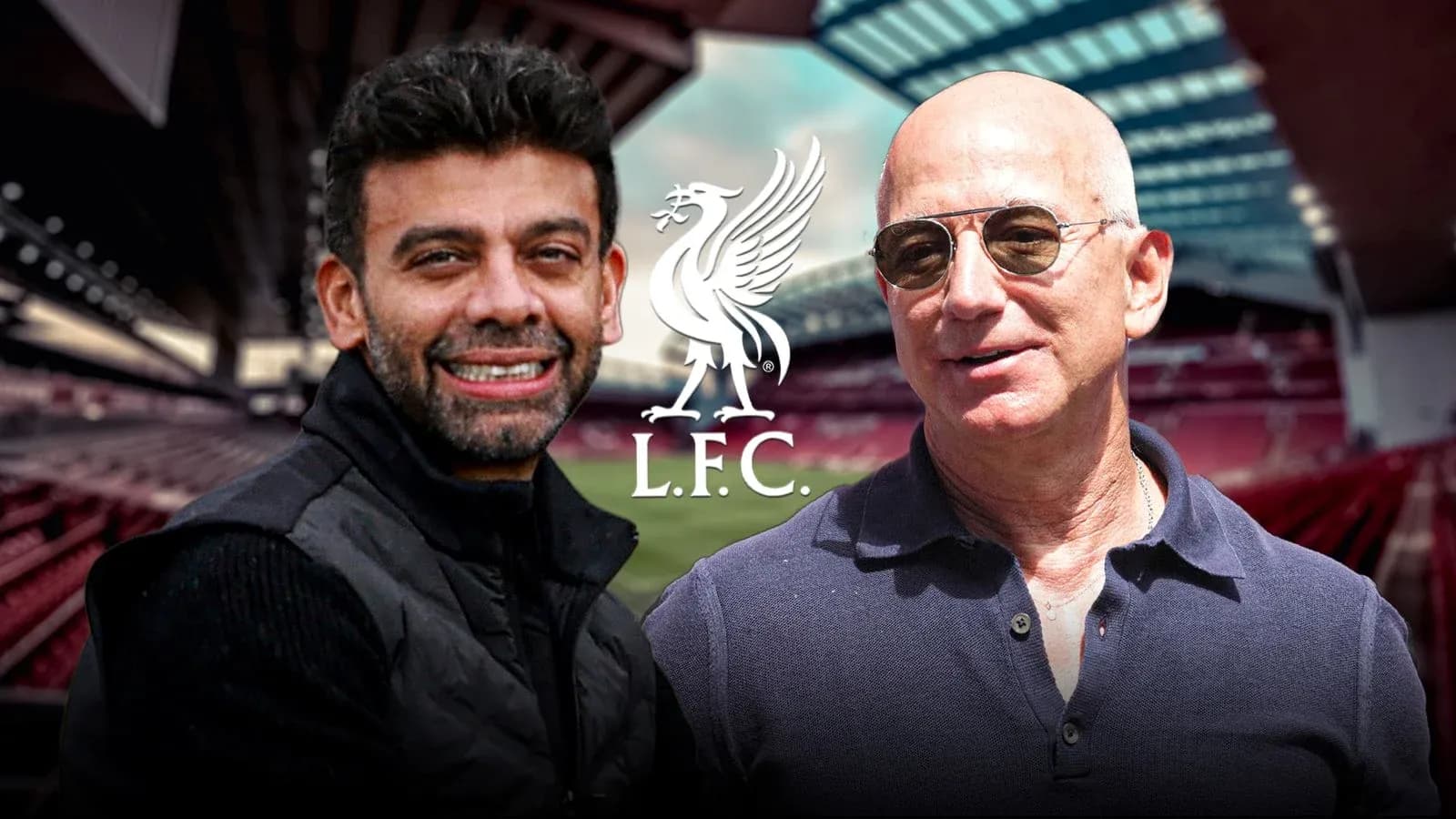
Liverpool on the Brink of Historic Ownership Deal with Jeff Bezos
Liverpool stand on the brink of one of the most eye‑catching ownership deals football has ever seen – with Jeff Bezos, the Amazon founder and one of the richest men on the planet, preparing to buy into the club.
Fenway Sports Group (FSG) are close to selling roughly a one‑third stake in Liverpool to a heavyweight consortium fronted by former QPR co-owner Amit Bhatia, with Bezos and Facebook co-founder Eduardo Saverin among the headline names involved. The proposed investment would value Liverpool at around £4.4bn ($6bn), placing the club in the rarefied air of the sport’s most lucrative transactions.
This is not just another minority stake. It is a statement of intent from global capital.
The money men: Bezos and Bhatia
Bezos needs little introduction. He built Amazon from a garage in Seattle in 1994 into an e‑commerce colossus and has since spread his wealth across aerospace through Blue Origin and media via Nash Holdings, which owns The Washington Post.
Forbes puts his personal fortune at about $281bn (£209bn). Only Elon Musk and Google co-founder Larry Page sit above him on the global rich list. When someone with that kind of financial firepower steps into football, people pay attention.
Bhatia is less of a household name but no less significant in this deal. The 46‑year‑old British Indian entrepreneur comes from an investment banking background and runs AyBe Capital, a multi‑asset investment firm that spreads its money across technology, media, real estate, consumer retail and health.
He is also deeply plugged into one of the world’s great industrial fortunes. Bhatia is married to Vanisha Mittal Bhatia, daughter of steel tycoon Lakshmi Mittal, whose estimated £23.2bn wealth makes him the 72nd richest person in the world, according to Forbes.
If Bezos brings global clout and tech‑era scale, Bhatia brings financial sophistication and a track record inside sport.
A growing sporting portfolio
Bezos has long been linked with American Football, exploring potential bids for the Washington Commanders and the Seattle Seahawks. To date, he has not taken a significant stake in any sports team or league. Liverpool would be his first major step into club ownership.
Bhatia, by contrast, has lived the grind of running a football club. He joined the QPR board at just 28 in 2007 when the Mittal family bought a 20 per cent stake, joining Bernie Ecclestone and Flavio Briatore at Loftus Road. He rose to become QPR chairman in 2018, a role he held for five years, and remained as director and co-owner until earlier this week, when he transferred his stake to majority owner Ruben Gnanalingam.
His sporting reach extends beyond football. Through AyBe Capital, Bhatia has invested in TGL, the tech-infused golf league fronted by Rory McIlroy and Tiger Woods, which pits six teams of elite players against each other across a season-long competition. AyBe also backs Switch Hitter, Kevin Pietersen’s media brand focused on exclusive content with the world’s top cricketers.
The Mittal family’s sporting footprint expanded again this year when Lakshmi Mittal acquired a 75 per cent stake in the Rajasthan Royals IPL franchise. The family know what it means to run elite teams in multiple sports, in multiple markets.
Liverpool would become the crown jewel of that portfolio.
Why FSG are ready to deal
FSG are not being forced to sell. They have transformed Liverpool since buying the club – then known as New England Sports Ventures – for £300m in October 2010 after the chaotic reign of Tom Hicks and George Gillett.
Under their stewardship, Liverpool have lifted every major trophy available: Premier League, Champions League, FA Cup, League Cup, Club World Cup, UEFA Super Cup. They rebuilt the club’s reputation and infrastructure and turned it into a commercial machine.
But the landscape has changed. The financial arms race at the top of European football has intensified, and FSG signalled as far back as 2022 that they were open to new investment. A small step came with the sale of a stake to Dynasty Equity in 2023, which injected £164m and valued the club at more than $4.5bn.
Now comes the big move. With the club’s valuation soaring, FSG can crystallise a huge profit on part of their holding while bringing in partners capable of pushing Liverpool into the next phase of global expansion.
It looks less like an exit and more like a calculated evolution.
The shape of the deal
Sky News report that the consortium is closing in on a roughly one‑third stake. At a £4.4bn valuation, that slice would rank among the richest deals in football history.
FSG will retain overall control. They remain the majority owners, with RedBird Capital and Arctos Sports Partners already holding minority stakes alongside the passive investment from Dynasty Equity. The new consortium would join that group rather than displace it.
Saverin, 44, adds another layer of Silicon Valley-era wealth and experience. He previously featured in a consortium that tried and failed to buy Chelsea during the 2022 auction that followed sanctions on Roman Abramovich after Russia’s invasion of Ukraine. This time, he appears to be getting his entry point into the Premier League via Anfield.
The identities of any other investors in the syndicate remain under wraps for now.
When will it land?
There is no fixed deadline, but the pace has quickened. Initial reports surfaced at the end of last month; talks have advanced to the point where an announcement could come as early as this week. It might slip into next week, but the direction of travel is clear.
Liverpool are already the fourth most valuable club in the world. With Bezos, Bhatia and Saverin poised to buy in at a £4.4bn valuation, the club edges closer to a new financial tier – one in which tech billionaires, global media, and multi-sport empires collide around one of football’s most storied institutions.
The question now is simple: what does a Liverpool powered by this kind of capital look like in the years ahead?