Liverpool and Chelsea's Tactical Showdown: A 1-1 Draw Analysis
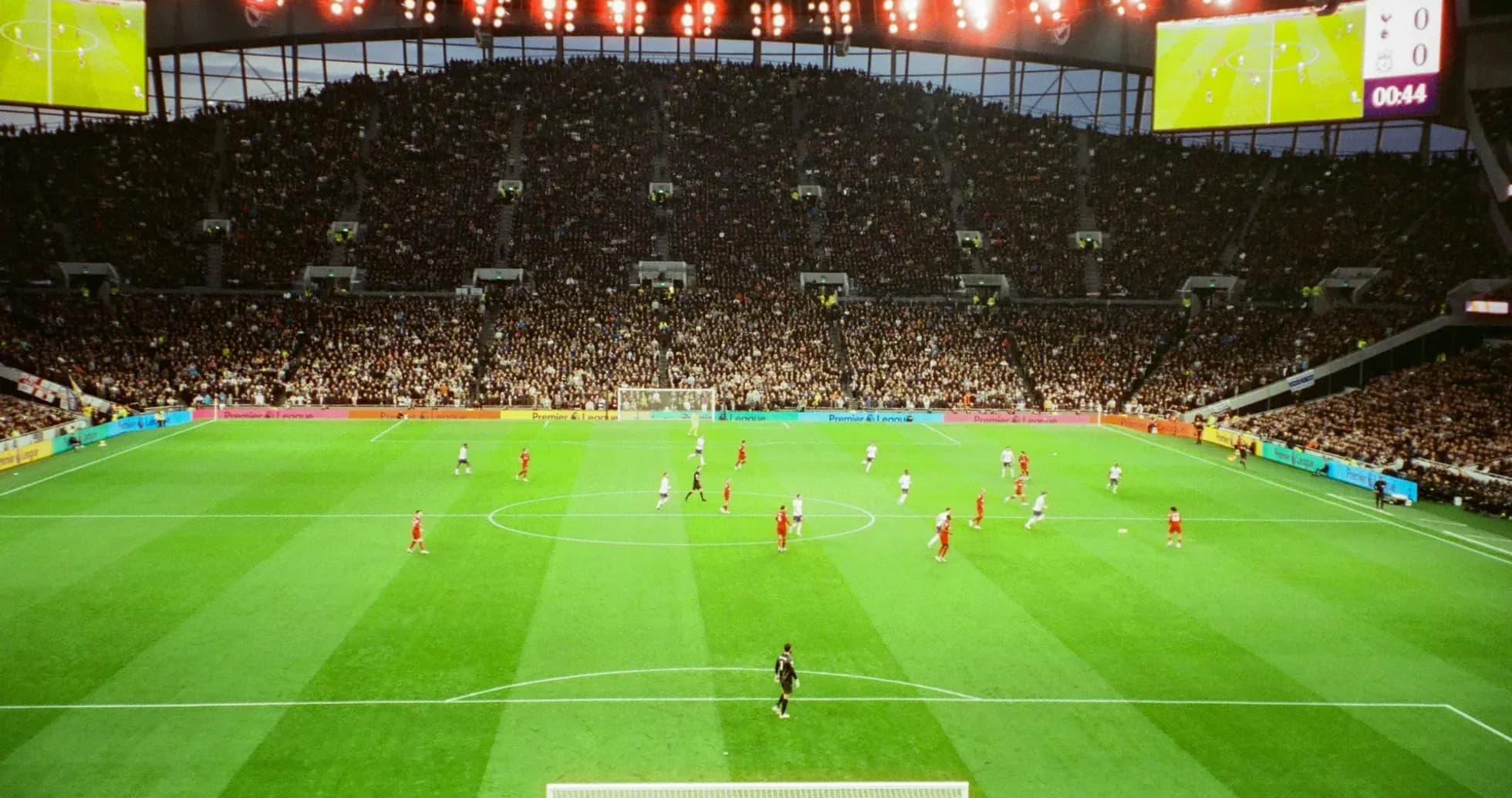
Anfield under grey Merseyside skies, the Kop in full voice, and two flawed but dangerous sides colliding late in the Premier League season. Following this result, Liverpool’s 1-1 draw with Chelsea felt less like a stalemate and more like a tactical arm-wrestle between two evolving projects, each constrained by absences yet rich in talent.
I. The Big Picture – Two Projects in Transition
This was Round 36 of the Premier League, a meeting between a Liverpool side sitting 4th with 59 points and a goal difference of 12 (60 scored, 48 conceded), and a Chelsea team in 9th on 49 points with a goal difference of 6 (55 scored, 49 conceded). The numbers underline the story: Liverpool are more explosive but looser, Chelsea a touch more balanced, especially on their travels.
At home this campaign, Liverpool have been formidable in attack, scoring 33 goals in 18 matches at an average of 1.8 per game, while conceding 19 at 1.1 per game. Chelsea, away from home, have produced 31 goals in 18 outings on their travels (1.7 per game) and conceded 25 (1.4 per game). The 1-1 at Anfield therefore lands almost exactly on the underlying equilibrium between Liverpool’s home firepower and Chelsea’s away resilience.
Arne Slot’s Liverpool have largely built their season on a 4-2-3-1 base (used 32 times), and the lineup here reflected that structure even without a formal formation listing: Giorgi Mamardashvili in goal behind a back line of Curtis Jones, Ibrahima Konaté, Virgil van Dijk and Miloš Kerkez; a midfield platform of Ryan Gravenberch and Alexis Mac Allister; and a fluid band of Jeremie Frimpong, Dominik Szoboszlai and Rio Ngumoha behind Cody Gakpo.
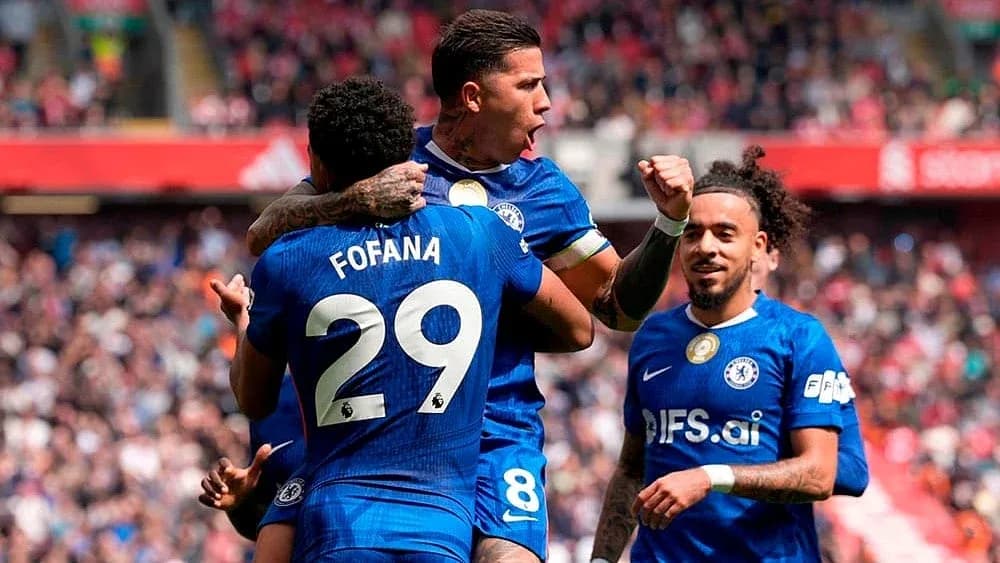
Calum McFarlane’s Chelsea mirrored that same 4-2-3-1 DNA (their most-used shape with 31 appearances), with Filip Jørgensen in goal, a back four of Malo Gusto, Wesley Fofana, Levi Colwill and Jorrel Hato; Moisés Caicedo and Andrey Santos screening; and a creative trio of Cole Palmer, Enzo Fernández and Marc Cucurella working behind Joã o Pedro.
II. Tactical Voids – Absences Shape the Chessboard
The team sheets were as notable for who was missing as for who played.
Liverpool were stripped of some of their usual cutting edge: Alisson (muscle injury), Wataru Endo (foot injury), Hugo Ekitike (Achilles tendon injury), Stefan Bajcetic (hamstring), Conor Bradley and G. Leoni (both knee injuries), Florian Wirtz (illness) and, crucially, Mohamed Salah (thigh injury). That is an entire spine of experience and end-product removed. Salah’s absence, in particular, meant Liverpool were without the league’s 6-assist creator in their ranks, forcing Slot to lean even harder on Szoboszlai and Gakpo as the creative and scoring axis.
Chelsea’s list was equally disruptive, especially in the final third. J. Derry and Robert Sánchez were out with concussion, J. Gittens with a muscle injury, an unnamed player with a hamstring issue, while A. Garnacho and P. Neto were listed inactive. Mykhailo Mudryk was suspended. For a side that leans heavily on rotation across the front line, losing Mudryk’s directness and the flexibility of Garnacho and Neto narrowed McFarlane’s options and placed a heavy burden on Joã o Pedro and Cole Palmer.
Disciplinary trends also cast a long shadow. Liverpool’s season card profile shows a pronounced late-game edge: 31.48% of their yellow cards arrive between 76-90 minutes, part of a broader pattern of intensity and risk as matches stretch. Chelsea, for their part, show a similar late spike, with 23.60% of their yellows coming in that same 76-90 window, and their red cards distributed across the match, including a 28.57% cluster between 61-75 minutes. This was always likely to be a contest where control might fray as legs tired.
III. Key Matchups – Hunter vs Shield, Engine Room vs Enforcer
Hunter vs Shield centred on Joã o Pedro. With 15 total league goals and 5 assists, he arrived at Anfield as one of the division’s most efficient forwards, having taken 50 total shots with 28 on target and drawing 54 fouls. His movement between the lines asked constant questions of Van Dijk and Konaté, who had to manage not just his penalty-box presence but his willingness to drop and combine with Palmer and Enzo Fernández.
Liverpool’s “shield” is less about pure defensive numbers and more about collective structure. Overall, they concede 1.3 goals per game, but at Anfield that tightens to 1.1. Van Dijk’s aerial dominance and Konaté’s recovery pace were crucial in preventing Chelsea’s transitions from turning into clear one-v-one situations for Joã o Pedro.
In midfield, the Engine Room duel was compelling. On one side, Dominik Szoboszlai orchestrated Liverpool’s play. Over the season he has produced 6 goals and 5 assists, with 2,090 passes at an 87% accuracy and 68 key passes. He is also a defensive presence: 52 tackles, 8 successful blocks and 29 interceptions, but his aggression has a cost – 8 yellow cards and 1 red, plus a missed penalty in the campaign that underlines his high-risk, high-reward profile.
Opposite him, Moisés Caicedo was Chelsea’s enforcer and metronome. Across the season he has delivered 1,940 passes at 91% accuracy, 87 tackles, 14 successful blocks and 56 interceptions, while committing 51 fouls and collecting 11 yellow cards and 1 red. His job at Anfield was twofold: smother Szoboszlai’s influence between the lines and protect the central channel against Gakpo’s drifting movements.
Enzo Fernández added another layer to Chelsea’s midfield. With 9 goals, 3 assists and 65 key passes from 1,936 total passes, he is both a deep creator and a late runner. His partnership with Palmer and Cucurella on the left allowed Chelsea to attack Liverpool’s half-spaces, especially when Frimpong and Kerkez pushed high.
IV. Statistical Prognosis – xG Balance and Defensive Solidity
Even without explicit xG numbers, the season data offers a clear lens. Heading into this game, Liverpool’s overall attacking profile (1.7 goals per match in total) and Chelsea’s defensive record on their travels (1.4 conceded per game) pointed towards a narrow margin – something like a 1-1 or 2-1 either way felt most likely. The final 1-1 therefore aligns closely with what their Expected Goals profiles would suggest: Liverpool creating slightly more volume, Chelsea carrying enough punch through Joã o Pedro and Enzo to always threaten.
Liverpool’s 10 clean sheets overall and Chelsea’s 9 show that both can manage games when the structure holds. Yet both sides also have a chaotic streak – Chelsea’s red-card history and Liverpool’s late yellow surge – that often drags matches into transitional battles. At Anfield, those tendencies largely cancelled each other out rather than exploding into late drama.
From a squad-analysis perspective, the draw underlines two truths. For Liverpool, the absence of Salah and Ekitike stripped away a layer of ruthlessness; they remain capable of sustained pressure but lack a guaranteed closer when their main finisher is missing. For Chelsea, the reliance on Joã o Pedro and the double pivot of Caicedo and Enzo is stark; when they function, McFarlane’s side can go toe-to-toe with Champions League-chasing opposition, even in hostile environments.
Following this result, the tactical verdict is that both projects are structurally sound but still incomplete. Liverpool’s ceiling rises sharply once their injured core returns. Chelsea’s, meanwhile, depends on whether they can add more variety around their central stars and reduce the disciplinary volatility that so often shapes their margins in tight games like this one.