Lionel Messi's Impact in Argentina's 3-0 Victory Over Iceland
Lionel Messi needed barely a heartbeat to turn a routine tune-up into his own stage.
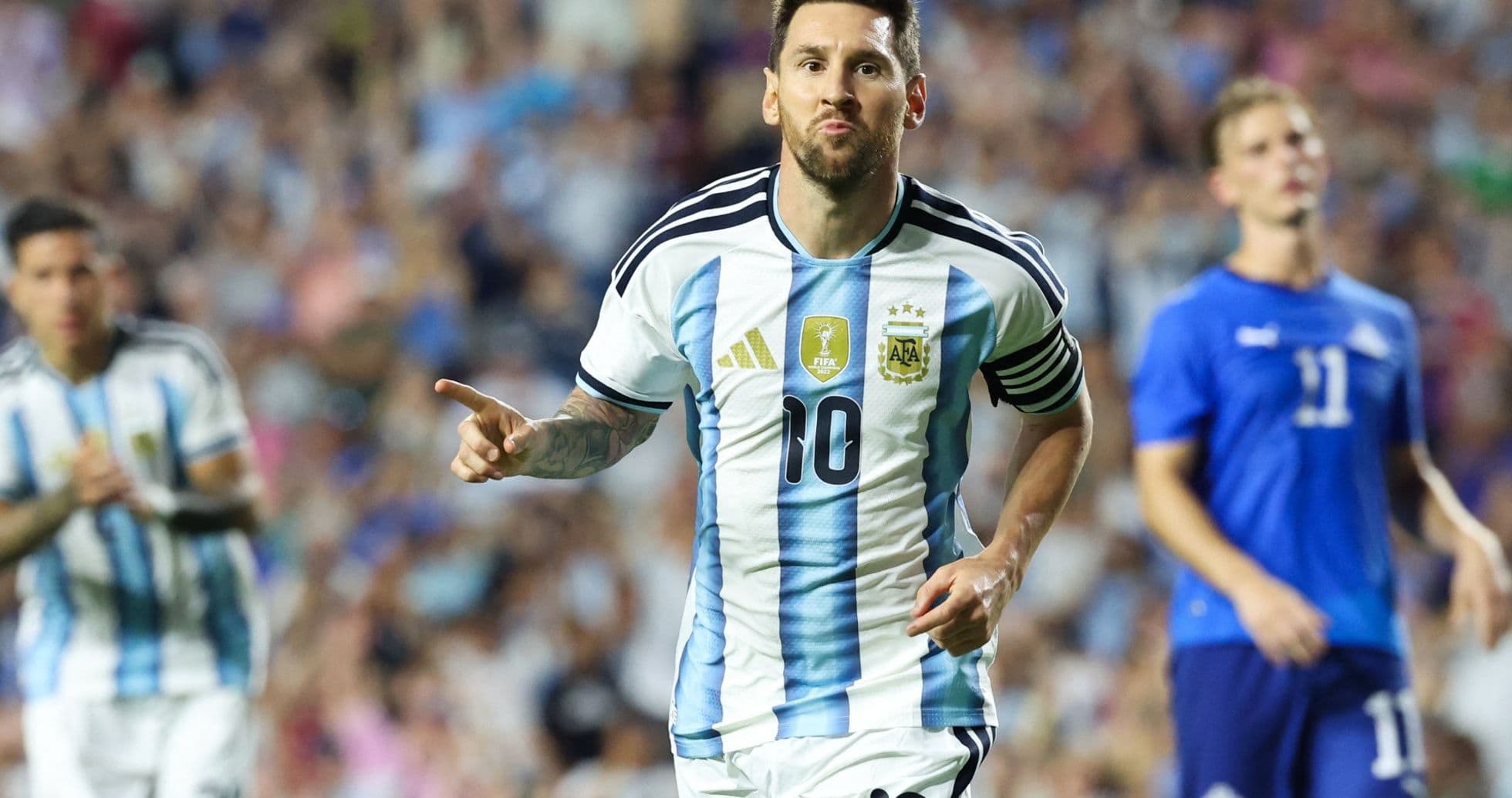
Argentina were already in control in Auburn, Alabama, when the 38-year-old finally peeled off his bib and stepped onto the pitch in the 70th minute. Within seconds, he had sliced Iceland open, earned a penalty and then buried it himself, as the world champions closed out their World Cup preparations with a smooth, assured 3-0 win in front of a heaving 88,000 crowd.
This was supposed to be a fitness check. It became a reminder.
Messi’s instant impact
Messi had sat out the weekend win over Honduras, nursing left hamstring soreness that had cut short his last outing for Inter Miami on May 24. All eyes, all cameras, all conversations in Auburn circled around one question: how would he move?
Answer: sharply.
His first real action came with a trademark slide-rule pass, a throughball that sliced between Iceland’s centre-backs and sent Lautaro Martinez racing in on goal. Goalkeeper Elias Olafsson charged out, clattered into the striker and left the referee with an easy decision.
Messi stepped up. No hesitation, no gentle warm-up strike. He lashed the penalty high into the roof of the net, goal number 117 of a record-breaking international career, and Argentina’s second of the night.
His World Cup place was never truly in doubt, but this was the clearest sign yet that he will arrive at a sixth tournament — a record he will share with Cristiano Ronaldo — ready to shape another campaign.
He wasn’t finished. Dropping between the lines, he started to toy with a tiring Iceland midfield. For Argentina’s third, he slipped another precise pass into the right channel for Rodrigo De Paul, who squared across the face of goal for Thiago Almada to tap in. Simple finish. Ruthless construction.
Scaloni experiments, Barco takes his chance
Before Messi’s entrance, Lionel Scaloni had used this final friendly to stretch his squad and his options. Julian Alvarez, Enzo Fernandez and Alexis Mac Allister all began on the bench, the head coach rolling out an experimental XI and asking some fringe players to make their case under the floodlights.
The night nearly started with a jolt. In the opening minutes, Mikael Egill Ellertsson found himself staring at an open goal and ballooned his finish over the bar. It was a glaring miss and a warning.
Argentina reacted. They tightened their grip on the ball, pressed Iceland back and forced the first breakthrough from a scramble. A loose clearance in the area dropped invitingly to Strasbourg defender Valentin Barco, who drilled a low shot into the bottom corner to make it 1-0. A defender finishing like a seasoned No 9, and a timely reminder of the depth Scaloni can now call on.
Nico Paz, one of those handed a start in Messi’s absence, had the chance to underline his own credentials before half-time. He drove into space and unleashed a fierce effort, only to see Olafsson block it with his face. The opportunity went begging, and with it a moment that might have changed the tone of his evening.
At the break, Scaloni shifted the pieces again. Fernandez and Mac Allister came on among five changes, a clear sign that this was still part laboratory, part showcase.
Lautaro Martinez entered as well and could easily have killed the contest on his own. Twice he found space, twice he beat Olafsson, and twice the ball came back off the post. The misses kept Iceland in the game on the scoreboard, if not in the flow of play, and delayed the inevitable roar that would greet Messi’s arrival.
When the No 10 finally stepped across the white line, the match changed gear. Not in chaos, not in drama, but in certainty. Argentina moved with more purpose, more angles, more menace. The penalty, the third goal, the control — it all flowed from there.
Scaloni’s side left Alabama with a clean sheet, three different scorers and, crucially, no fresh injury concerns. For a defending champion, that is close to the perfect send-off.
Iraq stumble as Venezuela strike early
On the same night in Bridgeville, Illinois, Iraq’s World Cup send-off told a very different story.
Facing Venezuela in their final warm-up, Iraq slipped to a 2-0 defeat that exposed familiar frailties and trimmed some of the optimism around their first appearance at the finals in 40 years.
The damage began early. In the 17th minute, midfielder Cristian Casseres pounced inside the area and finished from close range to put Venezuela ahead. It was a simple goal, born from sharper reactions and a quicker reading of the second ball.
Iraq never fully recovered. Just after the interval, Casseres again seized the moment, winning possession and driving his team forward before feeding Jesus Ramirez. The striker still had work to do, but he glided past a defender and hammered a powerful shot into the net for 2-0.
Any hope of a late response vanished in the 72nd minute when Ali Youssef was shown a straight red card, leaving Iraq to finish with 10 men and no way back.
They now head to the World Cup with the weight of history on their shoulders and a brutal schedule in front of them. Group I opens against Norway on June 17, followed by clashes with France and Senegal.
Argentina leave the United States looking every inch a champion ready to defend its crown. Iraq leave knowing the real work starts now.