Lamine Yamal: A Season of Triumph and Turmoil in La Liga 2025-26
Lamine Yamal began this season with a crown on his head and a flag in his hands. He ended it the same way.
On the very first night of 2025-26, with the last kick against Mallorca, Barcelona’s new No 10 – the boy given the shirt of Ladislao Kubala, Luis Suárez, Diego Maradona, Rivaldo, Ronaldinho and Lionel Messi – scored his first goal as an adult and staged his own coronation. La Liga’s title race opened with a teenager stepping into a myth.
Nine months later, as Barcelona’s bus crawled through the city on the victory parade, that same teenager stood on the top deck holding a Palestine flag. Eighteen years old. Three league titles. A season of injuries and what he later called an “internal abyss”, yet somehow the face of a new era.
“This is something I don’t normally like but I spoke to him and if he wants to it’s his decision,” Hansi Flick said. “He’s old enough: he’s 18.” The coach who had become a father figure, who lost his own father the morning they clinched the league and chose to share that grief with his “other family”, now had his second title. Asked if he had ever felt so much love, Flick didn’t hesitate. “No, never.”
Barcelona had effectively settled the league with seven games to spare, crushing Espanyol in the city derby while Lamine Yamal sprinted towards the line, arms spread wide like Usain Bolt. They sealed it mathematically in week 35, in a clásico that decided the championship for the first time in 94 years. Three days after a dressing‑room fight between Fede Valverde and Aurélien Tchouaméni left Real Madrid’s vice‑captain in hospital with “craniofacial trauma”, it was Marcus Rashford who landed the final blow.
Barcelona had played in three different homes this season and won every league game in all of them. This clásico was their 11th consecutive victory, their 23rd win in 25 league matches since the previous meeting, 600km west. A machine in motion, powered by a teenager with the No 10 on his back.
It hadn’t always looked like this.
Back in late October, Barcelona were wobbling and Flick was warning that “ego kills success”. Rayo had exposed what became known as The Flick Line. Sevilla had sliced them open. Madrid then beat them 2-1 at the Santiago Bernabéu to go five points clear.
That night Jude Bellingham dismissed Lamine Yamal’s words as “cheap”, posting Elvis’s A Little Less Conversation for good measure, while Dani Carvajal gave him the old jibber-jabber gesture. Madrid were enjoying the sound of their own voice. They had another mouth to worry about, though: Vinícius Júnior stomped off with 18 minutes left, the first crack in the façade.
Xabi Alonso tried to steer the conversation back to “what really mattered”. It turned out this was what really mattered. The coach was left exposed, fault lines widened, and the season began to unravel.
Barcelona’s Super Cup win in the next clásico closed a spell of supposed Madrid “control” that Alonso felt had started too soon and ended too soon. He departed for the Club World Cup unhappy; his replacement, Álvaro Arbeloa, talked a good game but coached a bad one. He invited players to open up on his grey sofa, brought them doughnuts when they played well. They didn’t get many doughnuts.
“I’m not Gandalf,” he said. He was right. By the time the great rivals met again in May, Madrid were out of Europe, out of the Copa del Rey and almost out of their minds. Divided, drained and desperate for it to be over, they walked off the pitch 12 points behind, nine to play, empty-handed again just like last season.
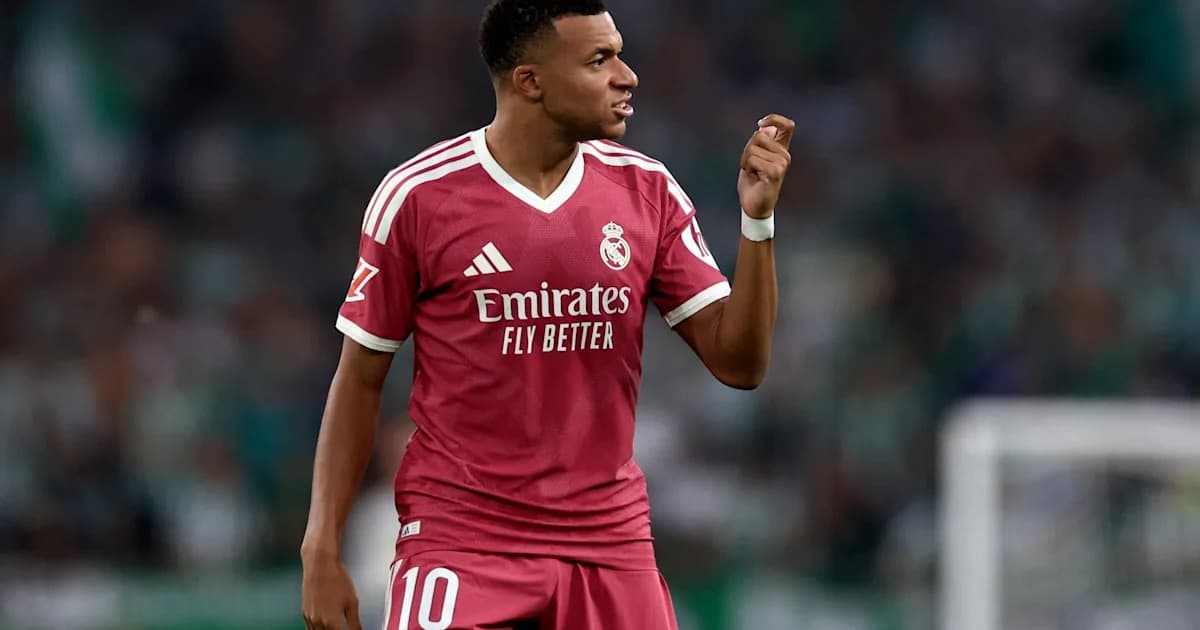
Kylian Mbappé? Also out. Off to Sicily. He posted “Let’s go Madrid!” when they were already 2-0 down.
Two days later, more than a decade since he last faced the media, Florentino Pérez walked into a press room and went full Trump. An incoherent monologue that explained nothing and somehow explained everything. He did at least identify Madrid’s problem and fix it: the newspaper ABC. Subscription cancelled.
Barcelona, meanwhile, were champions. For once, the trophy appeared on the night it was actually won and then rode the city with them. The Super Cup sat on the bus as well. The European Cup, the one they wanted most, did not. Nor did Madrid’s. Their better performances still came in Europe, but not good enough to finish the job.
Villarreal and Athletic didn’t even escape the league phase, though San Mamés was the only stadium where champions PSG failed to score. Atlético Madrid, who had knocked Barcelona out of both domestic cups and had long since let the league go, came closest. But they finished with nothing. Arsenal dumped them out of their first Champions League semi-final in a decade and in their first Copa del Rey final for 13 years they were “Matarazzoed”: Real Sociedad won on penalties.
A backup goalkeeper made the decisive save, then kissed the cheek of a former ballboy who ran up and buried the winner. That former ballboy, Álvaro Odriozola, hadn’t even played in the final. He still said he wouldn’t swap it for “anything in humanity”.
Barcelona, Madrid, Atlético and third‑placed Villarreal will return to the Champions League next season, joined by Betis, who claimed Spain’s new fifth spot. Below them, Copa del Rey winners Real Sociedad head back into Europe with Celta Vigo and Getafe.
Getafe’s manager, Pepe Bordalás, declared that qualification would “go down in football history”. That might be stretching it, but the context matters. They started the season with 13 first‑team players, two of them goalkeepers. At halfway, they were in the relegation zone and so desperate they used full-back Allan Nyom as a centre-forward.
“I wouldn’t wish this on anyone,” Bordalás said. This from a man who has inflicted plenty of misery on others. Then came January, four little-known loanees, and a staggering rise. Getafe finished seventh, in Europe, with the second fewest goals, lowest possession, fewest shots and most fouls in the league. They did it their way. They always do.
Somewhere inside Getafe’s pitch invasion on the final day, a cluster of red shirts waited. Osasuna’s players were still out there, stuck between joy and dread, waiting for other results to finish. Their captain called those minutes with iPads, phones and radios “agonising, the worst feeling I’ve ever had”.
When safety finally came, they exploded, leaping around with Getafe fans and Nyom, who said he wanted to be sure Osasuna were safe before disappearing into the dressing room.
“It’s been … weird,” admitted Osasuna coach Alesio Lisci. Weird and cruel. His team had already celebrated survival a month earlier after a 99th‑minute winner against Sevilla. They never imagined they would have to clamber clear again. In the end, others saved them.
It was that kind of season. The top stayed stable, the same five or six clubs all year, but the bottom was chaos. Sudden plunges, wild revivals, teams flipping from brilliant to broken in weeks. Only Real Oviedo went quietly.
Back in the top flight after 24 years, with Santi Cazorla finally making his primera debut for the club he joined at eight and rejoined at 38 on the minimum wage, Oviedo were supposed to be the romance story. Instead, they were gone early. Three managers. Two away wins. Nine home goals all year. No fairytale, no drama, just a slow slide.
Everywhere else, the fight to avoid the other two relegation spots was savage. In a league where a few points separated Europe from oblivion, nine clubs reached the penultimate round still at risk. Espanyol, Sevilla, Alavés and Valencia pulled clear then, leaving five for the final day, all tied together.
Elche and Girona met at Montilivi in a straight shootout. All or nothing. A late Thomas Lemar shot crashed off the bar, the difference between Girona living and falling. They had taken four points from their last eight games. Two seasons ago they had pushed for the title; last season they were in the Champions League. Now they dropped with 41 points – a total that would have been enough to survive in any other season this decade.
Mallorca went with them, bottom of a three‑team mini‑league with Osasuna and Levante, all on 42. They fell despite having a striker who scored 23 goals, a mark no one had matched in 26 seasons.
“This hurts,” said coach Martín Demichelis. “Football has been cruel,” lamented Girona’s Míchel Sánchez. “This league was really crazy,” added Elche’s Eder Sarabia. His team survived. Just.
And still, there was one more story. The best, in a way, saved until last.
Rayo Vallecano, the club that went from little Rayo to Rayo effing Vallecano, the barrio side forever slightly out of place and all the better for it, reached their first European final. They went to Germany for the Conference League showpiece and came back without the trophy. Which, like most things with Rayo, felt wrong and somehow exactly right.
In Leipzig, a banner stretched across the stand told the truth better than any piece of silver. “I have known no greater victory than being with you in defeat,” it read.
La Liga 2025-26 was a season of titles and tumbles, of grey sofas and scratch-and-sniff shirts, of presidents cancelling newspapers and coaches comparing themselves to catapults. It was a season that crowned a teenager as its best player – Lamine Yamal finished with 24 goals and 11 assists in all competitions, the decisive force in Barcelona’s surge to the line – and still found room for the improbable.
Carlos Espí scored 10 goals in Levante’s last 14 games, the only matches he started all season, and almost dragged them to safety on his own. Vedat Muriqi hit 23 and still went down. Joan García produced a “science fiction” save in a derby, prompting Lamine Yamal to cry: “Mother of God almighty, what a goalkeeper!”
Luis Castro slipped on his debut and then orchestrated a miracle at Levante. Eder Sarabia kept Elche up with a slingshot. José Bordalás sharpened Getafe down to a stub and still carved out Europe. Rino Matarazzo delivered Real Sociedad a Copa del Rey after a club president had asked ChatGPT if he was any good and got a “no”.
The manager of the year? Villarreal-bound Iñigo Pérez, who steered Rayo through a season of no pitch, no training ground, no hot water and endless problems to their highest-ever finish and a first final. “It’s easier to reach success through love,” he said. And he proved it.
By the end, the team of the season read like a map of the league’s madness: Joan García in goal for Barcelona; Marcos Llorente, Florian Lejeune, David Affengruber and Carlos Romero at the back; Fermín López, Luis Milla and Pablo Fornals in midfield; Lamine Yamal, Vedat Muriqi and Alberto Moleiro in attack. Around them, a bench of stars, journeymen, late bloomers and future legends.
Some seasons drift by. This one did not. It left scars and songs, banners and broken hearts, a teenager on a bus with a flag, and a league wondering what, exactly, he might do for an encore.