
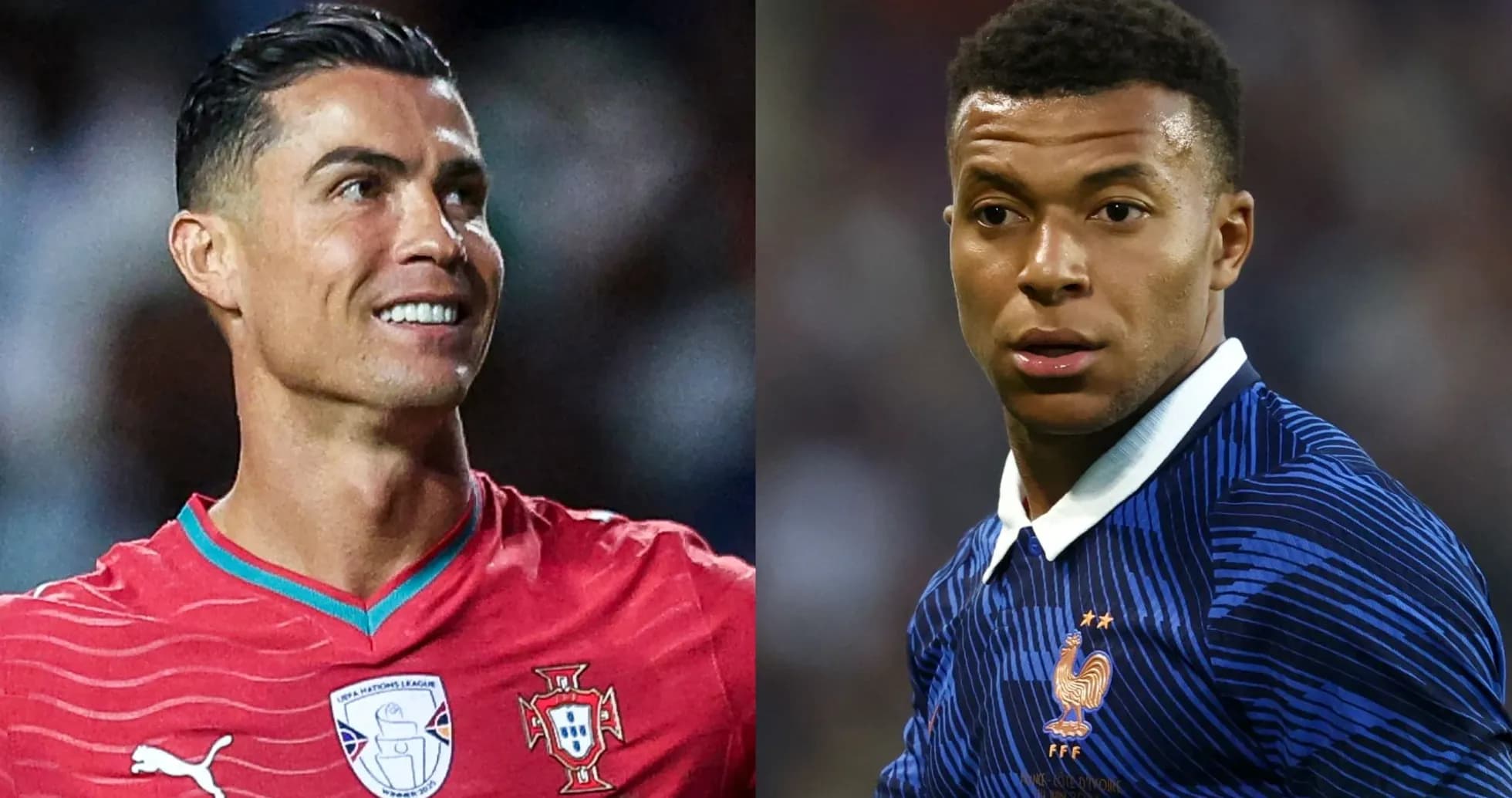
Kylian Mbappé: The Soloist in Team Football
Kylian Mbappé has spent most of his life being told he was born to be the leading man. The numbers back it up: 86 goals in 103 games for Real Madrid, 56 for France, a career built on stepping into the spotlight and owning it.
But for Frank Leboeuf, that is exactly the problem.
The former France defender, speaking to GOAL, painted a picture of a footballer shaped from childhood to be a soloist in a sport that keeps proving it rewards orchestras.
“He's been created to be the main man,” Leboeuf said. Since the age of eight, Mbappé has been treated as a future great, pushed towards superstardom, and he has delivered on that promise. The pace, the finishing, the highlights. All there. All the time.
The game, though, has moved in another direction.
The star who never learned to share
Leboeuf’s argument is blunt: Mbappé still doesn’t truly grasp the collective essence of elite football.
He points to recent history. Liverpool’s Champions League winners. The current Paris Saint-Germain. Real Madrid’s improbable run to a final when, by any logical measure, they should have gone out.
“When Real Madrid played awfully and they shouldn't have gone to the final against Liverpool,” he recalled, thinking back to the knockout ties against Chelsea, PSG and Manchester City. “No way they should have won those games but they managed to because of the collective spirit.”
For Leboeuf, that is the missing software in Mbappé’s “computer”. The modern game, he says, has elevated individual glory to a level that distorts priorities. The Ballon d’Or, once a nice extra, now dominates the conversation. The culture demands instant stardom. “We live in a dictator of emergency,” as he calls it, and footballers are shaped by that environment.
Mbappé, then, is not the only one to blame. “It's a different world and it's not only Kylian Mbappe guilty for that,” Leboeuf insisted. The sport itself, and those around it, have helped create a hierarchy where the individual sits above the team.
And he believes the evidence is already there on the pitch.
Why the super-attacks don’t work
Leboeuf doesn’t swoon over big-name front lines. He studies how they function. Or don’t.
“We saw Neymar, Messi, Mbappe playing together. Now we see Vinicius Jr and Mbappe playing together. It doesn't work because they don't fit into a collective spirit,” he argued.
The point isn’t that these players lack talent. It’s that the chemistry, the sacrifice, the constant off-the-ball work and instinctive understanding that define great teams are not automatic just because you stack world-class attackers together.
Leboeuf contrasts that with Liverpool’s peak under Jürgen Klopp. There, stars emerged from the system rather than bending it around themselves.
“Who was a star at Liverpool? Mohamed Salah? Yeah, okay, but Virgil van Dijk was also a star and Alisson was a star and all those players who fought together, [Andy] Robertson, Trent Alexander-Arnold, the two wing backs, they were the stars. They were crossing to each other to score goals. That was insane.”
That, to him, is football at its purest: a collective in which every role matters, where the glory is shared and the machine is greater than any one part.
He even admits he never warmed to pure dribblers, not even the greatest. “I wasn't a big fan of [Diego] Maradona even if he was a genius and a star. I didn't like people dribbling. I love people giving a pass one touch because he saw everything. Anticipation is the special skill for me.”
So when Mbappé slaloms past four defenders, Leboeuf shrugs. “It doesn't impress me because he doesn't see the game.” His admiration goes instead to players like Rodri and Kevin De Bruyne, who read the pitch two steps ahead and move the ball before pressure arrives.
In that world view, Mbappé’s brilliance comes with a ceiling until he fully submits to the idea that the team, not the superstar, is the real headliner.
A restless superstar and the Premier League question
Mbappé’s numbers at Madrid remain extraordinary, yet his body language in recent months has often told another story. Frustration. Arms outstretched. Glances to the bench. Whenever a player of his stature looks even slightly unsettled, the same question surfaces: what next?
The Premier League, inevitably, hovers in the background.
Leboeuf, who knows English football from his own playing days, believes the current version of the league would suit Mbappé far more than the one he experienced.
“If it was the Premier League from when I played, I would have said no he's not ready for that,” he admitted. The old English game, more direct and more physical, might have clashed with Mbappé’s style.
Now, though? Different landscape. More space, more technical teams, more room for a player with Mbappé’s pace and movement to explode in transition. “With the pace that he has and the possibility that you can find in England when you play in the Premier League, yes I think Kylian Mbappe can play in any league in the world and that would be nice to see him in the Premier League fighting with Erling Haaland as a top scorer.”
The idea of Mbappé and Haaland going head-to-head for the Golden Boot would light up any season. But Leboeuf quickly brings the conversation back down to earth.
The fee, the wages, the package required to prise him away from Madrid? “With the price that it would cost, nobody can buy him right now. I don't think so.” In his view, there is no obvious contender ready to move next season.
And even if there were, tactical fit looms large.
Why Arsenal and others might not suit him
Arsenal, on paper, need a centre-forward. In reality, Mikel Arteta’s system asks different questions of that position.
“Arsenal will need a striker but they don't use strikers,” Leboeuf said. Their No.9 often acts as a facilitator, dropping in, linking play, creating lanes for runners around him. It is not a role built to indulge a pure penalty-box killer or a wide forward who wants every attack to run through him.
Leboeuf imagines Mbappé in a system where the central striker waits on service that never quite arrives. “They go around the strikers so Mbappe would be very upset to have Gyokeres’ role where you wait for crosses, wait for passes and it never comes.”
He then points to Haaland as a counter-example: a superstar who has accepted life on the periphery of the ball under Pep Guardiola.
“What Haaland has been capable of accepting with Pep Guardiola's system, touching one or two balls per period, I'm not sure Kylian Mbappe will accept that.” The Norwegian has adapted, sacrificed touches and involvement for devastating efficiency. Leboeuf doubts Mbappé would tolerate that kind of isolation.
His prediction is clear: Mbappé would drift deeper, seek more touches, reshape the structure to suit his instincts. “So he will go back down as number 10, will try to touch the ball and maybe create a mess on the coach’s tactic.”
That is the tension at the heart of any future move. To get the best version of Mbappé, a team must give him responsibility and freedom. To win at the very highest level, that same team must preserve its collective balance.
For Leboeuf, the question is no longer whether Mbappé can conquer any league. It’s whether he is ready to let the team, not the man, be the real star.



