Kylian Mbappé's Powerful Response to Racism
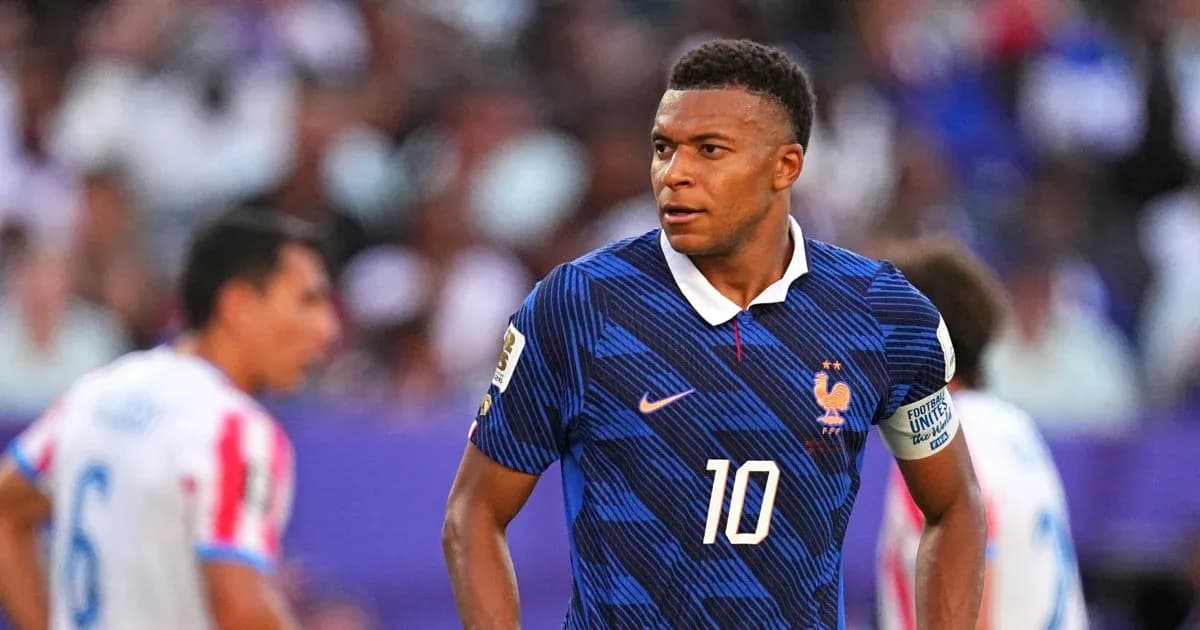
Kylian Mbappé has never been shy of big stages. On Saturday in Philadelphia, his right foot settled a World Cup knockout tie. Two days later, his words detonated a political storm.
The France captain hit back fiercely at Paraguayan senator Celeste Amarilla after she launched a racist tirade at him on social media in the wake of Paraguay’s World Cup elimination, branding her “a despicable woman and unworthy of your position.”
From penalty spot to political flashpoint
Mbappé’s penalty had been the cold, decisive moment in a bruising 1-0 win for France, a bad-tempered contest that pushed both sides to the edge and sent the world champions into the quarter-finals. For Paraguay, it was the end of a stirring run. For one of its lawmakers, it became the start of something far uglier.
On X, Amarilla published a lengthy racist rant, describing Mbappé as a “colonized Cameroonian, desperately trying to pass himself off as French,” and a “brute” who had not learned to write. She went further, claiming Paraguay’s players should have slapped him after the match.
The reaction was instant. And this time it was not about tactics, systems, or VAR calls.
Mbappé fires back
Mbappé chose his moment and his target. He did not only defend himself; he shielded the Paraguayan players she had tried to drag into the mud.
“Madame Celeste Amarilla, you are a despicable woman and unworthy of your position. You do not represent Paraguay, that country which has sweated passion and honor throughout the competition,” he wrote in a statement on X.
Then he turned the focus back on what Paraguay had actually done at the tournament – and what her words had erased.
“Through your recklessness and your brazen racism, the entire world has already forgotten the journey and the historic effort that your players accomplished during this World Cup, making way for an incompetent woman who gives the worst possible image of her country.
“I will never allow people like her the freedom to spread their hatred and racism across the world.”
In a few lines, the France captain moved the conversation from a personal insult to a wider fight over what football, and this World Cup, should stand for.
FFF goes to the courts
The French Football Federation did not leave him to fight alone. It escalated the matter, announcing it would file a criminal complaint over Amarilla’s comments.
“These remarks are criminal and reprehensible. They must be prosecuted here as elsewhere. The FFF is reporting the matter to the public prosecutor’s office with a view to legal proceedings,” the federation said.
The statement pulled no punches.
“These remarks are utterly abhorrent and unacceptable. These remarks bring shame upon those who make them and those who disseminate them. The players of the French national team represent France; it is our country that is being insulted.”
For the FFF, this is no longer just a social media controversy. It is a legal and moral line they are determined to draw.
Paraguay distances itself
In Asunción, the backlash forced institutions to move quickly. The Paraguayan government issued a formal statement “deploring and rejecting” Amarilla’s words, stressing that they clash with the values the country claims to promote.
The government underlined that her statements were “contrary to the values and principles that inspire peaceful coexistence and respect for human dignity that our country promotes,” and insisted she spoke only for herself.
“The statements of the aforementioned legislator correspond exclusively to the exercise of her individual responsibility as a member of the Legislative Branch and in no way represent the position of the Government of the Republic of Paraguay or the Paraguayan people,” the statement read.
Basilio Nunez, president of Paraguay’s National Congress, went public as well, trying to reclaim the image of a team that had earned respect on the pitch.
“As President of the National Congress, I strongly reject racist, xenophobic messages and those that incite violence against any person,” he said. “The Paraguayan national team gave their all with honor and grit at the World Cup. Politics and sports should be kept separate.”
The message was clear: Amarilla stands alone.
The Élysée weighs in
Once Mbappé speaks, France listens. This time, so did the president.
Emmanuel Macron’s office confirmed that Paraguay’s president had written to him to express support and condemn the remarks directed at the France captain. Macron then went public with his own words on X.
“Another goal for Kylian Mbappé. Against racism this time. All my support. When words smear, our values respond: dignity, respect, fraternity,” he wrote.
It was a striking image: a striker who usually deals in goals and trophies being framed as a symbol in a broader fight, with the Élysée Palace standing firmly behind him.
Inside the France camp
Within the French setup, there was anger, but also a sense of grim familiarity. Assistant coach Guy Stephan summed up the mood in a clipped, furious verdict.
“We haven’t spoken with Kylian yet, haven’t had the opportunity,” he said. “But in three words: it’s disgraceful, vile, outrageous.”
The squad now moves on to a World Cup quarter-final with their captain again at the centre of the story, this time not for a dribble or a finish, but for a line in the sand.
In Philadelphia, Mbappé decided a match from 12 yards. Off the pitch, with one searing statement, he has made it clear he is just as willing to take responsibility when the fight is against something far bigger than a back four.