Kylian Mbappé Chases History Ahead of World Cup Final
Kylian Mbappé is hunting history, but he’s chasing a date, not a number.
July 19. New York. A World Cup final.
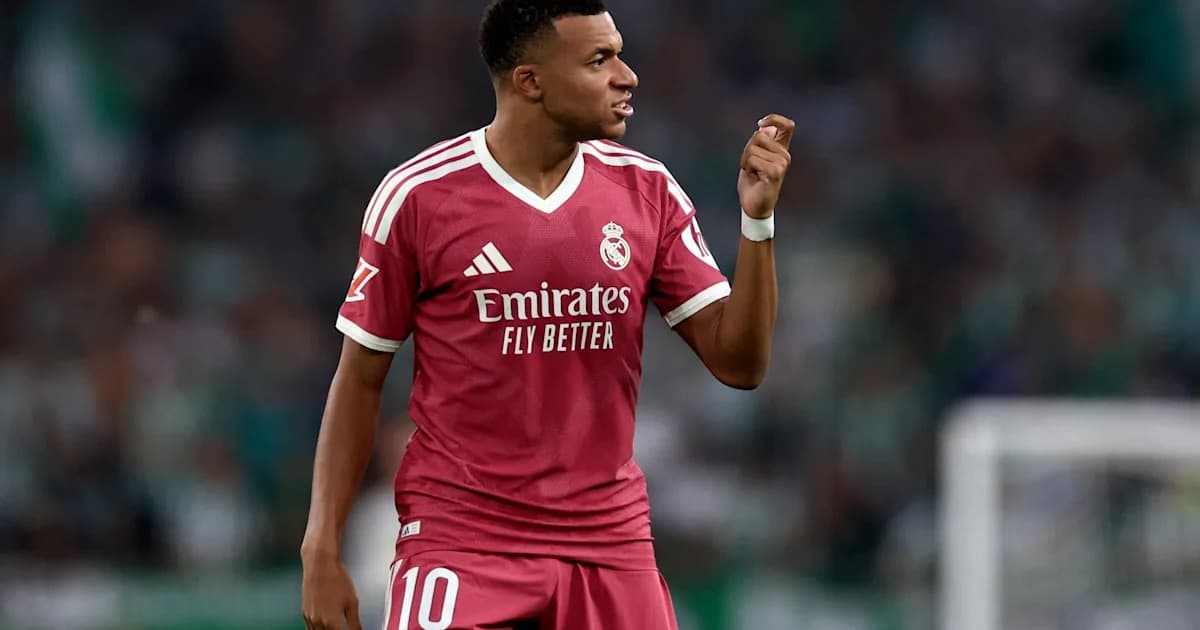
The France captain moved to within one goal of Lionel Messi’s all-time World Cup record on Tuesday night, scoring twice in a ruthless 3-0 dismantling of Sweden in the round of 32. That took him to 18 goals in 18 World Cup games, one shy of Messi’s 19, and six for this tournament alone.
Yet when Mbappé spoke afterwards, the obsession was clear – and it wasn’t the record.
“The goal is to go as far as possible – to make it to July 19th and come back here,” he told reporters, his eyes already drifting to the horizon rather than the history books.
He knows how the numbers work. He knows that every strike drags him higher up the rankings. But he also knows Messi is still out there, still scoring, still pushing the bar.
“I’m also convinced that Leo is going to score more goals, so I don’t focus too much on that,” Mbappé said. “I’m more focused on the opponents we might face and how close we’re getting to our goal: the final.”
Messi’s Argentina now meet Cape Verde in the last 32 on Friday, a mismatch on paper but another chance for the Argentine to edge away again. France, for their part, head to Philadelphia to face a very different kind of challenge.
France brace for Paraguay’s barricade
Paraguay have already rewritten this World Cup’s script once. Against Germany, they parked the bus, locked the doors and then kicked the four-time world champions out on penalties. It was brutally effective, brutally simple, and there is no suggestion they will suddenly open up against France.
An ultra-defensive block. Ninety minutes of patience required. One lapse could turn a dominant performance into a long, anxious night.
Mbappé knows it.
“I think we’ll keep working between now and the Paraguay match to see what we can improve, because there are still some sequences that aren't quite clear enough,” he said. “There’s room for improvement.”
The warning was deliberate. France may have cut Sweden apart, but knockout football has already claimed heavyweight victims. Germany are gone. The Netherlands are gone. Both were favourites. Both are now cautionary tales.
Still, Mbappé sees the edge that separates France from the rest.
“I think it’s positive overall, and our ability to score goals means we always have the chance to take the lead in matches.”
If they find that lead early against Paraguay’s wall, the game bends their way. If they don’t, Philadelphia could become a test of nerve as much as talent.
Belgium’s golden generation on borrowed time
Across the Atlantic, Belgium have already taken a small but significant step. They’ve outperformed the mess of Qatar.
Four years after crashing out in the group stage, the Red Devils topped Group G with a 5-1 demolition of New Zealand, a win that followed one victory and two draws in a cautious but effective group campaign. It’s not 2018-style fireworks, but it’s stability – and that’s what Rudi Garcia wanted.
“We wanted to finish first in the group stage and we succeeded,” the coach said. “Of course we wanted to win more — we know the story of our World Cup so far. Now it is time for the knockout phase. Senegal is a big team. But, you have to beat them, too, if you want to go far in a World Cup.”
Senegal await in the round of 32, and the stakes feel sharper than the usual “favourite vs underdog” narrative. This is about the last embers of Belgium’s golden generation. Kevin De Bruyne and Romelu Lukaku are still central, still decisive, but no longer young. Every knockout game could be the last act for this core.
Lukaku, for one, is not fooled by the odds.
“We know it will be a tough match,” he said. “Senegal has a lot of top-level players, and the coach is, too. I think it’s 50-50. We really shouldn’t underestimate them.”
Events elsewhere have underlined that point in thick red ink. Germany, undone by Paraguay. The Netherlands, ambushed by Morocco. Two giants gone in a single night.
“It doesn’t matter who the favorite is,” said forward Charles De Ketelaere. “We have confidence and need to be sharp. Yesterday showed that it doesn’t matter if you are the favorite.”
Belgium’s defence has at least given them a platform. With Thibaut Courtois in goal, they have conceded just twice in three games. Courtois remains the team’s great safety net, the last pillar of that 2018 side still playing at an elite level in his own penalty area.
Senegal, though, arrive with their own threat. Sadio Mané leads a side that just put five past Iraq without reply, and they are not short of belief. What they are short of is their first-choice goalkeeper.
Édouard Mendy, injured in a 3-2 loss to Norway in the group stage, will not feature. Coach Pape Thiaw confirmed that reserve keeper Mory Diaw, who kept a clean sheet against Iraq, is set to start again.
“Mory had a great performance,” Thiaw said. “He kept a clean sheet and I think (as) the goalkeeper tomorrow, we hope that we’ll also come up with a clean sheet.”
Senegal are watching the same tournament as everyone else. They’ve seen Paraguay and Morocco topple Europe’s elite. They want in.
“It’s not because you finished top of your group that you’re not going to be knocked out in the next round,” Thiaw said. “That’s exactly what happened with the Netherlands. It’s another tournament starting. We are looking for the win tomorrow so that we can continue our journey.”
There is at least one positive health note for Belgium. Center back Zeno Debast, sidelined all summer with a left leg injury, is finally available. He trained on Monday and again Tuesday, knee taped, but Garcia made it clear he will not be rushed.
“Zeno Debast is with the group, but tomorrow is still too soon,” Garcia said. “He is making progress, though. He still needs time to get fully fit, as was anticipated. I am very satisfied with the defenders we have already called upon.”
Seattle will test those defenders – and tell us whether Belgium’s window is still open or quietly closing.
England walk the tightrope
England have watched the chaos unfold and know exactly what it means. Germany out. The Netherlands out. Two European heavyweights dumped out on penalties by so-called outsiders.
Now it’s their turn.
On Wednesday in Atlanta, Thomas Tuchel’s side face the Democratic Republic of Congo for a place in the last 16, with the familiar weight of expectation pressing down on English shoulders. Sixty years without a major trophy hangs over every knockout game they play.
Tuchel isn’t pretending otherwise.
“I feel it is a privilege to be in these situations. I think we can just accept it, we are the favorites (against DR Congo),” he said. Then came the warning. “The games so far in round of 32 speak a very clear language. It's narrow, narrow margins.”
England will lean, as they so often do, on the class of Jude Bellingham and Harry Kane. Both have the temperament and quality to decide a tie in a single flash. But they will be without Reece James, an influential presence down the right, whose injury removes one of their best outlets and most reliable defenders.
DR Congo, meanwhile, arrive with a squad that reflects the country’s far-reaching football diaspora. Of the 26 players, 20 were born outside Congo, many in France. Yoane Wissa is familiar to English fans from his Premier League exploits, while Aaron Wan-Bissaka and Axel Tuanzebe both represented England at youth level before choosing DR Congo.
Coach Sébastien Desabre knows where the pressure lies.
“Our World Cup is already a success relative to our goals,” he said. “The pressure is on the England team.”
That lack of burden can be dangerous. A team that feels it has already overachieved often plays with a freedom the favourite cannot match. England have seen how that story ends for others. Their task is to avoid becoming the next headline in a tournament that is chewing up reputations.
America’s moment under the lights
On the other side of the bracket, the USA stand on the brink of the biggest match in their football history.
Bosnia-Herzegovina come to the San Francisco Bay Area on Wednesday, but the opponent is only half the story. The occasion is the rest. Up to 30 million Americans are expected to tune in for a primetime knockout tie, a figure that would have been unthinkable a decade ago.
Inside the US camp, the players understand the stakes go beyond their own careers.
“Everyone knows in the back of our minds what this could do for this country,” said midfielder Gio Reyna. “We feel the country rallying around us. We see the momentum it's bringing to the sport in this country, just through the group stage. But we also understand if we make a nice run in this tournament, what it could really do for the sport.”
For a nation still trying to cement football’s place alongside its traditional giants, this is a crossroads night. A first knockout win in almost 25 years would not just move them forward in the bracket; it would change conversations in homes, bars and boardrooms across the country.
Mbappé’s embrace, Haaland’s breakthrough
Back in France’s camp, the mood is intense but united. Against Sweden, Mbappé and his teammates didn’t just celebrate goals; they made a point of racing to Didier Deschamps, embracing a coach who has been mourning the death of his mother this month.
“I think that reflects the spirit of this group -- it's part of our DNA. We are all together,” Mbappé told beIN Sports. “We know the coach has been through a difficult experience; unfortunately, everyone goes through that at some point and it's very hard.”
It was a rare, raw glimpse into a squad often viewed through a purely tactical lens. For all the talk of systems and structures, this is still a human tournament, shaped by emotion as much as analytics.
Elsewhere, another superstar wrote his own milestone. Erling Haaland finally has a World Cup knockout moment. The Norwegian striker poked home the decisive goal in a 2-1 win over Ivory Coast, sending Norway into the last 16 for the first time.
Haaland’s breakthrough, Mbappé’s surge, Messi’s looming presence, Belgium’s last dance, England’s tightrope, America’s audition, Senegal’s ambition, Paraguay’s barricade – this World Cup is no longer following anyone’s script.
The records will fall in time. The real question now is simpler, sharper, and it hangs over every giant left standing: who survives the chaos long enough to walk out in New York on July 19?