
Kubo Takefusa's Injury Impact on Japan's World Cup Match Against Brazil
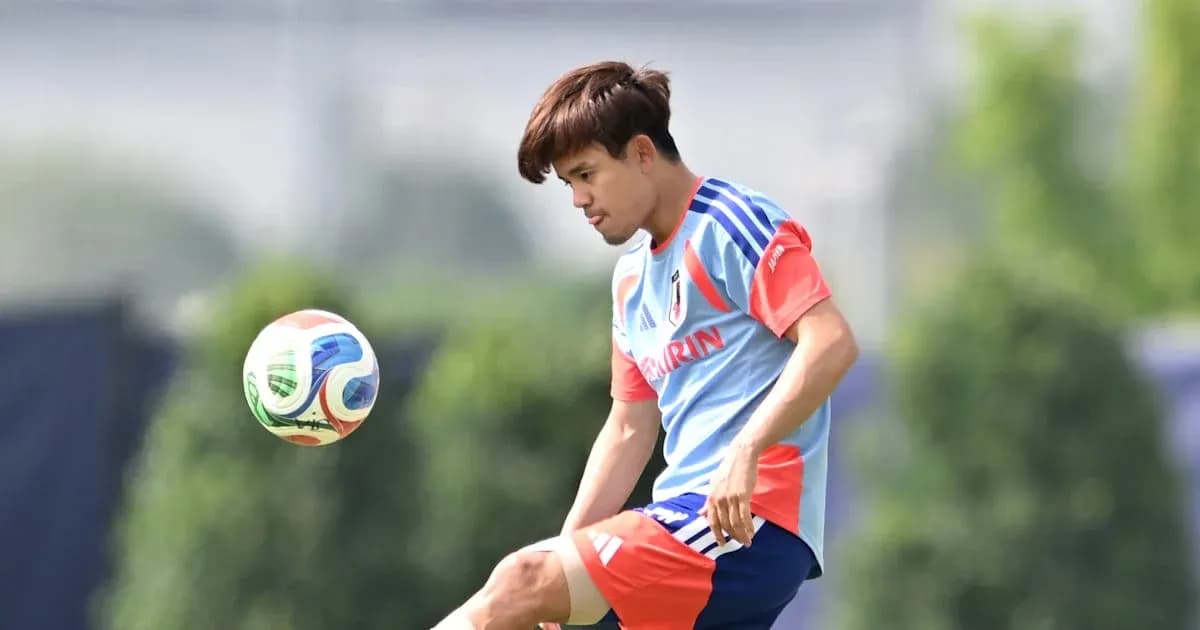
On the eve of Japan’s World Cup round-of-32 showdown with Brazil, Kubo Takefusa was asked about the left knee that has stalked his tournament and shut him down for two straight games.
“I’m good,” he said.
On paper, perhaps. In reality, the Real Sociedad playmaker has spent the days since that bruising opening draw with the Netherlands running alone, rehabbing, and watching others train. The knee is strapped heavily. The ball has barely been at his feet.
And on Sunday night, coach Moriyasu Hajime removed any lingering doubt.
“Kubo will not play,” he confirmed, a few hours before a nation settles in to watch a 1 a.m. kick-off and quietly wonder: what if?
“I’m hoping for a speedy recovery and he’s doing everything he can to pick up his conditioning,” Moriyasu added at the pre-match press conference, choosing his words carefully but closing the door all the same.
A star on the sidelines
There’s no need to dress it up. Japan are a better team with Kubo than without him.
At 25, he has become the rare thing this side possesses in short supply: a left foot that can break a game open on its own terms, that hint of street football and mischief that turns tight matches. With Mitoma Kaoru, captain Endo Wataru and Minamino Takumi already ruled out, Kubo had been stepping into a larger role, not just as a creator but as a voice. Around the camp, his presence carried weight.
Now, that influence will come from the bench and the dressing room, not the pitch.
On most teams, losing that many headline names would rip the spine out of a campaign. Japan have built themselves differently. Moriyasu has leaned hard on depth; all but three of his 26-man squad have already seen the field, the only outfielders yet to play being the reserve goalkeepers.
The “next man up” mantra that often sounds like a hollow slogan in sport has become Japan’s operating system. Players rotate in, the level hardly dips, and the collective identity stays intact.
Kubo’s absence hurts. It does not break them.
Fearless talk before Brazil
The opponent, though, is Brazil. The name alone once cast a spell over Japanese football.
When the J.League kicked off 33 years ago, Brazil were the gold standard and the dream rolled into one. Their players came to Japan as icons. Their style, Joga Bonito, was the blueprint. Japanese youngsters copied their stepovers in schoolyards, clubs studied their movement, the public watched in awe.
Listen to this Japan squad and you hear something very different.
Asked which teams he considered the strongest at this World Cup, Wolfsburg striker Shiogai Kento went straight to Europe and South America’s new guard.
“France and Argentina,” he said. No mention of Brazil.
He was pressed on Neymar, a player who has tortured Japan in the past with nine goals in five meetings.
“That’s Neymar of the old. I think we’re OK right now,” Shiogai replied, a line that would have sounded like sacrilege in 1993 and now lands as a statement of intent.
This is not arrogance; it’s a reflection of how the landscape has shifted. Japanese players no longer see Brazil as distant gods but as another giant to be measured against, another obstacle on a path they have publicly set: not just to beat Brazil, but to win the World Cup.
Depth against pedigree
Strip away the nostalgia and the narrative, and the contest becomes brutally simple. Japan arrive without Kubo, without Mitoma, without Endo, without Minamino – yet with a squad that has been stress-tested across the group stage and has not cracked.
Moriyasu’s rotation has bred trust. Role players have become central figures overnight. The line between “starters” and “backups” has blurred.
Brazil, as ever, bring pedigree, history, and names that light up scoreboards. Japan bring cohesion, fitness across the roster, and a belief that they no longer have to bow to the old order.
The country will stay awake deep into the night to see if that belief stands up under the harshest spotlight, and to wrestle with the nagging thought of how different it all might look with Kubo Takefusa drifting between the lines instead of watching from the touchline.
The era when Japan simply admired Brazil from afar is over. Now comes the only question that matters: can they beat them when it counts?



