Klopp's Controversial 'Still' Sparks Debate in Germany
Germany put seven past Curacao, but the loudest noise of the night did not come from the pitch. It came from the punditry desk.
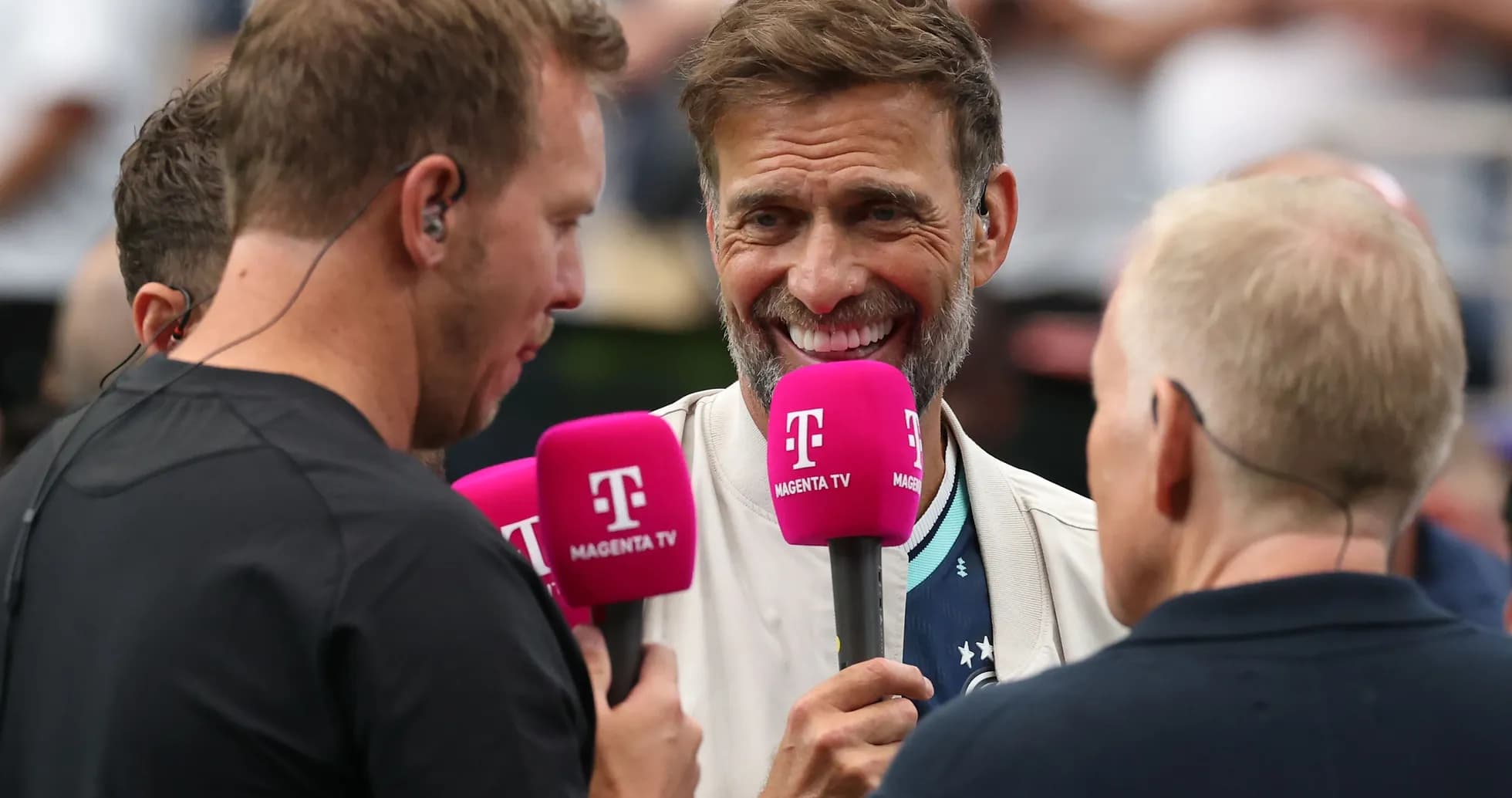
In the build-up to the World Cup opener, Jürgen Klopp sat alongside Thomas Müller on MagentaTV, dissecting Julian Nagelsmann’s team sheet. Then came the line that detonated across Germany.
“Luckily, Julian Nagelsmann is still picking the team.”
One word did the damage. “Still.”
In a country where Klopp’s name hovers constantly over the national team job, “still” sounded less like a throwaway aside and more like a reminder that Nagelsmann’s grip on the role might be temporary. Viewers heard it. Pundits seized on it. And Lothar Matthäus, never shy of an opinion, called it out.
Klopp, who turns 59 this week, realised almost instantly that he had stepped into a storm of his own making. What was meant as light banter landed as a loaded insinuation.
The match itself briefly drowned out the noise. Germany tore Curacao apart, a 7-1 demolition that looked like a training exercise disguised as a World Cup fixture. Yet as the final whistle went, the focus snapped back to the studio and the man in the black-rimmed glasses who had just complicated his own evening.
Klopp did not hide. He went straight at it.
“I’ve already found the most hated word of the year: ‘Still’,” he said on the post-match broadcast, turning the spotlight on himself. “I could have punched myself in the face for that, but it was already too late and I was on TV. It just slipped out so casually and has absolutely no relevance.”
No excuses. No attempt to blame the reaction. Just a blunt admission that he had misjudged the tone.
He knew exactly why the reaction had been so sharp. Klopp has been linked to the Germany job for months, some predicting he could take over in September. Against that backdrop, any hint that Nagelsmann is a caretaker rather than a long-term leader becomes political. One stray adverb suddenly sounds like a manifesto.
The situation had been primed by the pre-match joking with Müller. The two had playfully urged Nagelsmann to drop Jamal Musiala, Bayern’s dazzling young star, before a ball had been kicked. Müller then needled Klopp on air, suggesting he had forgotten the calendar and was behaving as if it were already September, the month many believe the former Liverpool and Borussia Dortmund coach might finally inherit the national side.
Inside the studio, it felt like familiar football banter. Outside, it landed very differently. Matthäus and other prominent voices called the exchange unprofessional, arguing it heaped needless pressure on Nagelsmann at the very moment he needed calm around him.
Klopp clearly heard that criticism. So when Nagelsmann appeared live after the game, the pundit turned supplicant.
“There’s one more thing I have to say… we still need to make time for this,” Klopp began, choosing his words carefully this time. “We’re also informally part of the team, we’re absolutely on your side. What I’ve realized is: I’ll be 59 the day after tomorrow and I’m still an idiot. We are completely on your side, whatever you do. Nothing was intended to come of it to disrupt the process here.”
Self-deprecation has always been part of Klopp’s armoury. Here, it doubled as damage control. By calling himself an “idiot” on air, he tried to drain the tension from a debate that had started to swell beyond a single comment.
For Nagelsmann, the dynamic is delicate. He has just overseen a 7-1 World Cup win, the kind of scoreline that usually silences doubters. Yet the spectre of Klopp, beaming from the studio, remains impossible to ignore. Every word, every joke, every slip becomes part of the national conversation about who should lead Germany into the future.
The players, at least, cut through the noise. Against Curacao they were ruthless, fluid, and utterly untroubled. The scoreline flattered the Caribbean side. It was the sort of performance that suggests a squad comfortable in its own skin, regardless of who is sitting in the pundit’s chair.
Now comes the real test.
Ecuador and Ivory Coast await in the group, opponents with greater physicality, structure and threat. The World Cup is rolling through North America, and Germany’s next stop is Toronto on Saturday, where they will meet the Ivory Coast. The margin for error shrinks, the scrutiny grows, and the stakes rise with every game.
Klopp will still be on television. Nagelsmann will still be in the dugout. One of them holds the job. The other, with a single misplaced “still”, has been reminded how close his shadow falls.