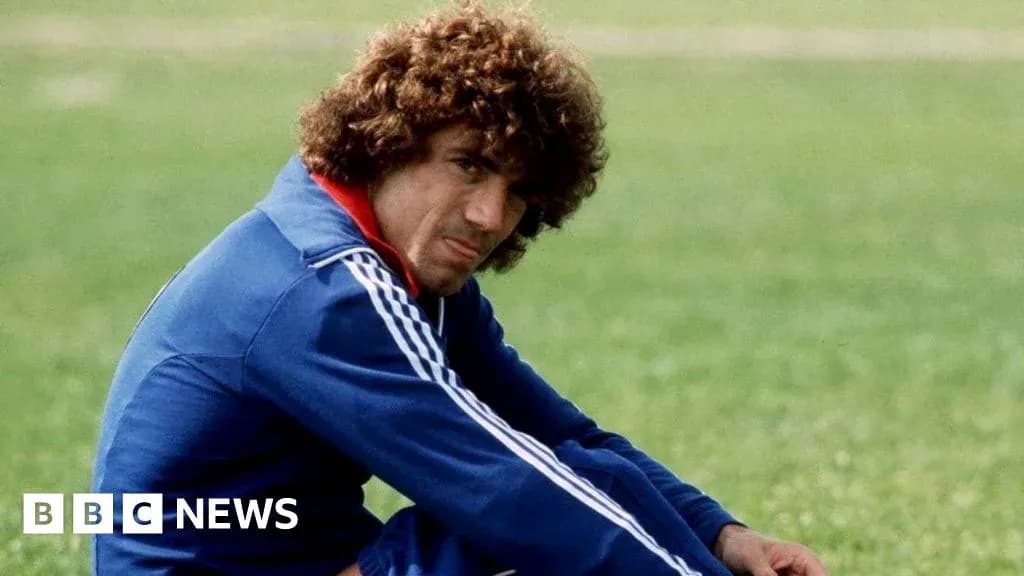
Kevin Keegan: The Legend Connecting Liverpool and Hamburg
In a football life measured in medals, goals and roaring European nights, Kevin Keegan still managed something rarer than silverware. He connected two cities.
Liverpool legend, Hamburg icon, and twice a Ballon d'Or winner, Keegan died on Monday aged 75. In the days since, the tributes have poured in from dressing rooms, boardrooms and terraces. On Merseyside, they have come from the very top of civic life.
Liverpool City Region Mayor Steve Rotheram has written to Hamburg’s mayor, Dr Peter Tschentscher, to describe Keegan as “a bridge between two great cities” – a player who did far more than complete a record transfer in 1977 when he left Liverpool for Hamburg SV.
Rotheram revealed that Keegan had been due to return to the German port city this year, joining him for Hamburg’s annual Harbour festival, the Hafengeburtstag. Cancer stopped him making that final trip.
The mayor’s letter, seen by the Local Democracy Reporting Service, lays out the scale of Keegan’s impact on both banks of the North Sea. For Liverpool supporters, he was the beating heart of a side that rose to dominate Europe. For everyone else in the city, he was something different – a rival to be endured and, grudgingly, admired.
“For one half of our football-mad city, Kevin was a footballing hero, for the other, a well-respected irritant on derby day,” Rotheram wrote, capturing the unique blend of affection and rivalry that defines Merseyside football.
Keegan earned that status the hard way. At Liverpool he became one of the most decorated English players of all time, lifting seven major honours and, crucially, the club’s first European Cup. That final appearance in red, crowned with the biggest prize in club football, came just before he crossed the Channel to start again in the Bundesliga.
Rotheram made clear that, in his eyes, that move did not break the bond with Liverpool. It widened it.
“When Kevin left our shores for Germany in 1977, he did more than make a then-record transfer between two football clubs. He built a bridge between two great cities,” he wrote.
Hamburg embraced him. Liverpool never let him go. Rotheram said Keegan’s success “belonged equally to Liverpool and Hamburg”, describing how he was both “admired and loved” in each city. To the mayor, Keegan captured the essence of the sport: “He embodied better than anyone else that famous maxim: football is the people’s game.”
The relationship was not just emotional, it was tangible. Keegan worked to strengthen the ties between the two ports, ties that Rotheram says “remain strong to this day”. His career has even been woven into a special exhibition celebrating the historical and cultural links between Liverpool and Hamburg.
Those connections resurfaced earlier this year. Rotheram recalled how Keegan had written a message for him to deliver at the Liverpool City Region pavilion back in May. The mayor joked about his “pidgin German and broad Scouse accent”, but the words landed. The crowd responded warmly. Keegan, long since departed as a player and manager, still held the room.
“Kevin may have left both cities many years ago, but he never truly left our hearts,” Rotheram wrote.
That sentiment grew heavier with the revelation that Keegan had planned to attend Hamburg’s port anniversary celebrations in person. The Hafengeburtstag would have offered a poignant return to the city where he became a superstar of European football. Instead, his cancer diagnosis forced him to stay away.
“He was devastated not to be attending,” Rotheram said. Even so, Keegan sent a personal note for the mayor to read from the Liverpool stage on the banks of the Elbe. A man who once lit up the Volksparkstadion was still determined to speak to Hamburg one more time.
Rotheram shared those words again in his letter to Dr Tschentscher. Keegan’s message was simple, heartfelt and entirely in character: “Forgive my Plattdeutsch, but I love Hamburg.”
The closing lines of the letter folded the two cities back together. On behalf of Liverpool, Rotheram offered “our deepest condolences to Kevin’s friends, the HSV family and the people of Hamburg. Thank you for loving him as we did. You’ll Never Walk Alone.”
Keegan’s numbers and honours will always stand out. Two Ballon d’Or trophies. Seven major titles with Liverpool. A European Cup lifted on his final night in red. Yet it is this – a Scouser by adoption, a hero on the Elbe, a footballer who stitched two proud ports into the same story – that may prove his most enduring legacy.