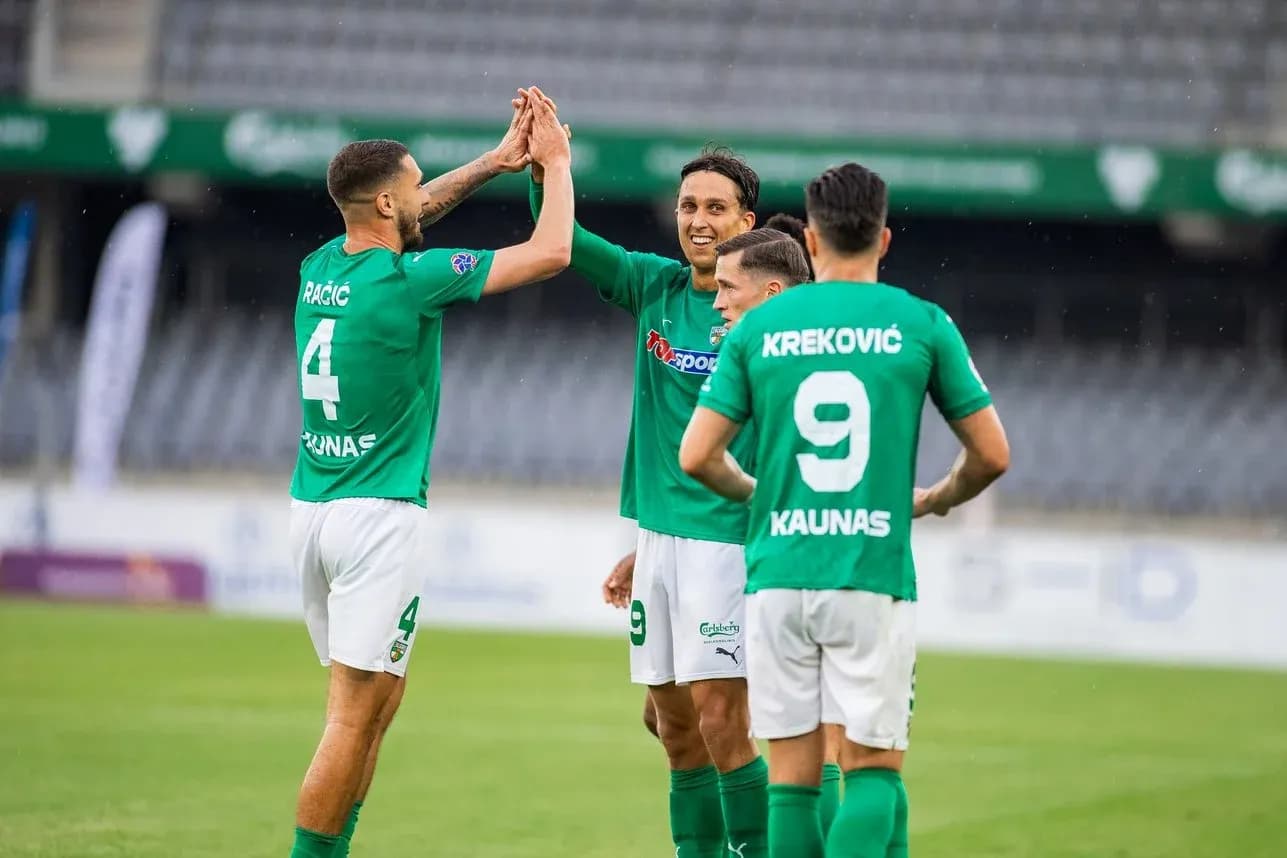
Kauno Žalgiris vs KI Klaksvik: UEFA Champions League 2nd Qualifying Round Preview
On 29 July 2026, in the compact surroundings of Jonavos centrinis stadionas in Jonava, Kauno Žalgiris and KI Klaksvik walk out knowing that one European summer will continue and the other will end. The UEFA Champions League 2nd Qualifying Round is delicately poised after a goalless first leg in Klaksvík, and this return match in Lithuania will decide who keeps chasing the dream of the group stage and the financial and sporting boost that comes with it.
Season Context
For Kauno Žalgiris, this qualifying campaign is already a statement of progress. They are unbeaten across 3 Champions League fixtures so far, with 1 win and 2 draws in continental play and 4 goals scored against 3 conceded. For a club still carving out its European identity, simply reaching this stage and going toe to toe with KI Klaksvik underlines a growing resilience.
KI Klaksvik arrive with the air of a side used to these summer adventures. In their 3 Champions League outings in 2026 they have 2 wins and 1 draw, scoring 4 goals and conceding only 2. That record, and the experience of negotiating tight two-legged ties in recent years, feeds the belief that this is another step on a now-familiar European path rather than a one-off occasion.
Form & Momentum
Kauno Žalgiris come into the second leg with a mixed but solid recent pattern in Europe, reflected in their run of DWD. They have found the net in most of their matches (4 goals in 3 games) while keeping things relatively tight at the back (only 3 conceded in the same span), suggesting a team that can compete physically and tactically over 90 minutes. The ability to avoid defeat so far in this qualifying campaign underlines a certain stubbornness when the pressure rises.
KI Klaksvik’s European form line of WWD tells the story of a side that tends to start ties strongly and protect what they have. With 2 wins and a draw from 3 matches, they are efficient rather than spectacular (4 goals scored, 2 conceded), but that balance between control and caution often proves decisive away from home. Their habit of staying in front on aggregate once they gain an edge makes them a dangerous opponent in any finely poised second leg.
Head-to-Head Patterns
The history between these two clubs is still being written, and the first chapter was tight. On 21 July 2026, at Djúpumýra in Klaksvík, the sides played out a 0-0 stalemate (UEFA Champions League, season 2026, July 2026). It was a night that underlined how evenly matched they are: KI Klaksvik were unable to turn home advantage into a lead, while Kauno Žalgiris showed they could survive in a hostile environment and bring the tie back to Jonava level. With no previous competitive meetings on record in this data, that single goalless draw is the only reference point – but it already hints at a contest defined by fine margins rather than open, end-to-end football.
Tactical Preview
Kauno Žalgiris have leaned consistently on a 4-1-4-1 structure in Europe, using it in all 3 Champions League matches so far. That shape gives them a clear holding presence in front of the back four and allows midfield runners to join the lone striker, which helps explain why they average more than a goal per game (4 in 3 matches) despite often facing better-resourced opponents. The flip side is that they are not impenetrable – conceding once per match on average (3 in 3) – so the balance between pushing the wide midfielders on and protecting the full-backs will be critical here.
In attack, Kauno Žalgiris have benefited from contributions across the lines. V. Slivka has emerged as a key figure with 2 Champions League goals, while A. Benchaib adds both a scoring threat and creativity (1 goal and 1 assist). J. Moutachy has also chipped in with an assist from deeper positions, hinting at an intent to progress the ball from the back rather than simply playing long. Discipline will matter: several of these same players feature among the leading yellow-card recipients, so managing aggression without crossing the line will be important in a high-stakes second leg.
KI Klaksvik offer more tactical variety. They have alternated between a 3-4-3 and a 4-2-3-1, with the back-three system used more frequently. The 3-4-3 gives them width and allows wing-backs to push high, but their numbers suggest a pragmatic, controlled approach rather than a gung-ho one: 4 goals scored and only 2 conceded in 3 matches points to a team that values structure and compactness as much as attacking thrust. When they switch to 4-2-3-1, they gain an extra man between the lines, which can be used to overload Kauno Žalgiris’s single pivot in the 4-1-4-1.
The key battleground is likely to be central midfield. If Kauno Žalgiris can use the energy of players like G. Sirgedas and the timing of Slivka’s forward runs to disrupt KI Klaksvik’s double pivot or central trio, they can pin the visitors back and create shooting opportunities around the box. Conversely, KI Klaksvik’s experience in managing away legs suggests they will be content to control tempo, keep their defensive distances tight, and wait for transitions or set-piece moments, trusting their record of conceding less than a goal per game (2 in 3) to carry them through.
Statistical Snapshot
- Competition: UEFA Champions League, season 2026 — 29 July 2026.
- Venue: Jonavos centrinis stadionas, Jonava.
- Prediction: Win or draw — Double chance : draw or KI Klaksvik.
- Win Probabilities: Home 10% / Draw 45% / Away 45%.
- Model: Kauno Žalgiris 41.8 — KI Klaksvik 58.2.
Betting Verdict
The predictive models lean clearly towards KI Klaksvik avoiding defeat, with only a 10% chance assigned to a Kauno Žalgiris win and a combined 90% split evenly between away win and draw. That aligns with the broader European form lines: KI Klaksvik have WWD from 3 matches and a stronger overall index in the comparison model (58.2 versus 41.8), while Kauno Žalgiris, though unbeaten, have drawn twice already. The goalless first leg reinforces the idea of a tight, low-scoring contest decided by small details. On that basis, siding with the advice of “Double chance : draw or KI Klaksvik” looks logical, with the visitors’ defensive solidity and slightly superior momentum giving them a narrow edge in this finely balanced tie.