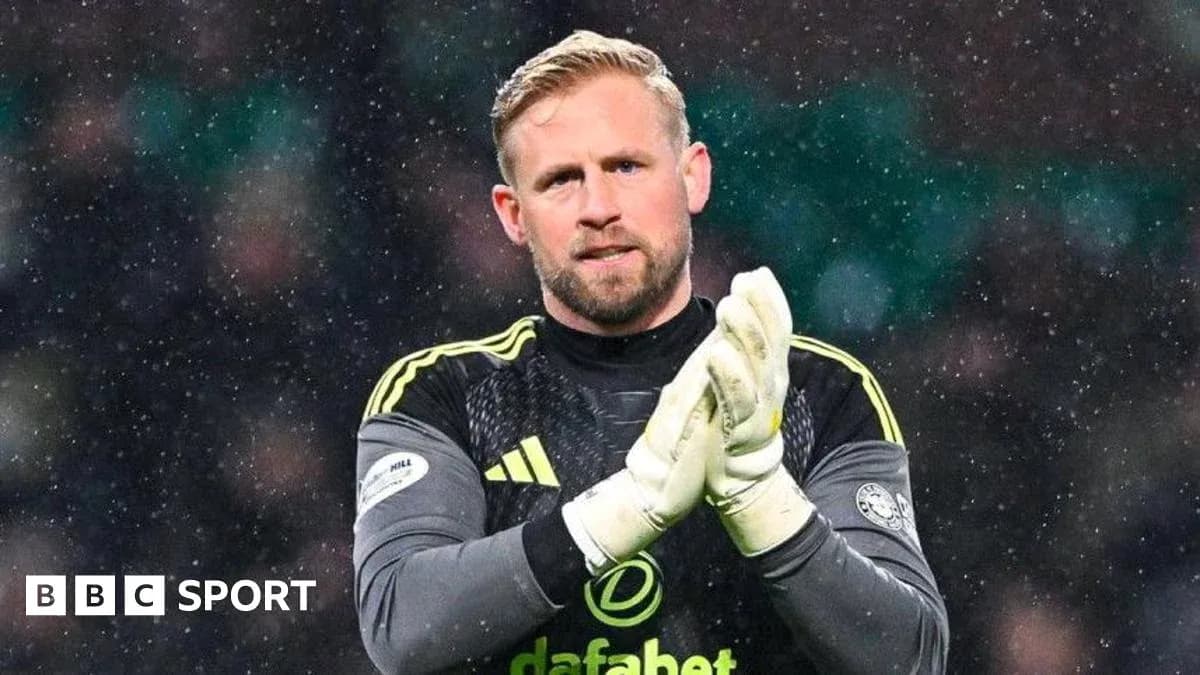
Kasper Schmeichel Retires: A Defiant Career Cut Short by Injury
Kasper Schmeichel has never been one to walk away from a fight. This time, his body left him no choice.
At 39, the Celtic and Denmark goalkeeper has retired from football, unable to recover from a serious shoulder injury that has kept him out since February and, ultimately, forced a decision he never wanted to make.
“I believe that now is the right time,” he told TV2, the son of Manchester United legend Peter Schmeichel sounding less like a man at peace than one who understands when the battle is lost.
An injury that wouldn’t heal
The story of the end began in March 2025, in a Nations League quarter-final against Portugal. Denmark had used all their substitutes when Schmeichel suffered the initial damage to his shoulder. He stayed on. Of course he did. Denmark lost, but their goalkeeper played through pain that, at the time, he didn’t fully comprehend.
“I didn't realise how bad it was back in March. It's been a long process,” he admitted. The real shock came later. “When I landed on it in February, I could tell straight away that something was seriously wrong.”
The problem flared again 11 months later, in Celtic’s Europa League defeat to Stuttgart. From there, the spiral accelerated. Out of action since February, and with his contract at Celtic running down, Schmeichel went from scan rooms to consulting rooms, chasing one more comeback.
He was prepared to take on up to a year of rehabilitation if that was what it took. Instead, the verdict from the experts cut straight through that resolve.
“I have consulted with various surgeons and experts regarding my shoulder, and they have told me that I should not expect to return to playing top-flight football,” he said. “This is a decision that has been made for me.”
For a goalkeeper who built his reputation on defiance, that may be the cruellest line of all.
A career carved in big moments
Schmeichel’s journey began at Manchester City, in the long shadow of his father but with a stubborn determination to carve out his own story. He did far more than that.
He leaves the international stage with 120 caps for Denmark, a cornerstone of a generation that carried the national team into the latter stages of major tournaments. He stood in goal at the World Cups of 2018 and 2022, then helped drive Denmark to the semi-finals of Euro 2020, a run that gripped a nation and confirmed his status as one of the finest keepers in Danish history.
At club level, his defining decade came at Leicester City. Ten seasons. One of the most improbable Premier League titles of all time in 2015-16. An FA Cup triumph in 2021. He was not a passenger in those triumphs; he was a constant, a captain, a voice, a presence that made Leicester feel bigger than they were supposed to be.
When that chapter closed, he took his experience to Nice, then Anderlecht, before arriving in Glasgow with Celtic. Even in the twilight of his career, he refused to coast. This season alone he played 39 times, adding a second Premiership winners’ medal in just two years in Scotland.
He was still competing. Still winning. Until his shoulder said no.
No farewell lap, but no bitterness
“I think everyone dreams of saying goodbye on the field, but you don't always get what you want,” Schmeichel reflected. It is a line that will resonate with professionals in every dressing room. The perfect ending, the farewell substitution, the standing ovation – football rarely scripts those on demand.
Yet there is no trace of self-pity in how he frames the end.
“I've had so much else along the way, so football doesn't owe me anything. I've had so many opportunities, so many experiences.”
This is a goalkeeper who has lived the extremes of the sport: relegation fights, title races, penalty shootouts, the roar of World Cups, the raw emotion of Euros. He has been both the underdog and the champion. He has known what it is to be compared relentlessly to a famous father and still emerge as his own man.
And when he looks back, it isn’t medals or trophies that he singles out.
“What stands out most are the friendships and connections I've made. The moments I've shared with them – for better or worse.”
For a player whose career was defined by resilience and big-game nerve, that might be the most revealing detail of all. The saves will live in highlight reels; the relationships will live with him.
The shoulder finally stopped Kasper Schmeichel from playing top-flight football. It never dimmed the legacy of a goalkeeper who spent nearly two decades proving he was more than just a famous name.