Kansas City W Dominates Chicago Red Stars W 3–0
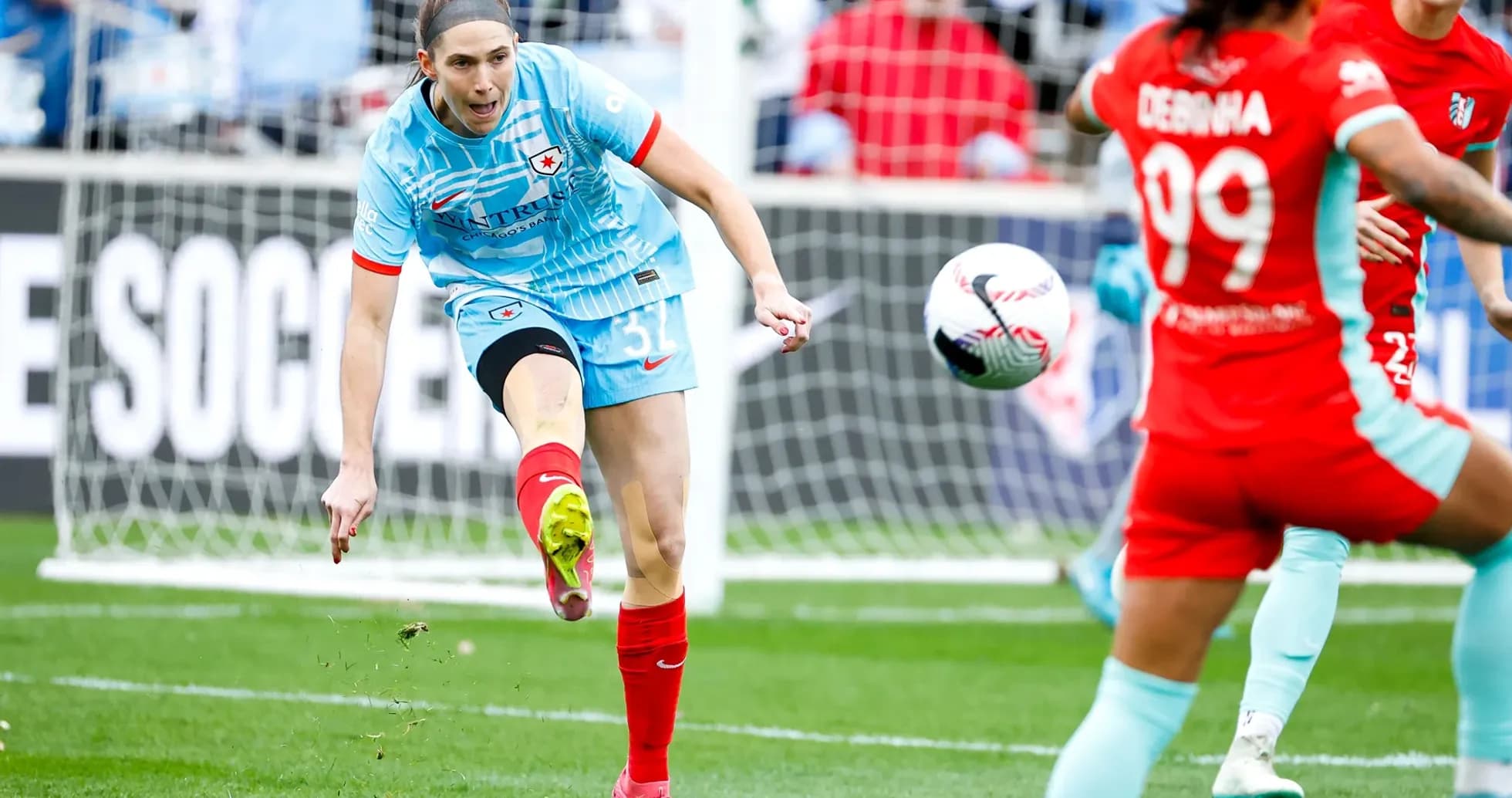
Kansas City W produced a ruthless, vertically focused performance at CPKC Stadium, dismantling Chicago Red Stars W 3–0 despite conceding the majority of the ball. In an NWSL Women group-stage match overseen by Laura Rodriguez, the hosts turned 47% possession into 18 shots and three goals, with Temwa Chawinga delivering a decisive hat-trick. Chicago’s 53% share of possession and cleaner passing structure never translated into sustained threat, repeatedly broken by Kansas City’s compact mid-block and direct transitions into the front three.
Scoring Pattern
The scoring pattern underlined the tactical story. At 22', Kansas City struck first: Temwa Chawinga finished a move assisted by Croix Bethune, the reward for the home side’s early willingness to attack quickly after regains. Chicago’s frustration surfaced at 34', when Nádia Gomes received a yellow card for “Foul” — the only booking of the match and a sign of Kansas City’s growing control of duels in advanced areas. The 1–0 halftime scoreline reflected Kansas City’s superior chance quality rather than volume of possession.
Second Half
Immediately after the break, Kansas City doubled and then trebled their lead, both through Chawinga. At 47', she scored again, this time unassisted, capitalizing on Kansas City’s aggressive start to the second half. Just two minutes later at 49', she completed her hat-trick, finishing a move assisted by Michelle Ivory Cooper. Those two quick goals effectively decided the contest and exposed Chicago’s structural fragility in defensive transition and central spacing.
Disciplinary Standpoint
From a disciplinary standpoint, the match was remarkably clean: Kansas City W finished with 0 yellow cards and 0 reds, while Chicago Red Stars W recorded 1 yellow card and 0 reds, all fouls balanced at 11–11. The single caution — 34' Nádia Gomes (Chicago Red Stars W) — Foul — stemmed directly from Kansas City’s ability to pin Chicago’s wide players into reactive defending, forcing late interventions as the home forwards drove at the back line.
Kansas City Setup
Chris Armas set Kansas City up to maximize their front three. With Lorena in goal, a back line of Laney Rouse, Elizabeth Ball, Kayla Sharples, and Isabel Rodriguez, and a midfield trio of Lo’eau LaBonta, Croix Bethune, and Bayley Feist, the structure looked like a flexible 4-3-3. The plan hinged on quick progression into the front line of Michelle Ivory Cooper, Ally Sentnor, and Temwa Chawinga. Kansas City’s 370 passes, 293 accurate (79%), were used pragmatically: they rarely circulated aimlessly, instead playing forward early into Chawinga’s channels or Bethune’s advanced pockets.
Defensive Strategy
Defensively, Kansas City accepted long spells without the ball, trusting their shape and Lorena’s shot-stopping. Lorena made 4 saves, anchoring a back four that allowed just 11 total shots and only 6 inside the box. The defensive unit stayed narrow, inviting Chicago to play around them rather than through them, then sprang forward once the ball entered central areas. This compactness limited Chicago’s ability to combine between the lines, forcing more speculative efforts from distance.
Role of Bethune
In possession, Bethune’s role was pivotal. Her assist at 22' highlighted her timing and weight of pass, but more broadly she served as the connector between LaBonta’s deeper distribution and the front three’s movement. LaBonta provided control and tempo from midfield, while Feist’s work rate and pressing set the tone before she went off at 71' (Katie Scott (IN) came on for Bayley Feist (OUT)). The double change at 71' — Haley Hopkins (IN) came on for Croix Bethune (OUT) — allowed Armas to refresh the press and protect key creators with the match already at 3–0.
Flank Positioning
On the flanks, Rouse and Rodriguez were conservative with their positioning, which helped Kansas City maintain numerical security against Chicago’s wide forwards. When Armas turned to his bench late — Amelia White (IN) came on for Temwa Chawinga (OUT) at 77', Ellie Bravo-Young (IN) came on for Isabel Rodriguez (OUT) at 81', and Penelope Hocking (IN) came on for Michelle Ivory Cooper (OUT) at 81' — the structure remained intact, signaling a shift from aggression to game management.
Chicago Red Stars Setup
For Martin Sjogren’s Chicago Red Stars W, the tactical blueprint was more possession-oriented. With Alyssa Naeher in goal, a back four of Jenna Bike, Kathrin Hendrich, Sam Staab, and Michelle Alozie, and a midfield of Manaka Hayashi, Aaliyah Farmer, and Julia Grosso, Chicago built steadily from the back. Their 431 passes, 342 accurate (79%), and 53% possession show a team comfortable circulating the ball. However, the lack of incision in the final third was telling: 11 total shots, only 4 on target, and just 3 blocked shots suggest Kansas City successfully funneled attacks into low-probability areas.
Naeher's Saves
Naeher’s 6 saves underscore how exposed Chicago became once Kansas City broke through their first line of pressure. The defensive line struggled to track Chawinga’s depth runs and Cooper’s movements into half-spaces. After going 2–0 and then 3–0 down within minutes of the restart, Sjogren turned to his bench: at 17', Brianna Pinto (IN) came on for Michelle Alozie (OUT), adjusting the balance in midfield and defense; at 61', Jameese Joseph (IN) came on for Manaka Hayashi (OUT) to inject more attacking threat. A triple wave of changes at 77' — Maitane López (IN) came on for Aaliyah Farmer (OUT), Ivonne Chacón (IN) came on for Jordyn Huitema (OUT), and Micayla Johnson (IN) came on for Nádia Gomes (OUT) — aimed to refresh the front line, but by then Kansas City had dropped into a more controlled block and rarely looked stretched.
Statistical Overview
Statistically, the match underlines the difference between sterile control and effective dominance. Chicago’s higher possession and equal passing accuracy did not translate into territorial or qualitative superiority. Kansas City generated 18 total shots to Chicago’s 11, with a striking 16 of those from inside the box, compared to Chicago’s 6. That territorial advantage in shooting zones, combined with 9 shots on goal versus Chicago’s 4, explains how the hosts ran out 3–0 winners despite seeing less of the ball.
Both teams recorded 11 fouls, but Kansas City’s ability to avoid bookings while maintaining intensity reflects a disciplined defensive structure. With no explicit xG values provided, the shot profile alone suggests Kansas City’s Overall Form on the day significantly outstripped Chicago’s, particularly in attacking efficiency. Defensively, Kansas City’s index was strong: limiting high-quality chances, relying on Lorena’s 4 saves when needed, and closing out the match without conceding. Chicago’s Defensive Index, by contrast, was undermined by their vulnerability to direct attacks and their inability to contain Chawinga’s movement, turning a possession advantage into a comprehensive 3–0 defeat.