Juventus vs Parma: A Statement Win in Serie A
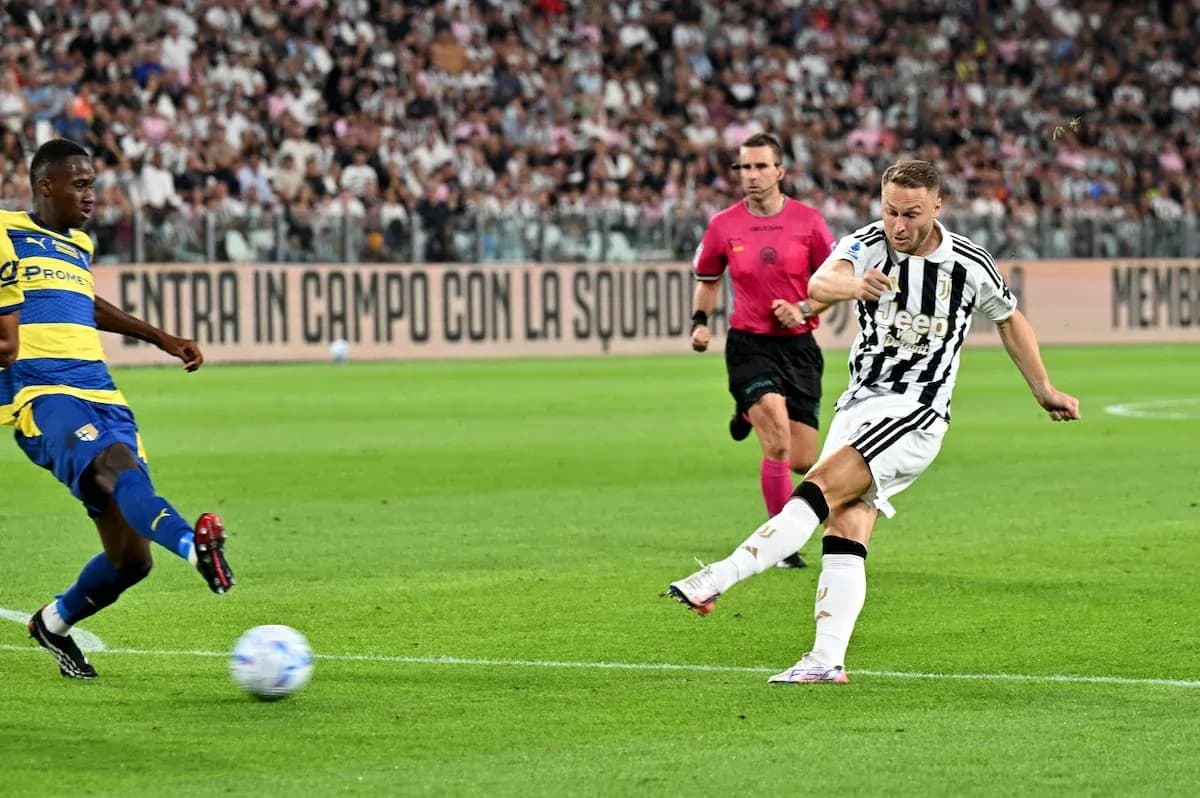
Under the Turin lights at Allianz Stadium, this finished as a statement win rather than a simple second-round fixture. Juventus’ 2-0 victory over Parma not only preserved their perfect start to the 2026 Serie A season, it crystallised the emerging identities of both sides: Juventus as a controlled, structure-first contender, Parma as a promoted side still learning the cruelty of the top flight.
Following this result, Juventus sit 3rd with 6 points from 2 matches, a flawless record built on control and clean sheets. Overall they have scored 3 and conceded 0, a goal difference of +3 that speaks to Luciano Spalletti’s early imprint. At home, they have now played 1, won 1, scoring 2 and conceding none; on their travels they have also played 1, won 1, with a 1-0 margin. Parma, by contrast, leave Turin 16th with 0 points from 2, still without a goal and with 3 conceded overall. At home they have lost 1-0; away, this 2-0 defeat completes a sobering opening pair of fixtures.
I. The Big Picture – Structure vs. Innocence
Both coaches mirrored each other on paper with a 4-4-2, but the systems behaved very differently. Juventus’ shape was a modern, fluid 4-4-2: Guglielmo Vicario behind a back four of P. Kalulu, Bremer, J. Lucumi and Z. Çelik, with a midfield band of Francisco Conceição, M. Locatelli, Douglas Luiz and J. Boga supporting the dual threat of R. Kolo Muani and J. David.
Parma’s 4-4-2, under Carlos Cuesta, was more orthodox: E. Corvi in goal, a back line of E. Delprato, M. Troilo, D. Drobnic and E. Valeri, with S. Britschgi, C. Ordonez, A. Bernabe and M. Keita behind the front pairing of S. Lontani and E. B. Toure. It was a shape designed to compress space and survive, but it never truly disrupted Juventus’ rhythm.
Seasonally, the numbers underline the contrast. Heading into this game, Juventus’ overall attacking average stood at 1.5 goals per match (2.0 at home, 1.0 away), while defensively they had not conceded at all, with 0.0 goals against both home and away. Parma arrived with an overall average of 0.0 goals scored and 1.5 conceded per match, split as 1.0 conceded at home and 2.0 away. The script held perfectly: Juventus hit their home scoring benchmark and preserved the clean sheet; Parma once again failed to score and leaked twice on their travels.
II. Tactical Voids – Absences and Discipline
Juventus’ squad was notably thinned in advanced zones. W. McKennie (muscle injury), K. Thuram (knee injury), K. Yildiz (foot injury) and E. Zhegrova (muscle injury) were all ruled out. That cluster of absences robbed Spalletti of rotation and vertical runners between the lines, forcing him to lean heavily on Douglas Luiz and Locatelli as the dual pivot and on Conceição and Boga for width and ball progression.
Parma had their own creative void with H. Nicolussi Caviglia missing through a groin injury. For a side already struggling to generate chances, the absence of a deep-lying organiser was significant; it pushed more responsibility onto Bernabe to connect midfield and attack, often leaving him isolated.
Disciplinary trends further shaped the tone. Juventus’ yellow-card distribution this season is front-loaded in the second half: 50.00% of their cautions have come between 46-60 minutes, with 25.00% in each of 0-15 and 76-90. It is the profile of a side that tightens its grip after half-time and is willing to foul to prevent transitions. Parma’s bookings are scattered later: 33.33% of their yellows between 46-60, another 33.33% in 76-90, and 33.33% in 91-105, reflecting a team that grows ragged as matches slip away.
Individually, A. Cambiaso and Çelik for Juventus, and Abdou Konate, Troilo and Delprato for Parma, already sit among the league’s more card-prone profiles with 1 yellow each. None has seen red this season despite their presence in both the yellow and red-card leaderboards, underlining that their aggression has so far stayed just on the right side of the line.
III. Key Matchups – Hunter vs Shield, Engine Room Battles
Hunter vs Shield
Juventus do not yet have an outright golden-boot candidate from this fixture’s data, but Teun Koopmeiners, already on 1 league goal from midfield, lurks as a secondary “hunter” in this squad. His profile is telling: 1 shot, 1 on target, 1 goal, with 10 passes at 80% accuracy across 20 minutes of action in the league. He is the late-arriving threat that opponents must track.
Parma’s “shield” is structurally anchored by Troilo and Delprato. Troilo has completed 145 passes at 91% accuracy with 2 blocks and 1 interception, while Delprato adds 86 passes at 76% accuracy, 2 blocks and 3 interceptions. Together they represent a young, proactive central pairing. Yet the macro numbers expose the strain: Parma’s overall goals against average sits at 1.5 per match, with 2.0 conceded on their travels. Against a Juventus side that hits 2.0 at home, the shield bent again.
The duel in Turin was about how long Troilo and Delprato could hold the line against sustained, structured pressure. Juventus’ forwards, Kolo Muani and David, repeatedly pinned them back, allowing midfield runners to arrive on the edge of the box. Once the first goal went in, Parma’s compactness frayed and the second felt inevitable.
The Engine Room
In midfield, Locatelli is emerging as Juventus’ metronome and quiet enforcer. Over the season he has completed 159 passes at 90% accuracy, with 5 key passes, 2 tackles, 1 blocked shot and 7 interceptions. He has also drawn 6 fouls and committed 7, with 1 yellow card – the statistical portrait of a player who both initiates play and disrupts opponents.
Alongside him, Conceição offers the incision: 70 passes at 90% accuracy, 6 key passes and 12 dribble attempts with 6 successes, plus 1 interception. His 8 fouls committed and 2 drawn show a winger who presses aggressively and is unafraid of contact. Together, they form a right-sided axis that both builds and regains possession.
Parma’s answer lies in the energy of Konate and the craft of Bernabe. Konate has 50 passes at 84% accuracy, 3 tackles and 2 interceptions, plus 1 successful dribble from 1 attempt. He is the runner and disruptor. Bernabe, though less statistically fleshed out here, is tasked with threading passes into Lontani and Toure. The problem for Parma is that this engine room is constantly under siege: with Parma failing to score in both matches so far and registering 0.0 goals per game overall, their midfield spends more time firefighting than constructing.
IV. Statistical Prognosis – A Controlled Contender vs a Learning Side
Juventus’ season profile after this match is that of a contender built from the back. Overall, they average 1.5 goals for and 0.0 against per match, with 2 clean sheets in 2 and no failures to score. Their biggest wins so far – 2-0 at home, 1-0 away – mirror the Parma result and reinforce a pattern: early control, measured risk, ruthless exploitation of key moments.
Parma’s outlook is more fragile. They have failed to score in both matches, with 0.0 goals for and 1.5 against per match overall, and 0 clean sheets. Their biggest defeats – 0-1 at home, 2-0 away – show that they are not being blown away, but they are consistently second best in both boxes.
From an xG-style lens, even without explicit values, the directional indicators are clear. Juventus’ shot quality is supported by structure: high passing accuracy from their creators, a midfield that wins the ball high, and forwards who occupy central defenders. Their defensive solidity – 0.0 goals conceded overall, 2 clean sheets, and a back line that rarely needs last-ditch interventions – suggests that opponents will need either a set-piece masterstroke or an individual error to break them down.
Parma, meanwhile, project as a side whose xG for lags badly behind xG against. Their inability to create clear chances, combined with a defence that concedes 2.0 goals on their travels, is not yet catastrophic but is unsustainable if they aspire to climb from 16th.
Narratively, this 2-0 in Turin felt less like a one-off and more like a snapshot of trajectories. Juventus, even with key attacking absences, look like a team that knows exactly how it wants to win: through structure, territorial control, and a ruthless use of their wide creators and double pivot. Parma, brave and industrious, are still discovering how to turn honest work into points.