Juventus vs AC Milan: Tactical Insights from the 1-1 Draw
Under the Turin lights at Allianz Stadium, this felt less like an early-season skirmish and more like a dress rehearsal for the top four. Juventus and AC Milan arrived in Round 3 with identical seasonal DNA: unbeaten, on seven points, goal difference of +3 each (Juventus with 4 scored and 1 conceded overall; Milan with 5 scored and 2 conceded overall). The 1–1 full-time scoreline preserved that symmetry, but underneath the surface, the squads revealed very different tactical identities and fault lines.
I. The Big Picture – Structures and Season Context
Luciano Spalletti doubled down on Juventus’ early-season template, rolling again with the 4-2-3-1 that has already been used twice in three league matches. At home this campaign, Juventus have scored 3 goals and conceded 1 across 2 games, averaging 1.5 goals for and 0.5 against per home match. That defensive parsimony framed the selection: G. Vicario behind a back four of Z. Celik, J. Lucumi, Bremer and P. Kalulu, with M. Locatelli and Douglas Luiz as the double pivot.
Ahead of them, the trio of F. Conceicao, N. Gonzalez and K. Alajbegovic worked off the lone striker R. Kolo Muani. It is a structure built to compress space centrally, then spring quickly into wide channels.
Ruben Amorim’s Milan, by contrast, arrived with a clear structural conviction: 3-4-2-1, used in all three league fixtures so far. On their travels this season, Milan have taken 4 points from 2 away matches, scoring 3 and conceding 2, for an away average of 1.5 goals for and 1.0 against. M. Maignan anchored a back three of M. Gila, K. De Winter and S. Pavlovic, shielded by a four-man band of P. Estupinan, Y. Musah, L. Modric and D. Moreira. In the half-spaces, A. Saelemaekers and A. Rabiot floated behind G. Ramos as the nominal spearhead.
The table context matters: Milan sat 5th with 7 points and Juventus 6th also on 7 points, both with forms reading DWW overall. This was less about momentum and more about who could impose their stylistic script on a direct rival.
II. Tactical Voids – Absences and Discipline
Juventus’ squad sheet carried the heavier scars. A cluster of absentees stripped away depth and some key profiles: J. Cabal (thigh injury), A. Cambiaso (ankle injury), J. Ekhator and W. McKennie (both muscle injuries), P. M. Sarr (muscle injury), K. Thuram (knee injury), K. Yildiz (foot injury) and A. Milik (inactive). The result was a narrower range of options for rotation in the middle third and at full-back. It also increased the burden on Douglas Luiz and Locatelli to cover ground and on Celik and Kalulu to provide width without natural like-for-like cover behind them.
Milan’s list was shorter but not insignificant: M. Gabbia’s ankle injury removed a flexible defensive piece from Amorim’s bench. With a back three that leans heavily on timing and coordination, losing a rotational centre-back constrains in-game tactical adjustments, especially if the match turns chaotic.
From a disciplinary standpoint, both sides came into this fixture with clear patterns. Juventus’ yellow-card timings this season show a spread of early and late-game spikes: 20.00% of their yellows between 0–15 minutes, 40.00% between 46–60, and a combined 40.00% from 76–90 and 91–105. Milan, meanwhile, have concentrated their yellows late: 20.00% in each of the 46–60, 61–75 and 76–90 windows, then a sharp surge to 40.00% between 91–105. This is a side that tends to ride the line of aggression as fatigue and game-state pressure mount.
III. Key Matchups – Hunter vs Shield, Engine Room Battles
The “Hunter vs Shield” narrative here is collective rather than individual. Juventus’ overall scoring rate of 1.3 goals per match, with 4 goals across 3 games and zero fixtures where they have failed to score, meets a Milan defence conceding 0.7 goals per match overall. On their travels, Milan’s back line has allowed 2 goals in 2 away matches, an away average of 1.0 conceded. The question, then: could Kolo Muani and the supporting cast stress a three-man defence that thrives on control but has not yet been airtight away?
Kolo Muani’s role was to stretch Milan’s central trio, attacking the channels between De Winter and Gila or De Winter and Pavlovic. Behind him, N. Gonzalez and F. Conceicao offered the vertical running and dribbling threat to drag Milan’s wing-backs into deeper positions, blunting their ability to overload midfield.
On the Milan side, the attacking “hunter” threat is distributed. A. Cisse, one of the league’s early top scorers with 2 goals from 5 shots and a rating of 7.17, started on the bench but loomed as an impact option. His profile – willing runner, 20 duels contested and 9 won, plus 5 fouls drawn – makes him a late-game disruptor against tiring defenders. If introduced, his directness would target the spaces outside Bremer and Lucumi, especially if Juventus’ full-backs pushed high.
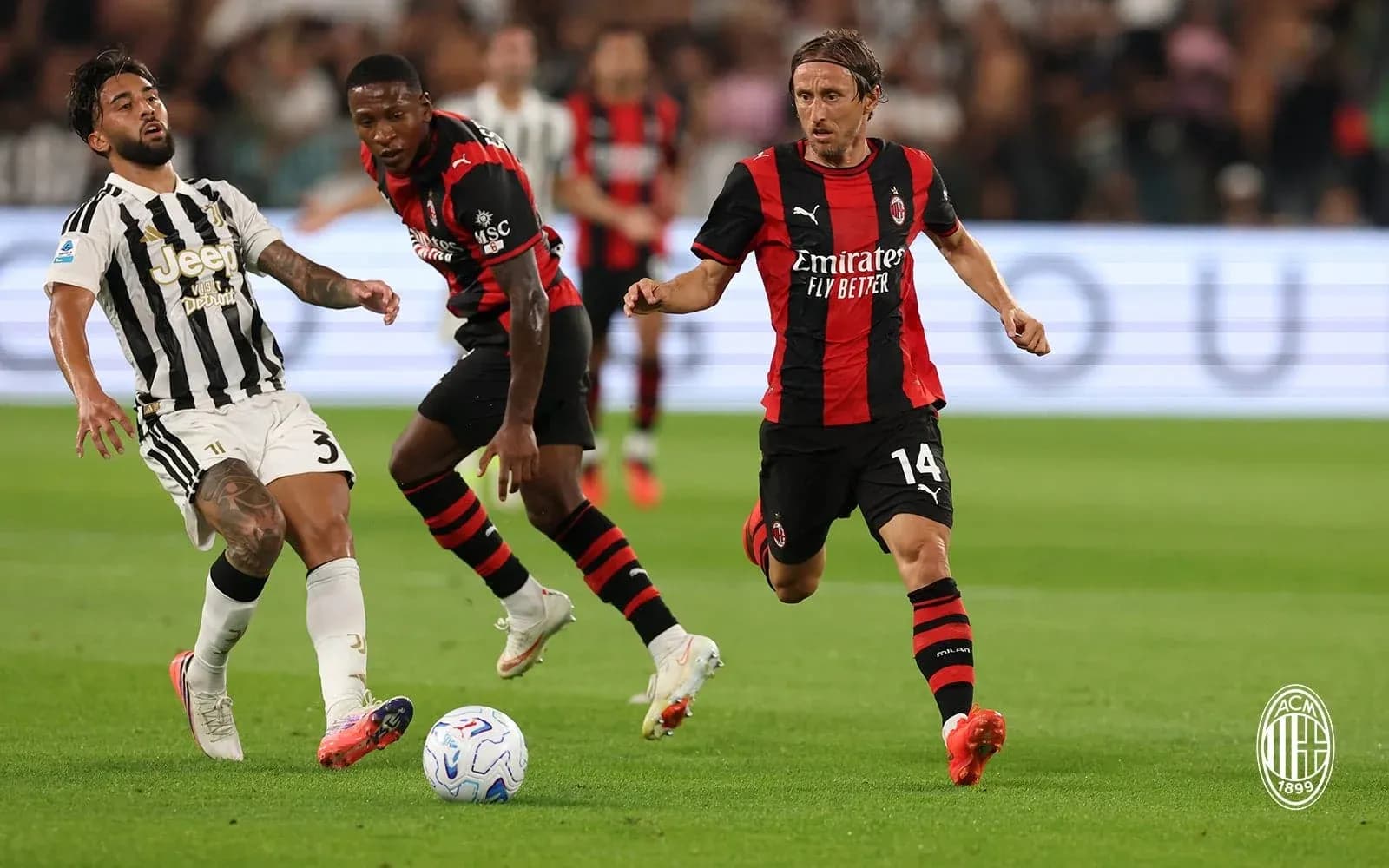
In the “Engine Room” matchup, the contrast was stark. For Juventus, Locatelli and Douglas Luiz formed a double pivot tasked with both screening and progression. Their job was to deny L. Modric and Y. Musah the time to dictate tempo and to cut off vertical supply into Rabiot and Saelemaekers.
Rabiot, in particular, sits at the heart of Milan’s hybrid threat. With 1 goal and 1 assist this campaign, plus 70 completed passes at 80% accuracy and 16 duels contested (8 won), he is both a runner beyond the striker and a secondary playmaker. His ability to drift from the left half-space into central zones challenges Juventus’ pivot to hand off marking responsibilities cleanly. Any hesitation opens lanes for G. Ramos to pin centre-backs and for Modric to thread passes between the lines.
Out wide, P. Estupinan and D. Moreira had to manage a delicate balance: provide width in the 3-4-2-1, but not leave the back three exposed to Conceicao’s and Gonzalez’s transitions. The duel between Estupinan and Conceicao, in particular, was a barometer of territory: if Estupinan pinned Juventus back, Milan could construct long possessions; if he was forced into a deep, reactive role, Milan’s structure would collapse into a back five.
Another subtext in the engine room was the presence of T. Koopmeiners on the Juventus bench. With 1 goal and 1 assist in just 46 minutes this season, plus 26 passes at 88% accuracy and a successful block already recorded, he offers a different rhythm: late-arriving runs, set-piece quality and calm distribution. His introduction would tilt Juventus towards more methodical, possession-based pressure.
IV. Statistical Prognosis – Edges, Risks, and xG Logic
Heading into this game, the macro numbers tilted slightly towards Milan in attacking potency and towards Juventus in defensive solidity. Juventus’ overall defensive record – 1 goal conceded in 3 matches, an average of 0.3 against, and 2 clean sheets in total – is the foundation of their approach. Milan’s attack, with 5 goals in 3 matches and an overall scoring average of 1.7, is more explosive, especially when factoring in the creative weight of S. Chukwueze (2 assists, 8 key passes, 4 successful tackles) and the bench threat of Cisse.
The intersection of those curves suggests a tight expected goals landscape: Juventus controlling central spaces, limiting clear chances, Milan generating volume through width and half-spaces rather than repeated high-quality shots. With neither side having taken or missed a penalty this season (both at 0 total penalties, 0 scored, 0 missed), there was little reason to expect spot-kick variance to skew the contest.
Card timing patterns hinted at a late-game swing. Milan’s tendency to pick up 40.00% of their yellows between 91–105 minutes, combined with Juventus’ own spikes after the break, pointed towards a more fractured, transitional final phase – fertile ground for impact substitutes like Cisse, Chukwueze, Koopmeiners or J. Boga to tilt the balance.
In the end, the 1–1 draw reflected the underlying equilibrium: Juventus’ defensive structure largely held against Milan’s multi-pronged attack, while Milan’s back three, aided by Maignan, survived enough of Juventus’ surges. From a tactical and statistical standpoint, this felt like a meeting of two sides whose ceilings are still rising – Juventus leaning on defensive control and emerging depth, Milan on structural clarity and attacking variety. Over a long campaign, those profiles suggest both will remain firmly in the Champions League conversation, and this night in Turin will be remembered less for separation than for the confirmation that the margins between them are razor-thin.