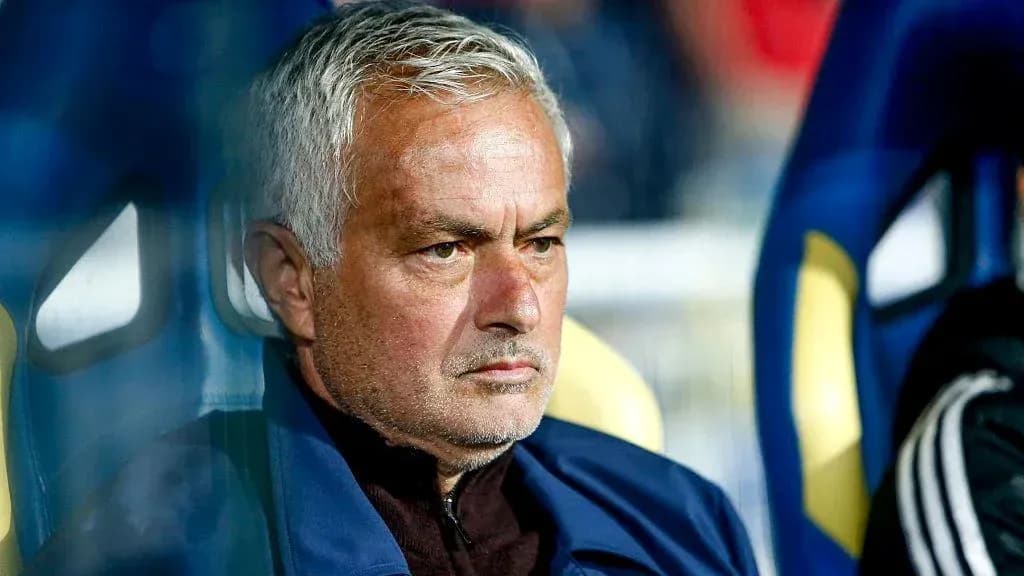
Jose Mourinho's Heartfelt Decision: Turning Down Manchester United
Jose Mourinho has revealed he agreed to succeed Sir Alex Ferguson at Manchester United – then walked away from the biggest job in English football to follow his heart back to Chelsea.
The Portuguese coach lifts the lid on one of the great modern what-ifs in a new Netflix documentary, confirming for the first time that a deal to take over at Old Trafford was in place when he left Real Madrid in 2013.
"When I left Real Madrid, I signed to go to Manchester United after Sir Alex," Mourinho says. Simple as that. Or so it seemed.
The job that slipped away
Ferguson had just closed the book on 26 years in charge, 13 Premier League titles and an era that reshaped the club and the league. His chosen successor, as history records, was Everton manager David Moyes, soon to be unveiled beneath a Stretford End banner proclaiming him "The Chosen One".
But that was not the original script.
Ferguson himself confirms Mourinho was the man United first moved for. He recalls sitting the then-Real Madrid manager down, spelling out the opportunity, and leaving the meeting convinced he had his man.
"I sat him down and explained the situation," Ferguson says. "As far as I was concerned, he was accepting. And then, within hours, it changed."
The turnaround came quickly and brutally. Mourinho had already given his word to Chelsea.
A phone call in tears
The decisive moment arrived with a late-night call. Ferguson remembers the sound of a man torn between professional ambition and emotional loyalty.
"One night, he phoned me and he was crying," Ferguson says. "He said: 'Alex, I can't take it. I've given my word to Chelsea and I'm not going to break my word.'"
For a manager as ruthless as Mourinho has often appeared on the touchline, the detail is striking. This was not a cold calculation over salary or squad strength. It was about a promise – and about a club that had got under his skin.
"The reason he gave to me I could understand," Ferguson admits. "But I was disappointed."
Heart over history
Mourinho makes no attempt to play down the scale of what he turned down. He calls the offer to replace Ferguson "very flattered", and speaks of United’s "incredible appeal". The weight of history, the size of the stage, the chance to follow the greatest manager of the Premier League era – it was all there.
But it was not enough.
"But one thing is love for football, another thing is love for a certain club," he explains. "I think this is more powerful than love for football and, fundamentally, after Real Madrid I needed to feel that I'm loved."
Chelsea had already given him that feeling once. Two straight Premier League titles in 2005 and 2006, a bond with the Stamford Bridge crowd, and an aura that reshaped the club’s identity. When the door opened for a return in 2013, he chose emotion over legacy.
"For me to lose the chance to be the coach to succeed Sir Alex Ferguson was dramatic," he says. "But I don't regret it because it was a decision that I made with my heart."
Diverging paths
The consequences were stark. Mourinho walked back into Stamford Bridge and quickly reasserted his authority. He delivered another Premier League title and a League Cup, adding to his already formidable haul in west London.
United, meanwhile, went in a very different direction. Moyes, handpicked by Ferguson and heralded as the long-term heir, lasted just 10 months. The banner came down. The era of seamless succession never arrived.
By the time Mourinho finally took the Old Trafford job in 2016, the landscape had shifted. He was no longer the immediate heir to Ferguson but the latest in a growing line of rebuilders, following Louis van Gaal.
His two-and-a-half-year spell brought silverware – the League Cup and the Europa League – but never quite the sense of permanence or dominance that might have followed a 2013 appointment at the height of his powers. He was sacked in December 2018 after a slump in results, another chapter closed abruptly.
The revelation in this documentary does not rewrite that history, but it sharpens its edges. For United, it underlines just how close they came to a very different post-Ferguson era. For Mourinho, it captures the moment he chose love over legacy, emotion over the most glittering of opportunities.
And it leaves one lingering thought: how different might the last decade of English football have looked if that late-night phone call had never been made?