Jose Mourinho's Departure from Chelsea: A Heartfelt Goodbye
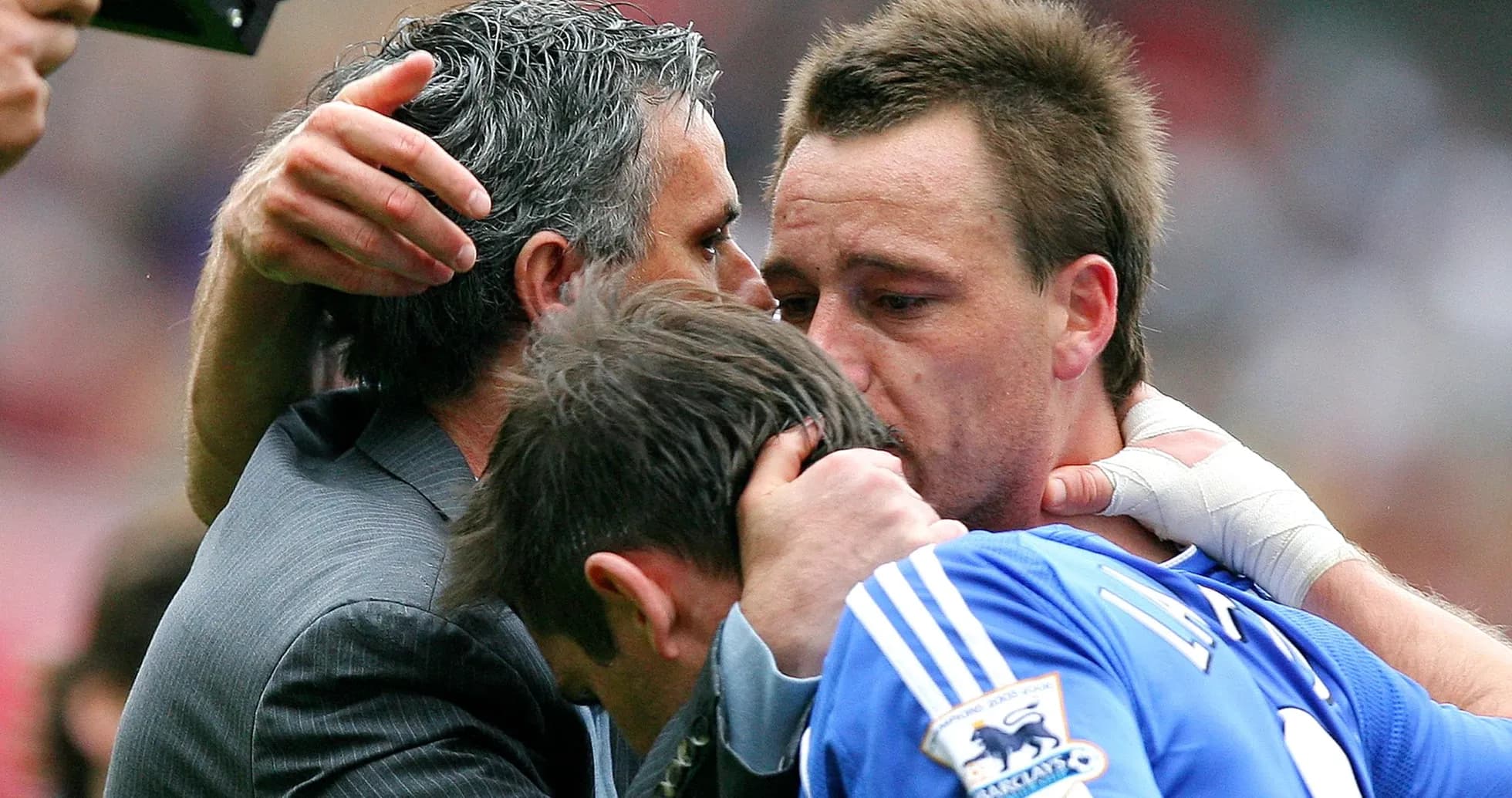
The day Jose Mourinho walked back into the Chelsea dressing room to say goodbye did not feel like football. It felt like a wake.
Frank Lampard still sees it clearly: the manager stepping through the door, the room falling quiet, the message landing like a punch.
"I remember him coming into the dressing room and he said to me that he’d been sacked," Lampard recalled. The words barely registered. All he could think about was the man who had dragged his game to another level, the manager he loved playing for, the figure who had turned Chelsea into a snarling, serial-winning machine.
"There were tears," Lampard admitted. "Which is not normal in the dressing room when a manager leaves."
This was 2007, but for those inside that room it might as well have been yesterday. The shock. The anger. The sense that something powerful had been broken before its time.
John Terry felt it just as deeply, and still carries the weight of it.
"I would leave that pitch in a coffin for him," the former captain said, summing up the bond between Mourinho and his core players. That night, grown men cried. Not out of politeness. Out of confusion and disbelief.
"You’ve got grown men, tears running down their face, not really understanding why. And even still today I’m like, that’s my fault."
Terry’s guilt traces back to a single moment: a 1-1 Champions League draw with Rosenborg at Stamford Bridge, the result widely seen as the trigger for Mourinho’s dismissal.
"When we drew the Champions League game, my man scored," he said. "If I didn’t let that person score, would he have lasted another couple of years? Who knows? I still feel kind of responsible for that, if that makes sense."
He knows, rationally, that a club as complex as Chelsea never turns on one header lost at the back post. Emotion doesn’t care. For Terry, that goal still lingers like a bad decision.
"It’s just disappointing how it all ended, if I’m honest. I absolutely loved him and adored him and was more upset than anyone, to be honest."
While the players wrestled with their own regrets, Mourinho had a different vantage point. From his side of the divide, the problem started long before Rosenborg. The bond that once tied manager, chief executive Peter Kenyon and owner Roman Abramovich together had frayed, then split.
"In my work, the triangle: Jose, Peter Kenyon, Roman was invaded by strangers," Mourinho revealed. That triangle had built a dynasty. It also had enemies.
At first, the owner’s box at Stamford Bridge was a tight, almost private space. "In the beginning, you play at Stamford Bridge, you look to the box, Roman, his wife, with one or two persons of his confidence," Mourinho said.
Then the faces changed. The crowd around Abramovich thickened.
"A few seasons later: former players, agents. These kinds of people, they know where the money is."
The message was clear. Decisions no longer flowed cleanly between manager, executive and owner. Other voices arrived. Other agendas crept in. The purity of that original project, the one that had powered Chelsea to back-to-back Premier League titles, began to dissolve.
Mourinho felt it in the day-to-day, not just in the boardroom. One request from Abramovich, relayed through Kenyon, underlined the shift.
"I think Roman changed," Mourinho said. Then came the story that still sounds surreal.
"One day Peter came to me quite embarrassed and he told me, 'Jose, I have to tell you something. The boss is in Sardinia with these boats, and the people that work in these boats they play football against guys from the hotel, and they are losing. Can you go there to win a game for him?'"
This was not a joke. The owner wanted his world-class manager to fly out and rescue a kickabout on a luxury trip.
Mourinho’s answer was blunt, and utterly in character.
"'No, Peter, I have training today. I have to prepare for tomorrow; I cannot go'. And he was not happy with that."
That refusal captured the clash in miniature: a coach obsessed with preparation and control, an owner whose empire no longer revolved around the touchline in quite the same way. The man who had once been the centre of Abramovich’s project now found himself pulled into sideshows.
The end, when it came, still stunned the dressing room. But looking back, Mourinho’s version of events makes it feel less like a sudden storm and more like a slow, inevitable change of weather.
Lampard remembers the tears. Terry remembers the goal. Mourinho remembers the triangle that broke apart and the day he was asked to trade a training session for a billionaire’s boat game.
Chelsea moved on, as big clubs always do. The trophies kept coming. Yet for those who lived it, that first Mourinho era remains the benchmark – and the way it ended still hangs in the air, a reminder of how fragile even the strongest football empires can be.