
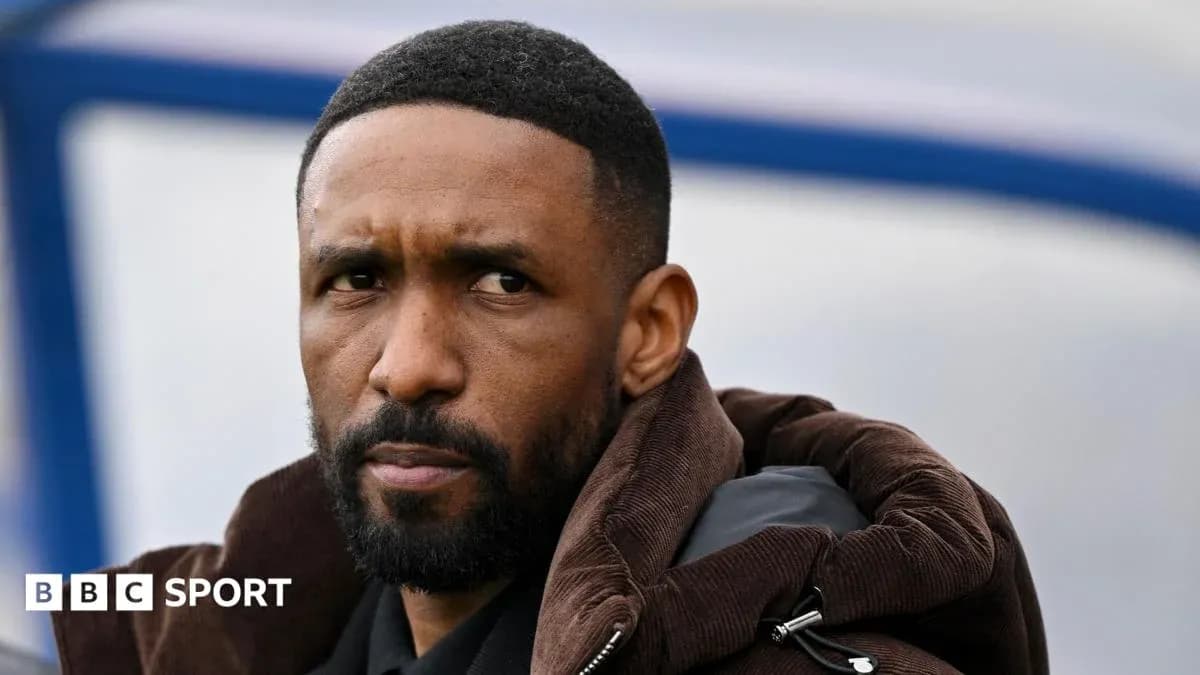
Jermain Defoe's Brief Managerial Stint at Woking
Jermain Defoe’s first full-time managerial job has lasted barely four months. At Woking, the romance ended quickly, and with a jolt.
Two weeks before the National League club are due to kick off their season against Sutton United, Defoe and Woking “mutually agreed to part ways with immediate effect”. Six league games into his tenure, the former England striker is out, leaving more questions than answers and a club scrambling to steady itself before a ball has even been kicked.
Enthusiasm on the surface, unease underneath
Inside the club, the mood music never quite matched the public soundtrack.
“Jermain's feedback was always positive, and he regularly expressed his enthusiasm and excitement for the season, both publicly and privately,” director of football Jody Brown explained. On the face of it, Woking had a big-name manager talking boldly about the future, projecting energy and optimism.
Yet behind that, something was beginning to fray.
“In recent weeks there had been feedback from across the club, including players, staff and other departments, regarding growing concerns,” Brown said. The word “concerns” is doing a lot of work there. It hints at a wider unease that went beyond tactics or results in pre-season friendlies. It points to structure, planning, communication – the unglamorous foundations that make a season viable.
Brown responded by going back to basics. He asked Defoe and assistant Paul Bracewell for a short report: an overview of squad depth, recruitment priorities and any operational issues that might need board support. The sort of document that underpins a professional set-up.
He asked more than once. It never arrived.
A no-show that changed everything
That silence triggered a more serious step. A meeting was scheduled with the directors, Defoe, Bracewell and the head of operations to review how ready Woking really were for the new campaign.
Neither Defoe nor his assistant turned up. They also missed that day’s training session.
In any club, at any level, that kind of absence is seismic. It signalled a breakdown that could not be brushed off as a diary mix-up or crossed wires. For Brown, who says Defoe had never raised any serious issues directly with him, it left a vacuum that speculation quickly filled.
“I am not going to speculate on his reasons,” Brown insisted. Publicly at least, Woking will not be drawn on what lay behind the no-show. But the timing and manner of the exit underline how quickly optimism around a marquee appointment can evaporate when communication collapses.
A giant of a playing career, a harsh lesson in management
Defoe’s reputation as a player needs no embellishment. He scored 305 goals in 763 senior appearances, lighting up spells at West Ham, Tottenham, Portsmouth and Sunderland. He hit 20 goals in 57 games for England, retiring in 2022 as one of the Premier League era’s most reliable finishers.
His coaching path had been steady rather than spectacular. He spent time on an interim staff at Rangers in 2021 and worked in the Spurs academy, roles that allowed him to learn away from the full glare of frontline management. In 2024, he stepped away from that security to take on Woking and the realities of being the man in charge.
He has called his short stint “an eye-opening managerial experience and one that will undoubtedly make me stronger for the next challenge in my career”. That line carries the tone of someone who has discovered just how unforgiving the job can be when results, recruitment and relationships all need attention at once.
For Brown, the fallout has a personal edge. He drove the appointment, convinced Defoe was the right figurehead for what he described as “an exciting new era”. The attraction was obvious: a likeable, high-profile former international, a modern face to front a club with ambitions of punching above its weight.
The reality has been a reminder of an old truth.
“As we have seen many times before, success as a player does not always translate into management and leadership,” Brown admitted. It is a line that has followed many great players into the dugout. Defoe is far from alone in discovering that elite instincts on the pitch do not automatically solve the puzzles off it.
Brown, though, refused to close the door on Defoe’s future in the game. “I sincerely hope to see him succeed in whichever direction he follows,” he said. There is no bitterness in that, just a recognition that this chapter has ended too abruptly for anyone’s liking.
Woking left to pick up the pieces
For Woking, the clock is now ticking loudly. A season that should have been building towards a new beginning with a marquee name is instead being reshaped in a hurry, with recruitment plans, tactical ideas and dressing-room dynamics all needing rapid recalibration.
The club must now move from damage limitation to direction. Defoe will move on to his “next challenge”. Woking, with the National League season about to start, cannot afford to get their next decision wrong.



