
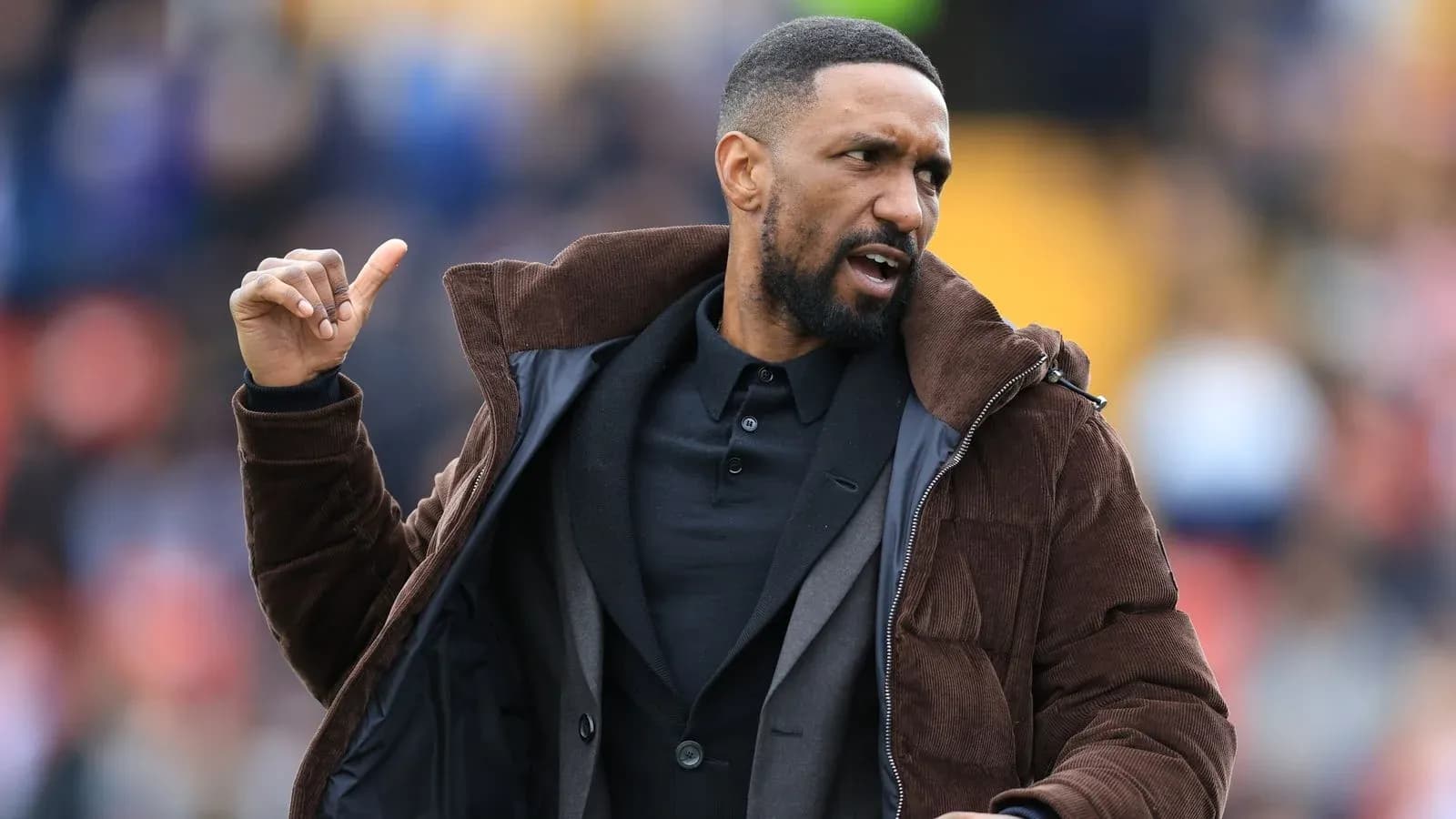
Jermain Defoe's Management Stint at Woking Ends Abruptly
Jermain Defoe’s first job in management has ended after just four months – and the fallout at Woking is turning ugly.
On Thursday, the National League club announced that Defoe had left by mutual consent. By Saturday morning, the tone had changed. Director of football Jody Brown went public with his version of events and, in doing so, dragged a Premier League great into a very different kind of spotlight.
Brown: “People do not just fail to turn up”
Defoe, 43, had painted his departure as the product of circumstances that made it “impossible” to continue. He spoke of pride, progress and an “eye‑opening” experience. The message was respectful, even wistful. A project cut short, but no bridges burned.
Brown’s statement landed like a challenge.
He revealed that Woking had scheduled a key pre-season meeting involving the directors, Defoe, assistant manager Paul Bracewell and the club’s head of operations. The agenda was clear: squad depth, recruitment targets, operational issues, and what was needed to accelerate preparations for the new campaign.
According to Brown, Defoe and Bracewell simply did not show up. Not for the meeting. Not for training that day either.
“People do not just fail to turn up,” Brown said, after listing the everyday demands inside a football club – from players wanting game time and better contracts to media, medical and fitness staff pushing for more resources. His point was blunt: pressure is normal; absence is not.
An appointment Brown owns – and now questions
Brown did not duck his own role. The decision to appoint Defoe in March, he said, was his recommendation and his responsibility. He had met the former Tottenham and England striker several times, felt he was the right man to lead Woking into “an exciting new era” and handed him significant influence.
Recruitment, staffing and football decisions, Brown stressed, were “heavily influenced” by Defoe. The club, in his view, had been “fully committed” to backing their rookie manager.
Yet as pre-season wore on, the mood behind the scenes began to shift. Brown spoke of “growing concerns” coming from across the club – players, staff, and other departments. To get clarity, he asked Defoe and Bracewell for a short report on the squad, targets and any operational challenges. It was requested more than once.
It never arrived.
For Brown, that became part of the story. A manager who, he says, gave consistently positive feedback, spoke with enthusiasm about the season ahead, and never raised serious concerns directly – but then missed a crucial meeting and a training session without, in Brown’s words, any explanation he was prepared to share.
“As we have seen many times before, success as a player does not always translate into management and leadership,” Brown said. It was both an observation and a verdict on a gamble that had backfired.
Defoe’s version: pride, frustration, and a quick goodbye
Defoe’s own words, delivered via Instagram, told a very different tale in tone, if not in detail.
He confirmed the mutual agreement to leave and said “circumstances have ultimately made it impossible for me to continue in the position.” He did not expand on what those circumstances were.
Instead, he leaned into what he felt had been built in a short space of time. He spoke of being “extremely proud” of the work done, of “building something special,” and of his disappointment that the journey had ended so quickly.
There was gratitude for owner Todd Johnson, warm praise for the supporters, and a clear sense of regret for the players he was leaving behind. Defoe described the squad as “fantastic” and said he was “genuinely gutted” for them, wishing them every success for the season.
He also highlighted the work of his staff, naming Bracewell and Karl Halabi, and called his spell at Woking “an eye-opening managerial experience” that would make him stronger for whatever comes next.
Sky Sports News has contacted Defoe for further comment. For now, his only public explanation remains that brief statement and the single word that hangs over it: “impossible.”
From EFL dreams to a brutal reality check
When Defoe walked into Woking in March, the story was supposed to be different.
Sky Sports had cameras on his first steps in the dugout. His early games brought drama – a six-goal thriller against Eastleigh, followed by a goalless draw with Braintree Town. Across six matches, he won two and lost one. It was a modest sample, but enough to hint at something to build on.
Defoe certainly believed it. After that 0-0 with Braintree, he talked about doing “something special” with Woking, even daring to mention promotion to the EFL. “People talk about it being impossible. That means nothing,” he said. “I truly believe that we can do something special.”
Those words now read like a snapshot from another era, not a quote from a manager who would be gone within months.
The ambition was clear. So was the challenge. Defoe wanted a project, a target to chase every morning. He found one in the National League. It lasted a pre-season.
What’s left at Woking – and what’s next for Defoe?
Woking are left with a fractured narrative and a director of football publicly questioning the commitment and leadership of a man he once championed. Brown has taken ownership of the appointment. He has also, in effect, drawn a line under it.
The club must now reset quickly, with a season looming and a squad built under a manager who has already walked away. Those “growing concerns” Brown referenced will not vanish overnight. They will need addressing on the training pitch and in the dressing room, not in statements.
For Defoe, the episode will follow him into his next interview room. A glittering playing career cannot be erased – the goals, the longevity, the respect are all intact – but the early entry on his managerial CV now comes with questions.
He insists the experience will make him stronger. Brown insists Woking were “fully committed” and left in the dark. Between those two positions lies a story only those inside the club truly know.
The one certainty is this: Defoe’s dream of fast-tracking Woking towards the EFL has gone up in smoke. If he wants to return to the touchline, his next job will be less about romance and reputation, and far more about proving he can stay the course when the realities of management bite.



