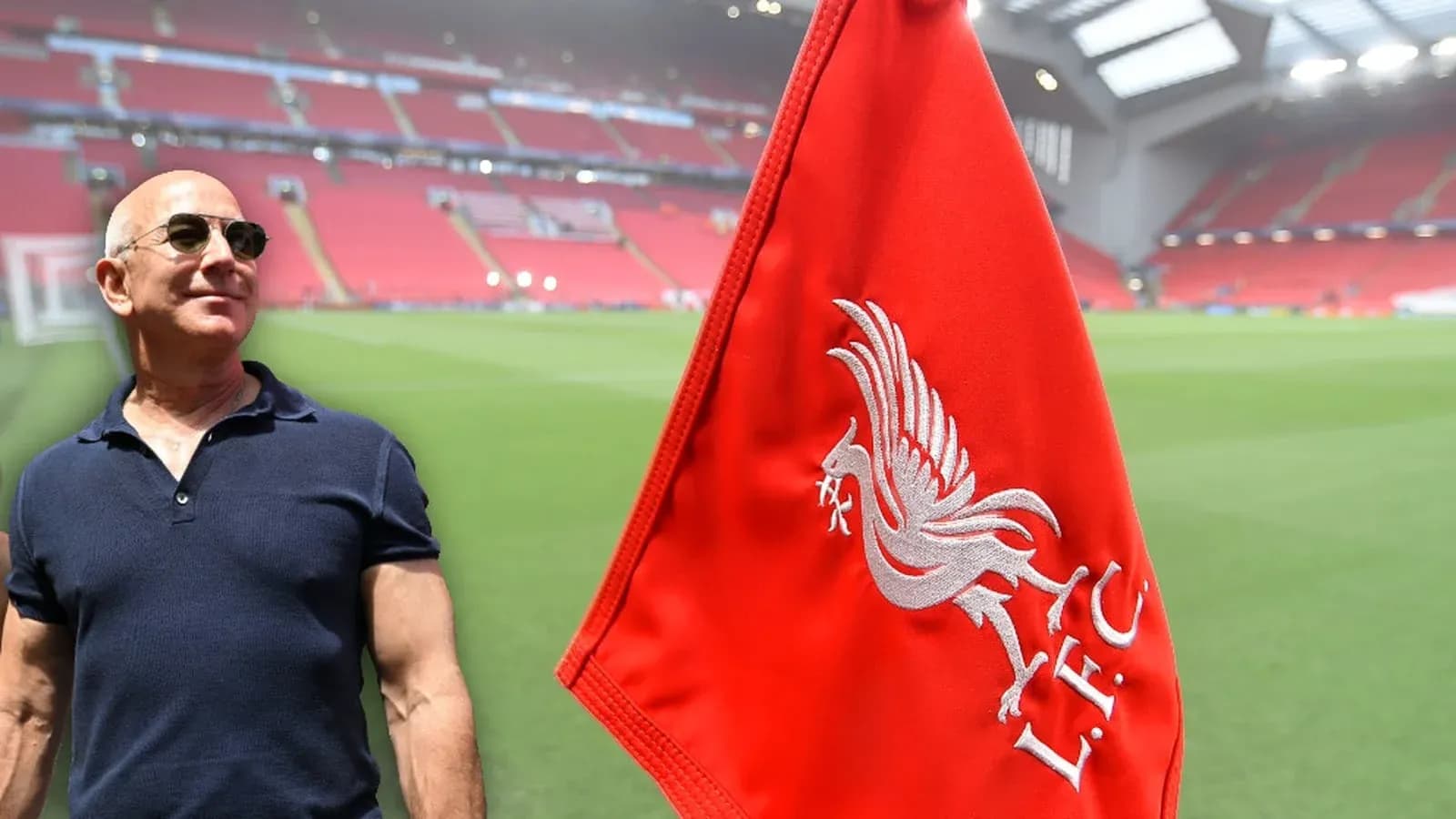
Jeff Bezos Explores Minority Stake in Liverpool Investment
Liverpool’s ownership picture could be about to gain one of the most powerful names in global business.
Jeff Bezos, the Amazon founder and one of the richest men on the planet, has held talks over potentially joining a consortium looking to buy a minority stake in the club, according to reports in the UK. Sky News say Bezos could link up with a syndicate fronted by Amit Bhatia, the son-in-law of steel magnate Lakshmi Mittal.
It would not be a takeover. This is about a slice of Liverpool, not the whole pie.
Bhatia steps forward, FSG confirm approach
On Tuesday, Fenway Sports Group publicly acknowledged that Bhatia’s group had made contact over a possible investment.
“An investment consortium led, managed, and represented by Amit Bhatia has expressed interest in making a strategic minority investment in Liverpool Football Club,” a spokesperson for FSG said.
That single sentence underlined two key points: FSG are listening, and Bhatia is very much the figurehead of the proposal.
The timing is striking. News of Bhatia’s interest in Liverpool emerged on the same day the 46-year-old ended an 18-year association with QPR, stepping down from the board and transferring his stake to majority owner Ruben Gnanalingam. One door closes in west London; another creaks open on Merseyside.
Bezos circles football after NFL flirtations
Bezos’ name instantly changes the scale of any conversation. Forbes estimates his fortune at around £192bn, a number that dwarfs the valuations of almost every major sports franchise on earth.
He has already explored elite sport from close range. Bezos looked at potential bids for the NFL’s Seattle Seahawks and Washington Commanders, sounding out the market and the mechanics of ownership in America’s biggest league, before ultimately walking away from both possibilities.
Now his attention has drifted towards one of European football’s giants. At this stage, he is in talks over joining, not leading, Bhatia’s syndicate. The structure, influence and exact size of any stake involving Bezos remain to be thrashed out, but his presence in discussions alone signals the level of capital and ambition behind the group.
FSG’s model: sell a slice, keep control
For FSG, this would be evolution, not revolution. The American owners, who also control the Boston Red Sox and the Pittsburgh Penguins, bought Liverpool in 2010 for around £300m. Forbes now values the club at roughly £4.6bn, a staggering rise over 14 years of careful — and sometimes cautious — stewardship.
They have already tested the water with external money. In 2023, FSG sold a minority stake to investment firm Dynasty, bringing in fresh capital while retaining full control of football operations and strategic direction. Any agreement with Bhatia’s group is expected to follow a similar template: a strategic minority investment, not a handover of power.
That approach allows FSG to tap into new funds for squad building, infrastructure or global expansion, while holding on to the long-term project they believe still has room to run.
A new era of money at Anfield?
The prospect of Bezos’ wealth even brushing against Anfield will inevitably raise questions. What would a Bezos-backed minority stake mean for Liverpool’s spending power in a landscape dominated by state-backed clubs and sovereign wealth? How much influence would a group fronted by Bhatia and supported by one of tech’s biggest titans actually wield in the boardroom?
Those answers lie in the fine print of any eventual deal. For now, the facts are clear enough: Bhatia’s consortium has stepped forward, FSG have confirmed the approach, and Bezos is in talks over joining the bid.
Liverpool, a club that has spent the last decade trying to balance tradition with modern finance, may be about to welcome one of the defining figures of the modern economy into its ownership circle.