
Jamshedpur FC Exits ISL: A Significant Shift in Indian Football
Nine years after Tata Steel fought to put Jamshedpur on the Indian Super League map, the lights are going out at The Furnace.
The club that packed the JRD Tata Sports Complex, the club that turned a steel city into a football town and lifted the ISL League Winners’ Shield in 2021-22 under Owen Coyle, will not be part of the top tier when the league rolls into a new era.
On Friday, Jamshedpur FC confirmed what had been whispered for weeks.
“Jamshedpur FC would like to confirm that it will not be participating in ISL from 2026-27 season onwards,” the club said in a statement, drawing a line under one of the league’s most distinctive projects.
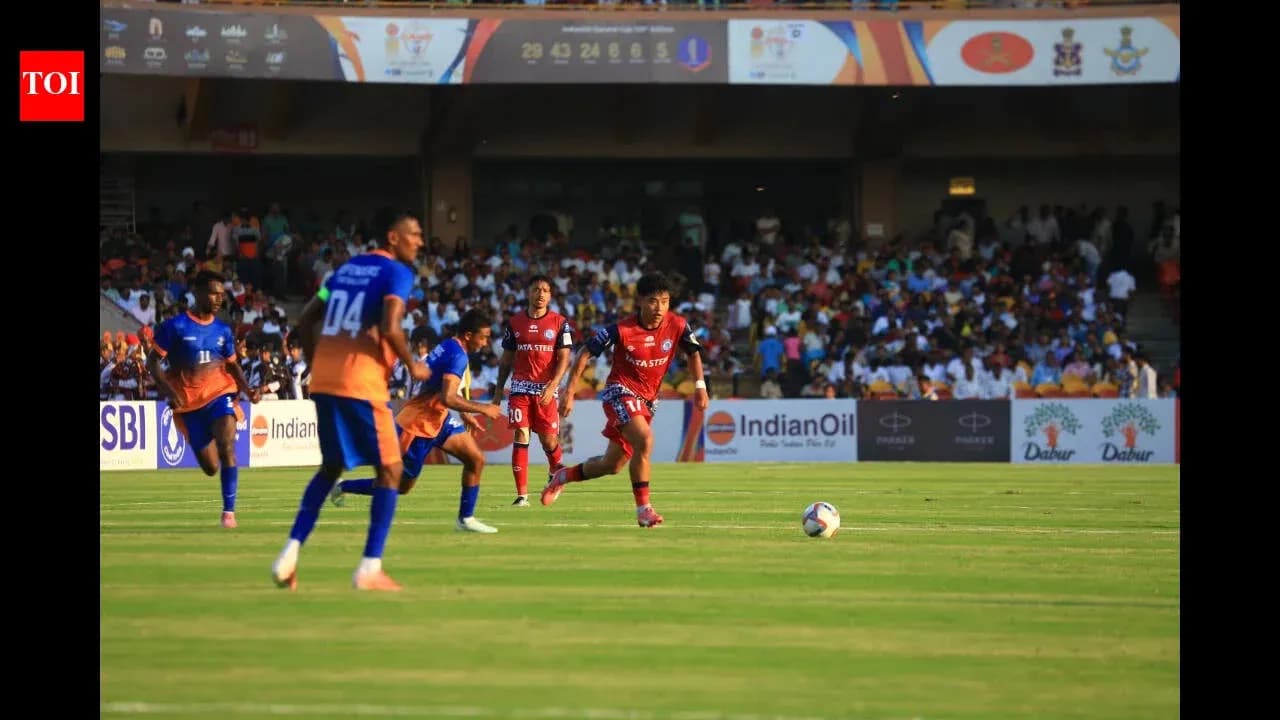
The announcement lands at a strange moment. The senior team is still on the pitch, currently competing in the Durand Cup, but the future that usually stretches beyond a pre-season tournament has been abruptly cut off.
A Sudden Full Stop
The statement leaned heavily on legacy and intent.
JFSPL underlined its “commitment” to the growth and development of football in India, stressing plans to keep investing in grassroots structures, talent identification and pathways from youth to national and international football.
What it did not say was why a club that once looked like a model ISL project is walking away from the league.
Behind the scenes, the picture is sharper. Sources indicate growing concern over mounting financial losses and doubts in some quarters about the long-term sustainability of the league. Those worries have now translated into a formal withdrawal, already communicated to the All India Football Federation.
Inside the club, the impact has been immediate. CEO Mukul Choudhari called a staff meeting and informed employees that the senior team would not continue. Around 50 members of administrative and technical staff across the first team, youth and grassroots setups have been left staring at an uncertain future.
For them, this is not just a strategic shift. It is a livelihood hanging in the balance.
A Blow to the New ISL Model
For the ISL, the timing could hardly be worse.
This is the first season of a new club-led model, with teams collectively operating the league through a dedicated entity, while the AIFF retains a 10% stake. The structure was meant to signal maturity, stability, shared responsibility.
Instead, one of the league’s champions is stepping away just as that model takes shape.
The symbolism is hard to miss: a founding-era heavyweight, backed by one of India’s most powerful industrial houses, deciding the numbers no longer add up.
On the football side, the questions pile up. Jamshedpur currently have at least 12 senior players on long-term contracts, and title-winning coach Owen Coyle is still tied to the club. No clarity has emerged on how those deals will be resolved or what comes next for the squad.
Six other players brought in on short-term contracts specifically for the Durand Cup — Raynier Fernandes, Abhishek Ambekar, Aman CK, Devendra Murgaokar, Leewan Castanha and Provat Lakra — are in a different boat, their commitments aligned to a tournament that will end long before the ISL season they were never meant to play.
For now, they play on, even as the institution behind them prepares to step away from the stage.
A Rich Legacy, An Uncertain Road
Tata’s association with Indian football predates the ISL by decades.
From its Mumbai-based team that lifted historic trophies like the Durand Cup, IFA Shield and Rovers Cup, to the residential football academy in Jamshedpur that has produced close to 150 India internationals over almost three decades, the group has rarely been a passive investor.
Tata Steel has also used its clout to bring global clubs such as PSV Eindhoven and Sao Paulo to India for friendlies, seeding ambition in a generation that grew up watching those teams only on television.
Jamshedpur FC was meant to be the modern extension of that story: a professional franchise, a packed home ground, a clear pathway from academy to first team. The 2021-22 league title under Coyle felt like validation of that vision, proof that a planned project from a non-metro city could outthink and outplay the bigger markets.
Now, the senior team is being switched off while the grassroots machinery is promised continued support. The academy and development structures may survive; the flagship has been scuttled.
The Furnace, once one of the league’s most atmospheric venues, will no longer host ISL nights. The league loses a champion, a unique football city, and a powerful symbol of what expansion beyond the traditional hubs could look like.
The official line stresses commitment to Indian football. The reality on the ground will be judged by what remains once the last Durand Cup ball is kicked, the contracts are settled, and the gates at JRD Tata Sports Complex close on top-tier football.
In a league still fighting to prove its long-term viability, the exit of Jamshedpur FC poses a hard question: if a project backed by Tata Steel cannot make the numbers and the model work, who can?



