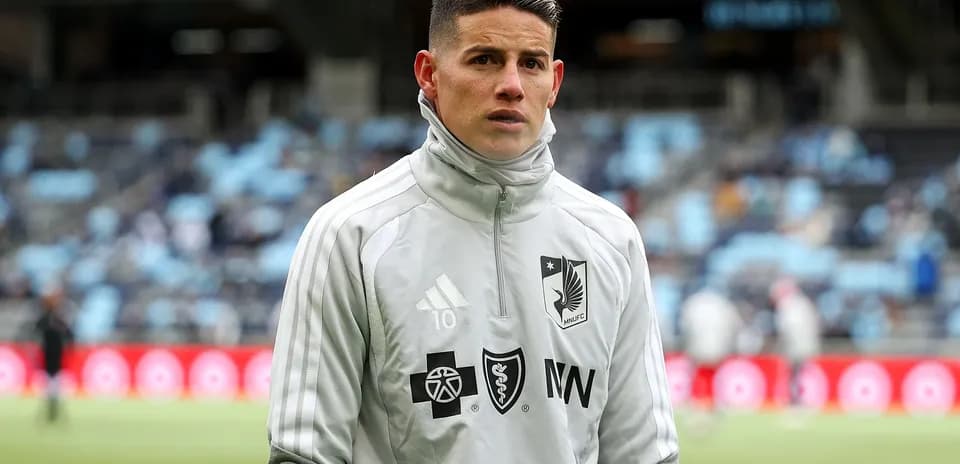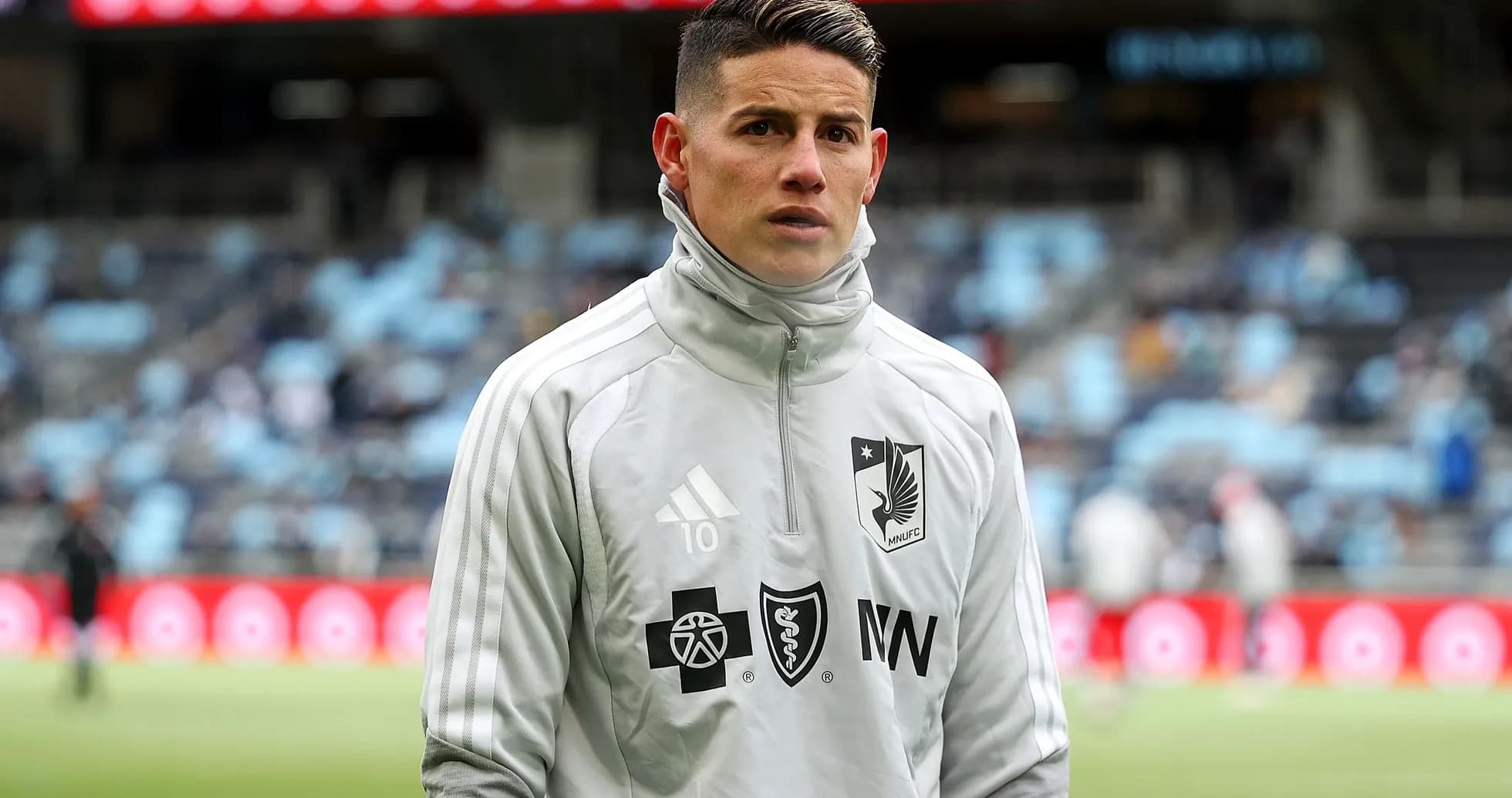
James Rodríguez has ridden out one of the more alarming weeks of his career, emerging from a hospital stay and a swirl of medical rumours to step back onto the training pitch with Minnesota United.
What began as a routine international friendly in Paris quickly turned into a health crisis.
From Paris pitch to hospital bed
On 29 March, the 2014 World Cup Golden Boot winner started for Colombia in their high-profile clash with France, a game that finished 3-1 to Les Bleus. For James, the real drama started after the final whistle.
The 34-year-old reported intense physical exhaustion in the hours following the match. The symptoms escalated fast. Doctors later diagnosed “severe dehydration”, a condition serious enough to force immediate and careful intervention.
Two days later, on the morning of 31 March, the former Real Madrid playmaker was admitted to hospital. He spent three days under constant observation, receiving fluids and intravenous treatment while the medical team worked to stabilise him and rule out more dangerous complications.
Only once his condition had clearly improved was he discharged, sent home to continue recovery under the eye of specialist doctors.
Club slams talk of ‘rhabdomyolysis’
The silence during his hospitalisation created a vacuum. It didn’t last long.
Reports in the United States claimed James was suffering from rhabdomyolysis, a serious breakdown of muscle tissue that can cause kidney failure and, in extreme cases, be life-threatening. The word alone was enough to trigger genuine concern across Colombia and among Minnesota supporters still waiting to see their new signing in full flow.
Minnesota United moved quickly and forcefully to shut that down.
In a strongly worded statement, the club insisted there was no biological or clinical evidence to support claims of rhabdomyolysis or any similar condition, stressing both the seriousness with which they treat player welfare and the importance of respecting James’ privacy.
“Minnesota United FC takes the health and privacy of its players very seriously, and we wish to make it clear that there is no medical evidence to suggest that James has rabies. We respectfully ask the public and the media to refrain from speculation and to await updates via our official channels,” the statement read, correcting misinformation and calling for restraint as the player recovered.
The message was blunt: the rumours had gone too far, and the diagnosis was clear – severe dehydration, nothing more sinister.
A fragile start in MLS
The timing of the scare could hardly be worse for James.
Since arriving in February, the Colombian has managed just 39 minutes in Minnesota colours. A string of physical issues has already slowed his adaptation to Major League Soccer, turning what was billed as a marquee arrival into a stop-start introduction.
He came to the US looking for rhythm, continuity, and a platform to relaunch his club career. Instead, the early weeks have been dominated by medical bulletins and fitness updates.
That is why the latest development matters.
On Monday, Minnesota United confirmed that James had returned to the training ground. Not with a full session, not yet, but with a light, individual workout carried out under close medical supervision.
No fanfare. Just boots back on grass.
The long road to full speed
For a player of James’ profile, the temptation will be to rush. To prove he is fine. To show why the club brought him in.
Minnesota’s staff, though, will take a different view. The plan is cautious and methodical: a gradual reintegration into group sessions over the coming days, all of it dictated by medical protocols rather than the impatience of a fanbase or the weight of his name.
The club needs his vision and creativity in the final third. Colombia will watch closely too, with another international window always looming on the horizon.
James has survived a genuine scare and cleared up the noise around his condition. The next test is tougher to measure: can his body finally give him the continuity that his talent has always deserved?