
Iran vs New Zealand: A World Cup Opener Amidst Political Turmoil
In Los Angeles, the World Cup’s grand opening act for Iran will play out under something closer to a state of emergency than a festival of football.
Iran face New Zealand at SoFi Stadium tonight with a war raging between their country and the host nation, a fanbase at open war with its own regime, and a team ordered to do the unthinkable: stop a World Cup match if the dissent in the stands grows too loud.
A World Cup opener under orders
The scale of the strain has already seeped into the squad. Captain Mehdi Taremi laid bare the mood inside the camp, describing a tournament where politics and conflict have trampled the usual joy.
“I have felt the tension from the first moment we arrived at this World Cup,” he said, pointing to the upheaval that has dogged Iran’s preparations: a forced relocation of their base to Mexico, visa complications for members of the delegation, and travelling supporters stripped of match tickets.
“This kind of tension, it undermines that joy and it undermines the message of Fifa and our people, which is that football brings about peace. I feel like this World Cup could have provided a better atmosphere than it has.”
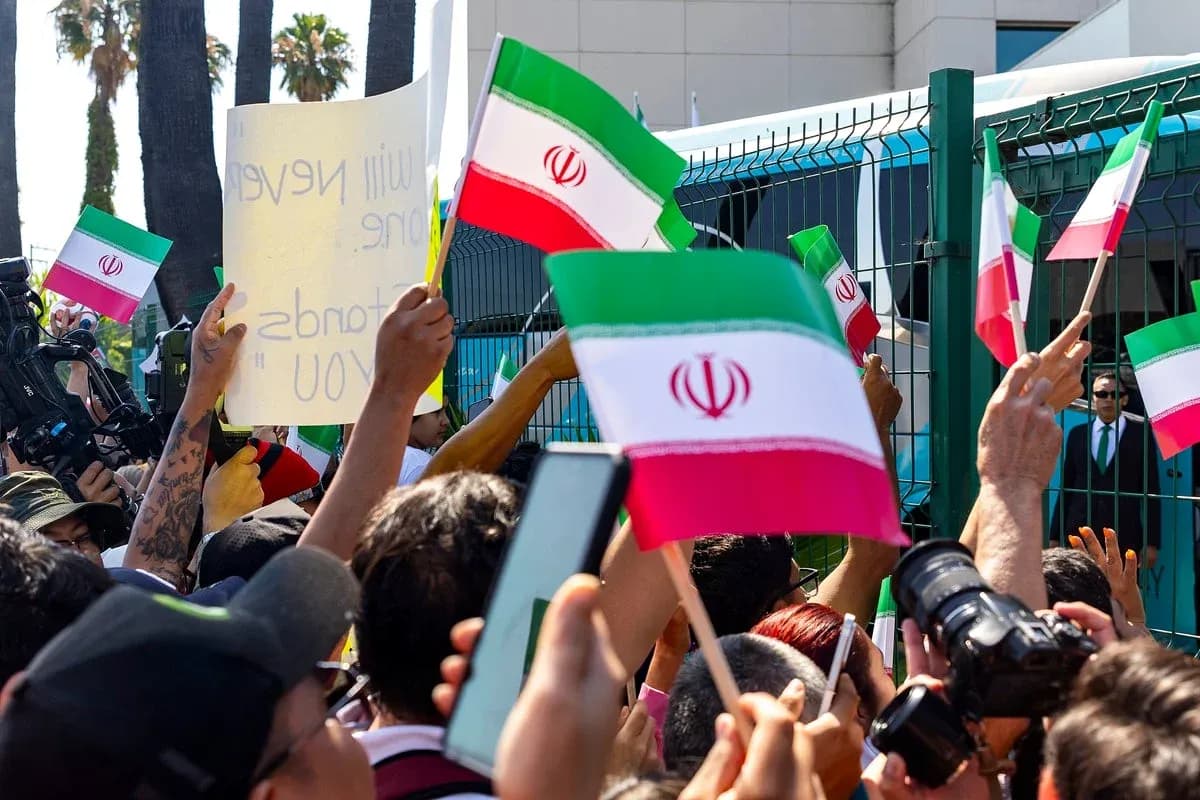
Instead of a clean build-up, Iran’s opening fixture has become a lightning rod. Protesters opposed to the ruling regime have promised to turn the night into a public reckoning.
“We’re going to make it hell”
Iranian emigrants and activists are descending on Los Angeles with a clear plan and no intention of staying quiet. Their target is not New Zealand. It is the flag, the anthem, the symbols of the state.
Outside and inside SoFi Stadium, protesters intend to boo the anthem, turn their backs as it plays and unfurl pre-revolutionary flags – banners Fifa has prohibited in stadiums.
“We’re going to make it hell,” one activist told the Daily Mail, explaining that buses would leave from San Diego, Orange County and cities across LA to converge on the game. The aim is unmistakable: to drown the ceremony in hostility towards the regime.
“We’re going to boo the anthem that is going to play. We're going to turn our backs during the anthem so we will have our flags showing.
“I know Fifa banned it [the flag] but we will make a way to get it in. So we're going to see this flag, not the terrorist regime’s flag.”
That defiance collides head-on with the instructions given to Iran coach Amir Ghalenoei.
Ghalenoei’s impossible brief
Ghalenoei has been told by the government to halt the match if pre-revolutionary flags appear or if negative chanting against the regime is clearly audible. It is a surreal directive for any manager, let alone at a World Cup, where the spectacle and the schedule are supposed to be sacrosanct.
Yet publicly, he tried to push all of that into the background.
“We don’t pay attention to any of the hype and anything that goes on around us,” he said on Friday. “We are here to represent the respectful people of Iran, be it the Iranians inside Iran or the Iranian diaspora.
“We are not political people... football is separate from politics.”
The words jar with the reality. This is a team whose very presence in the United States is framed by conflict, whose coach has been given political instructions that could rip up the script of a World Cup match in front of the watching world.
The possibility hangs over the game like a storm cloud: a referee’s whistle, a touchline conversation, and then what? Players walking off? A stand-off with officials? A global broadcast frozen on an unprecedented act of protest and power.
A first in World Cup history
Kieran Jackson has already captured the hard truth: in 96 years of World Cup history, this is the first time a competing nation is at war with the host. That alone would make Iran’s campaign perilous and strange.
Layer on top the threat of in-stadium revolt from their own people, and the picture becomes almost dystopian. Tonight’s meeting with New Zealand is not just a group-stage opener; it is a test of how far politics can seep into football before the sport itself fractures.
Inside the dressing room, players must somehow cut through the noise and face a New Zealand side focused only on points and progression. Outside it, every anthem note, every flag, every chant will be scrutinised.
This is the World Cup, but not as anyone knew it. The only question now is whether the football survives the night without being stopped in its tracks.



