Ipswich vs Liverpool: Premier League Match Analysis
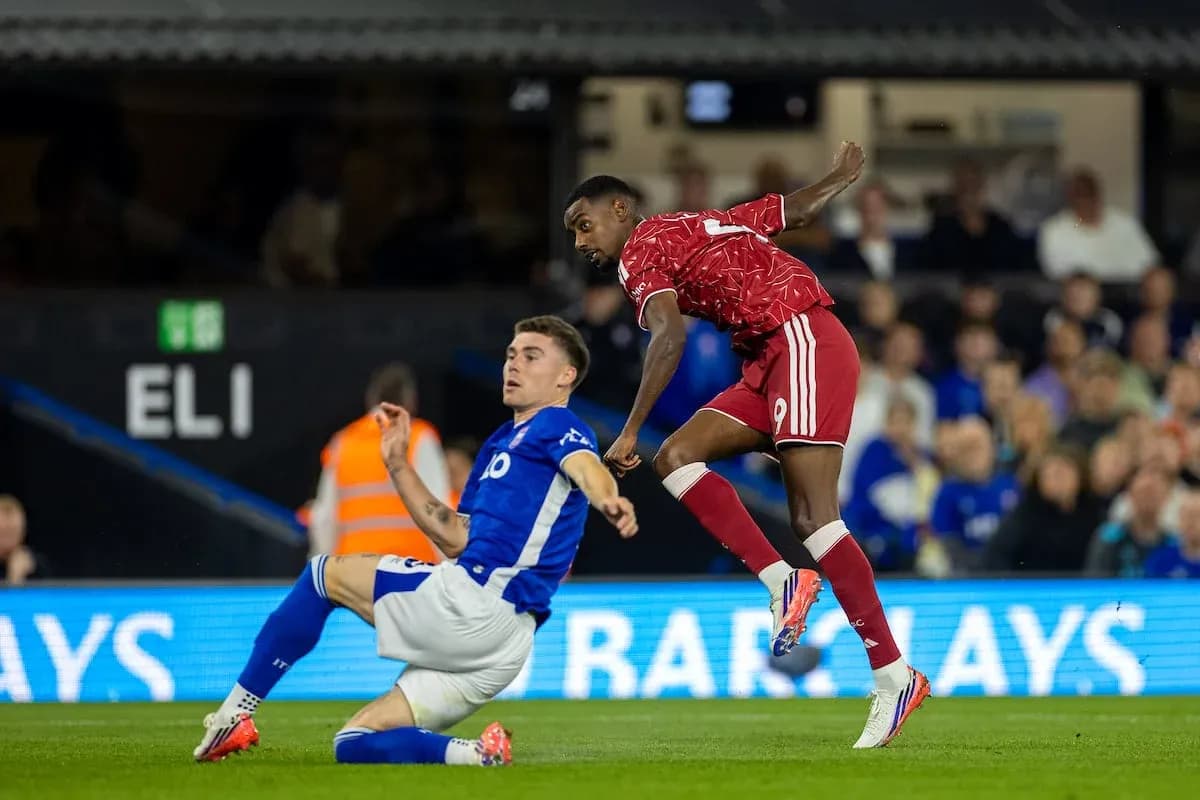
Portman Road under the Friday night lights staged a reminder of the Premier League’s harsh learning curve. Ipswich, newly back among the elite and sitting 14th heading into this game with 3 points from 3 matches, were methodical and brave in their 4-2-3-1. Liverpool, 6th with 5 points and still unbeaten, arrived with the same shape but a very different level of polish and depth. By full time, a 2-0 away win felt like the natural extension of each side’s early‑season DNA.
Ipswich’s campaign so far has been defined by volatility. Overall they had scored 4 goals and conceded 8 heading into this fixture, a goal difference of -4 built on sharp attacking flashes but porous defending. At home they had split their first two matches – one win, one defeat – with 2 goals for and 3 against. The numbers underline a side that can hurt opponents (1.3 goals scored per match overall, with 2.0 on their travels) but is constantly walking a defensive tightrope, conceding 2.7 per game in total and 5.0 away.
G. O’Neil stayed loyal to the 4-2-3-1 that has underpinned all three league games so far. K. Scherpen anchored the side behind a back four of D. O’Shea, I. Diop, J. Greaves and L. Davis. In front, S. Lukić and E. Palacios formed a double pivot tasked with both screening and launching transitions. Ahead of them, the creative burden again fell on the trio of A. Fatawu, J. Enciso and D. Maeda, with Emersonn as the lone forward.
The absences only amplified how thin Ipswich’s margin for error is at this level. A. Matusiwa’s injury robbed O’Neil of a natural ball-winner who could have added bite and protection in front of the defence. The loss of J. Philogene removed a direct wide threat who might have pinned back Liverpool’s full-backs, while J. Taylor’s knee injury further limited rotation in advanced roles. On a night where Liverpool’s bench was stacked with options, Ipswich’s list of absentees felt particularly heavy.
Liverpool’s own injury sheet was longer in absolute terms – C. Bradley, F. Chiesa, H. Ekitike, J. Gomez and G. Leoni were all ruled out – but Andoni Iraola’s starting XI still oozed quality. Alisson Becker was shielded by a back line of R. Araújo, J. Jacquet, V. van Dijk and M. Kerkez, with D. Szoboszlai and A. Mac Allister controlling the central lanes. Ahead of them, Víctor Muñoz, F. Wirtz and C. Gakpo floated behind A. Isak, the league’s leading scorer with 3 goals from 3 appearances heading into the match.
The contrast in defensive profiles set the stage. Liverpool had conceded 4 goals overall from their first 3 matches – 2 at home and 2 away – for a goal difference of +2 (6 scored, 4 conceded). On their travels, they had allowed just 2 goals in 2 games while scoring 4, underpinning a calm, structured away persona. Ipswich, by comparison, had yet to keep a single clean sheet either home or away, and had already failed to score once at home. Against a Liverpool side averaging 2.0 goals scored per match both at Anfield and on their travels, the defensive strain on Scherpen’s back four was always going to be severe.
Individually, the “Hunter vs Shield” duel was obvious. A. Isak, with 7 shots and 5 on target in his opening 3 games, arrived as the division’s most clinical centre-forward. His movement between centre-backs and into the channels was a direct examination of Diop and Greaves’ concentration and mobility. Any lapse in Ipswich’s compactness – especially with Lukić and Palacios stepping forward to press – risked leaving the back line exposed to Isak’s runs and Wirtz’s through balls.
On the flanks, the “Engine Room” of the contest revolved around C. Gakpo and Ipswich’s wide pair. Gakpo’s early-season numbers – 1 goal, 3 assists, 8 key passes and 32 duels contested overall – paint the picture of a wide playmaker who can both progress the ball and counter-press aggressively. Up against him, A. Fatawu has been Ipswich’s own chaos agent: 15 dribbles attempted, 7 successful, and 44 duels contested overall, winning 21. That clash of high-volume dueler versus disciplined, two-way creator was always going to dictate which side controlled the wide channels.
On the opposite side, J. Enciso’s creativity was Ipswich’s clearest route to upsetting the odds. With 2 assists already this season, 11 shots and 4 key passes, he has been the one player capable of bending the tempo to Ipswich’s will. But Liverpool’s left, marshalled by M. Kerkez, is an aggressive defensive zone. Kerkez had already made 6 tackles and 3 successful blocks, while committing 5 fouls and collecting 2 yellow cards overall – a defender who defends on the front foot and lives on the disciplinary edge. His presence, alongside the yellow-card record of Araújo, dovetails with Liverpool’s broader card profile: 40.00% of their yellow cards this season have come between 46-60 minutes, with another 20.00% in each of the 16-30 and 76-90 windows. For Ipswich, that suggested a second-half opportunity to draw fouls and possibly tilt momentum if Enciso and Maeda could isolate Kerkez repeatedly.
Discipline on Ipswich’s side has been less dramatic but more clustered. Overall, 75.00% of their yellow cards have arrived between 31-45 minutes, with the remaining 25.00% between 46-60. That pattern hints at a team that grows increasingly stretched as the first half wears on, then comes out of the break still on the edge. Against Liverpool’s structured, possession-heavy game, any late-first-half rashness was always likely to invite pressure and, ultimately, punishment.
Tactically, both teams’ season-long commitment to 4-2-3-1 framed a battle of execution rather than innovation. Liverpool’s double pivot of Szoboszlai and Mac Allister, with their superior passing range and press resistance, offered a far more stable launchpad than Ipswich’s. Víctor Muñoz and Wirtz floating between the lines posed constant questions that Ipswich’s pivots had struggled to answer even against less fluid opponents in previous rounds.
From a statistical prognosis point of view, Liverpool’s away profile simply looked more sustainable. They had yet to lose, had already recorded a 0-2 away win as their biggest victory on the road, and had not failed to score in any match. Ipswich, by contrast, had conceded 5 on their travels and 3 at home, with no clean sheets in any venue. Even without explicit xG figures, the shot and chance creation data from Liverpool’s leading lights – Isak’s shot volume, Gakpo’s key passes, Wirtz’s creative role – pointed toward a visiting side far more likely to generate high-quality opportunities.
In the end, the 2-0 scoreline at Portman Road felt like the logical intersection of these trends. Liverpool’s superior defensive solidity on their travels, their ruthlessness in the final third, and the depth to absorb multiple injuries outweighed Ipswich’s spirited but fragile structure. For O’Neil, the lesson is clear: the attacking talent of Enciso and Fatawu can trouble anyone, but until the defensive metrics shift – particularly the 2.7 goals conceded per game overall and the absence of clean sheets – nights like this against the league’s heavyweights will remain unforgiving.