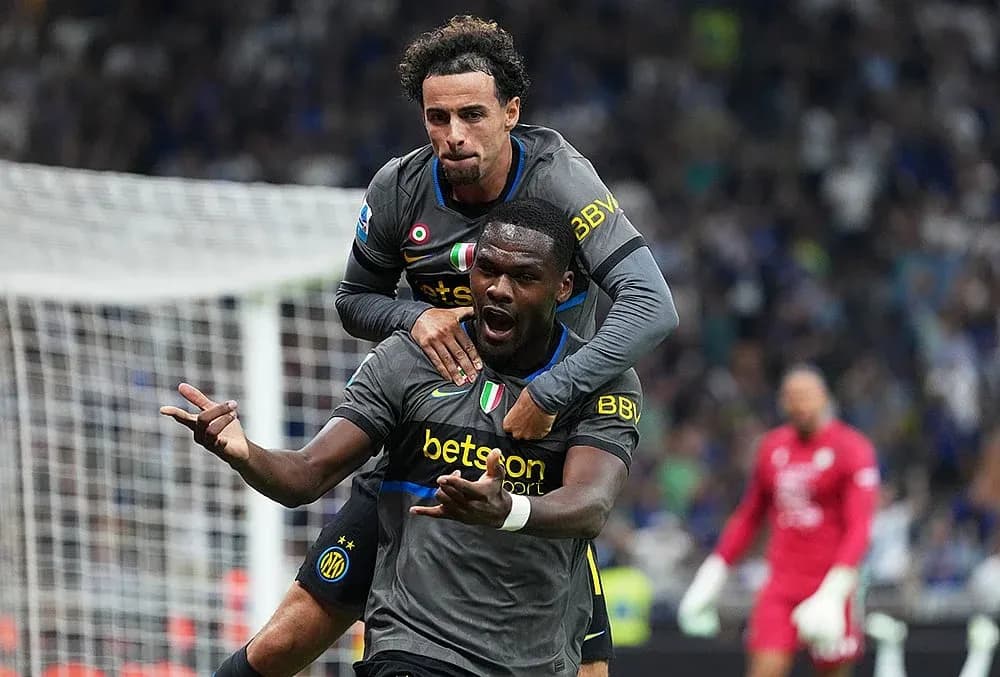
Inter's Thrilling 5-3 Victory Over Udinese: A Tactical Analysis
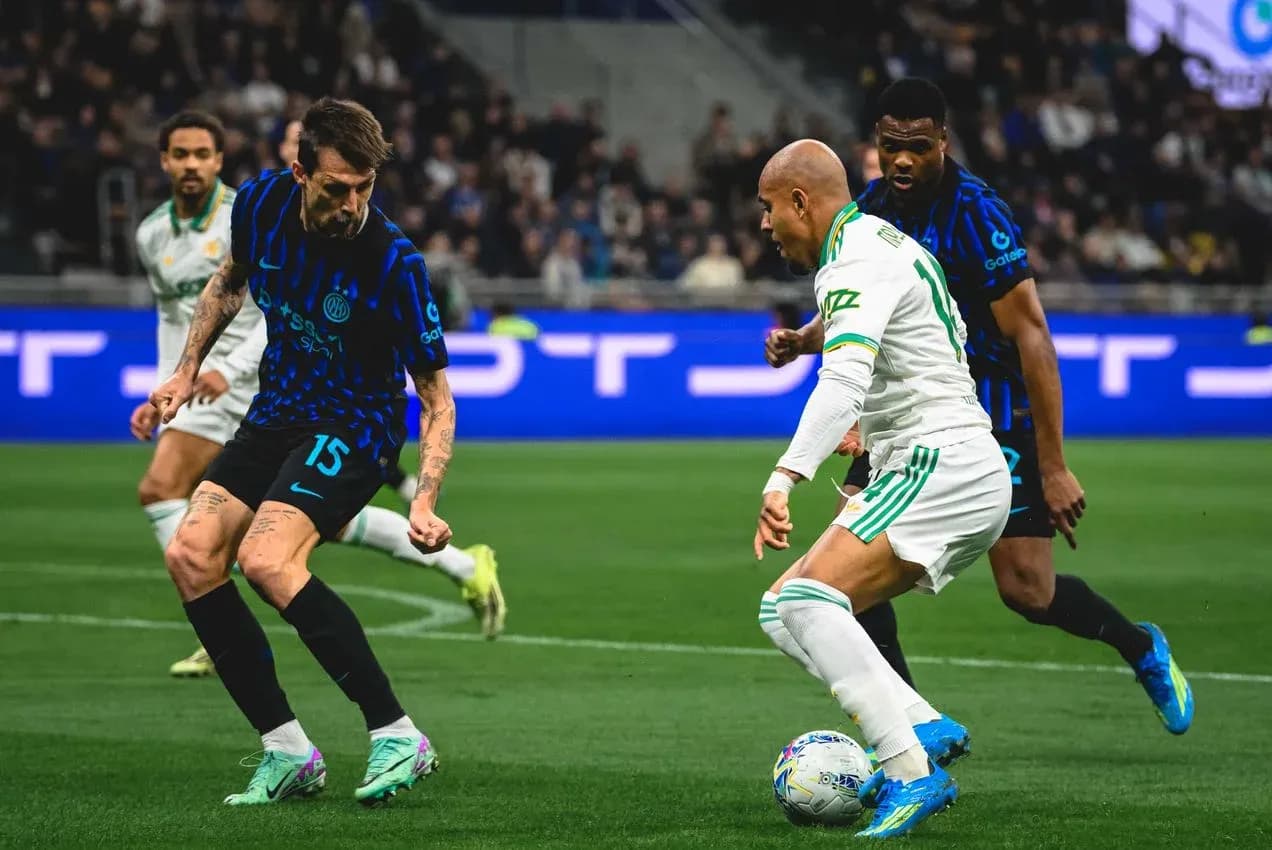
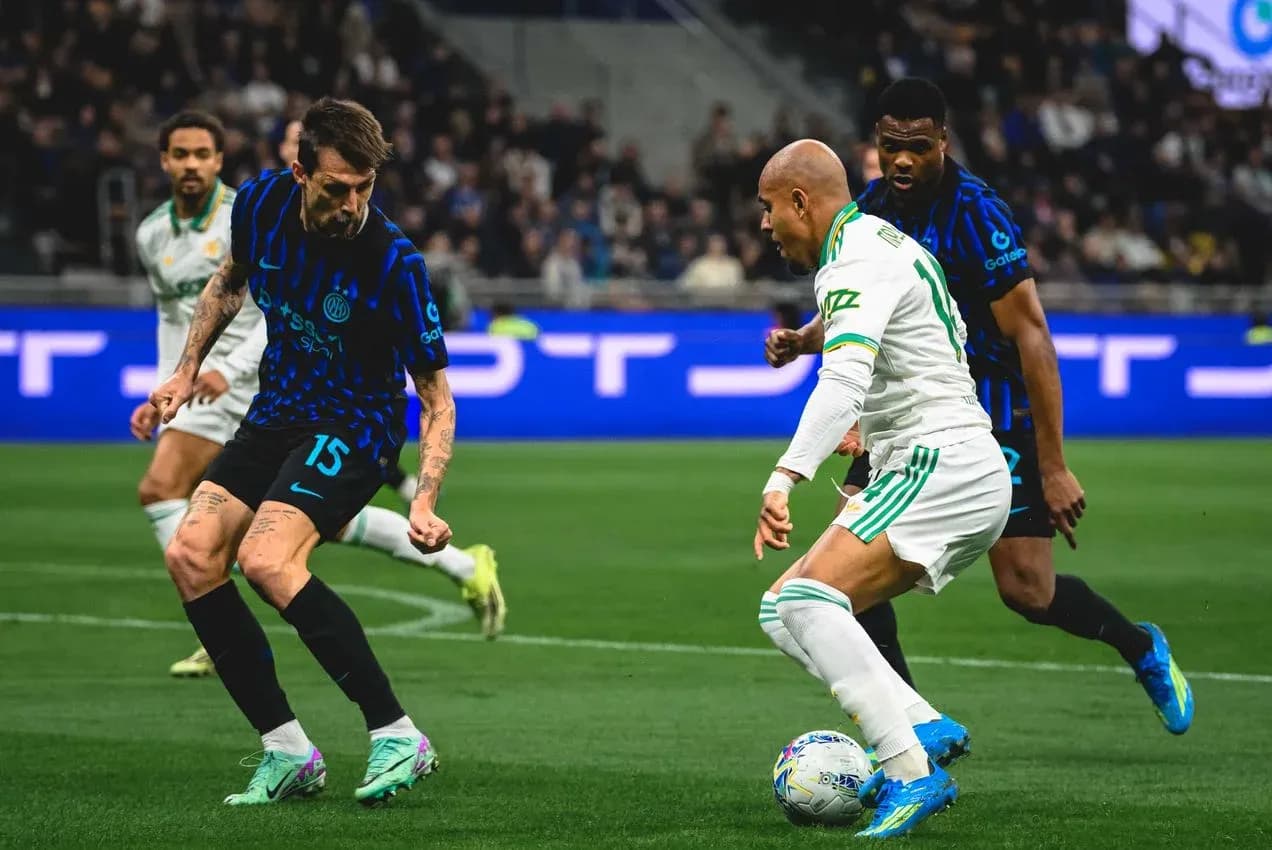
Under the lights of San Siro, this “finished in regular time” thriller between Inter and Udinese felt less like a routine early-season league game and more like a stress test of each side’s identity. Inter emerged 5–3 winners, a scoreline that both confirmed their attacking supremacy and underlined the defensive looseness that still shadows their perfect start.
I. The Big Picture – Form, table and structural DNA
Following this result, Inter sit in 2nd place in Serie A with 12 points from 4 matches, a flawless run of four wins that has already carved out a clear profile: high-volume, high-risk football. Overall this campaign they have scored 13 goals and conceded 6; the goal difference of +7 is exactly what you would expect from a side that overwhelms opponents more than it controls them.
At home, the numbers are even more extreme. Across 3 home matches they have scored 12 and conceded 6, averaging 4.0 goals for and 2.0 against per game at San Siro. Cristian Chivu has doubled down on a 3-5-2 that is not merely a shape but a statement: Inter will pin you back with wing-backs, overload the half-spaces with creative midfielders, and trust their forwards to finish in flurries rather than in drips.
Udinese, by contrast, leave Milano with a record that tells of volatility. Overall they have 4 points from 4 matches, sitting 13th with a goal difference of -2 (8 scored, 10 conceded). On their travels, the split is stark: 6 goals scored and 7 conceded in 2 away games, an away average of 3.0 goals for and 3.5 against. Kosta Runjaic’s 3-4-2-1 is adventurous, but the defensive platform is not yet stable enough to sustain it against elite attacks like Inter’s.
II. Tactical Voids – Absences and discipline
This fixture was shaped as much by who was missing as by who played. Inter were without H. Calhanoglu, sidelined by a muscle injury, and D. Spence, also out injured. Calhanoglu’s absence removed the natural metronome and deep-lying playmaker from Chivu’s structure, forcing creativity to be redistributed across N. Barella, P. Zielinski and H. Mkhitaryan. It also subtly changed set-piece dynamics and long-range threat.
Udinese’s absences were even more acute in terms of balance. J. Arizala (thigh injury), M. Palma (muscle injury), J. Piotrowski (heart problems), O. Solet (injury), N. Zaniolo (thigh injury) and A. Zanoli (knee injury) all missed out. Solet’s absence weakened the defensive core, while being without Piotrowski – a midfielder with both bite and discipline, already carrying 2 yellow cards this season – removed a natural enforcer who could have disrupted Inter’s combinations between the lines.
The disciplinary trends of both sides added another layer. Inter’s yellow-card pattern this season shows a pronounced spike right after the interval: 40.00% of their cautions have come between 46–60 minutes, with 20.00% in each of the 0–15, 31–45 and 61–75 windows. That profile fits a side that presses aggressively and sometimes over-commits when re-establishing control after half-time.
Udinese’s bookings are more evenly spread but still telling: 22.22% of their yellows arrive in each of the 16–30 and 31–45 minute ranges, with 11.11% in several other windows including 76–90 and 91–105. They are a team that can be drawn into fouls across the full 90, which is dangerous against a side like Inter that thrives on repeated free-kick and crossing situations.
Neither team has seen a red card in league play so far, and both have yet to win or miss a penalty this campaign; from the spot, there is no psychological baggage either way.
III. Key Matchups – Hunter vs Shield, Engine Room battles
The clearest “Hunter vs Shield” duel came in the form of Inter’s front line against Udinese’s away defensive record. Heading into this game, Udinese were conceding an away average of 3.5 goals per match, and Inter’s home average of 4.0 goals scored suggested that any open contest would tilt heavily towards the Nerazzurri.
M. Thuram and F. Esposito, both already on 2 league goals each, led the line in Chivu’s 3-5-2. Thuram’s profile this season – 9 shots with 4 on target, 2 goals, 1 assist and an 86% passing accuracy – paints him as a high-efficiency focal point who can both finish and connect. Esposito, also on 2 goals and 1 assist from 4 appearances, has taken 9 shots with 5 on target and drawn 8 fouls, showing a knack for occupying centre-backs and forcing defensive errors.
Up against them, Udinese’s back three of J. Abankwah, C. Kabasele and E. Ebosse were asked to hold a line that has already leaked 7 away goals. Without Solet’s presence and with the wing-backs M. Vojvoda and H. Kamara naturally aggressive in their positioning, the channels between centre-back and wing-back were always likely to be exposed by Thuram’s diagonal runs and Esposito’s movement off the shoulder.
In the “Engine Room”, the duel between Inter’s midfield five and Udinese’s central quartet defined the rhythm. A. Diouf, one of Serie A’s leading assist providers with 3 already, is the creative hinge: 127 passes at 91% accuracy, 13 key passes, and 4 tackles underline a midfielder who can both dictate and disrupt. Alongside him, Barella and Zielinski added verticality and late runs, while Mkhitaryan and Carlos Augusto provided the connective tissue between lines.
Udinese’s response ran through H. Kamara and J. Karlstrom. Kamara has been outstanding this season: 2 goals, 1 assist, 106 passes at 80% accuracy, 12 tackles, 1 blocked shot and 4 interceptions. He is simultaneously their outlet and their first defender in transition. Karlstrom’s role as the stabiliser was complicated by Inter’s willingness to flood central spaces with three interior midfielders and two forwards dropping in.
Further ahead, J. Ekkelenkamp and K. Davis formed a fluid support line behind the striker. Ekkelenkamp’s 2 goals, 1 assist, 6 shots (4 on target) and 7 tackles make him a rare hybrid threat: he can arrive in the box late but also press and tackle high. Davis, with 2 assists and 5 key passes from 71 total passes, offers link play and target-man qualities, though his 1 yellow card hints at the physical edge he brings.
IV. Statistical Prognosis – What this game tells us going forward
A 5–3 scoreline is the natural meeting point of these profiles. Inter’s total average of 3.3 goals scored and 1.5 conceded per game, combined with Udinese’s total average of 2.0 scored and 2.5 conceded, made a high-scoring contest more probability than possibility. Even without explicit xG data, the shot volumes and chance creation numbers of key players point towards a match in which Inter would generate the higher-quality opportunities.
Defensively, Inter’s overall figure of 6 goals conceded in 4 matches – with 6 of those at home – confirms that their back three of M. Akanji, J. Stones and A. Bastoni is still adjusting to the aggressive rest-defence demands of Chivu’s system. Yet their ability to outscore problems is currently overwhelming domestic opposition.
Udinese, meanwhile, leave with evidence of their attacking potential but a clear warning: on their travels they are too open. Scoring 6 away goals in 2 matches is impressive; conceding 7 in the same span is unsustainable, especially against sides with the individual quality of Thuram, Esposito, Diouf and, from the bench, L. Martinez.
Following this result, the tactical verdict is clear. Inter’s 3-5-2, powered by a creative midfield core and a ruthless front line, is built to dominate high-event games and will continue to generate strong underlying numbers. Udinese’s 3-4-2-1 can hurt teams, particularly through Kamara and Ekkelenkamp, but until their defensive structure tightens, especially in away fixtures, they will remain a side whose matches are decided more by chaos than control.