Inter's Dominance Over Napoli in Serie A Clash
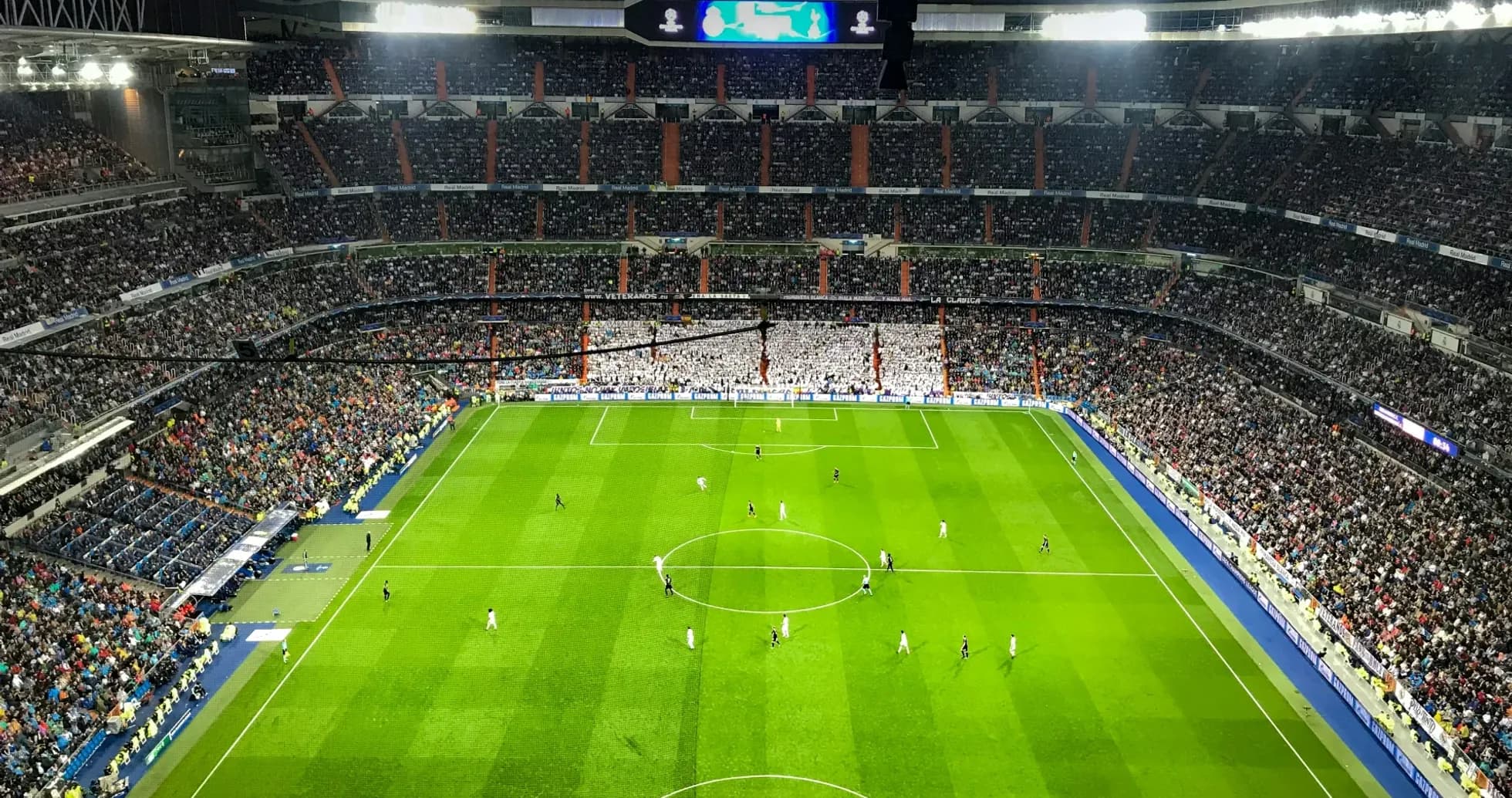
Under the late-summer lights of San Siro, this was billed as a meeting between two very different versions of themselves. Inter arrived as a ruthless, early-season machine; Napoli as a talented but unsettled side still learning its new patterns. The 3–2 final score to Inter felt exactly like that: a superior structure holding off a volatile, high-ceiling opponent.
I. The Big Picture: Form, Table, and Tactical DNA
Following this result in Serie A’s Regular Season - 3, the table tells a clear story. Inter sit 2nd with 9 points from 3 matches, a perfect record of three wins from three. Overall they have scored 8 and conceded 3, a goal difference of +5 that matches their standings figure and underlines a dominant yet front-loaded profile: at home they have already scored 7 and conceded 3 in just 2 matches, averaging 3.5 goals for and 1.5 against at San Siro.
Napoli, by contrast, leave Milano in 13th on 3 points from 3 games, their season split between promise and fragility. Overall they have scored 5 and conceded 5, a goal difference of 0 that encapsulates a side capable of hurting anyone but unable to control matches. On their travels they have 1 win and 1 defeat from 2 away fixtures, with 4 goals scored and 3 conceded, an away average of 2.0 goals for and 1.5 against that makes them dangerous but exposed.
Inter’s season-long statistics confirm the eye test. Heading into this game they had won all 3 fixtures, failed to keep a clean sheet at home but maintained a clean sheet once away, and never failed to score. Their default 3-5-2, used in all 3 league matches, has become a platform for territorial dominance and sustained pressure.
Napoli’s numbers are more unstable. Heading into this match they had 1 win and 2 defeats overall, with a single clean sheet coming away from home. Their 4-3-3, also used in all 3 games, is built for verticality and quick strikes rather than control.
II. Tactical Voids: Absences and Discipline
Both coaches had to navigate key absences that shaped the tactical landscape.
For Inter, D. Spence was ruled out through injury and M. Spinacce was unavailable due to inactivity. Neither is central to Cristian Chivu’s core structure, but their absence narrowed his rotational options in wide and defensive roles, subtly increasing the physical load on starters like Y. Bisseck and F. Dimarco.
Napoli’s missing list was far more consequential. A. Buongiorno (knee injury), Giovane (groin injury), L. Marianucci (knee injury) and S. McTominay (heart problems) all sat out. The absence of Buongiorno in particular stripped Massimiliano Allegri of a key defensive profile, forcing Rafa Marín and A. Rrahmani to shoulder more responsibility in the heart of the back line, with L. Spinazzola and G. Di Lorenzo stretched wide against Inter’s wing-backs.
The disciplinary backdrop added another layer. Inter’s season-long yellow-card distribution shows a steady drip of cautions across the first 75 minutes, with 25.00% of their yellows in each of the 0–15, 31–45, 46–60 and 61–75 ranges. That pattern reflects an aggressive, front-foot side that fouls to sustain pressure and kill transitions early. Napoli, meanwhile, concentrate their yellows in the middle and late phases: 50.00% between 31–45, 25.00% from 46–60 and 25.00% from 76–90. This points to a team that starts relatively clean but becomes reactive as matches slip away from their control.
On an individual level, Lautaro Martínez’s 2 yellow cards in 3 appearances underline the edge with which he leads the line. M. Akanji and H. Çalhanoğlu also carry single yellows, mirroring Inter’s willingness to defend high and aggressively. For Napoli, Matteo Politano, Rafa Marín and G. Di Lorenzo each have 1 yellow, consistent with a back line and wide forward often defending large spaces in transition.
III. Key Matchups: Hunter vs Shield, Engine Room vs Enforcer
The match unfolded around a series of duels that had been foreshadowed by the season data.
Hunter vs Shield: Lautaro and Esposito vs Marín and Rrahmani
Inter’s attacking core is led by Lautaro Martínez and F. Esposito, both already on the scoresheet this season. Lautaro’s 2 goals from 13 shots and 4 on target, combined with 29 total duels (12 won), make him a relentless, multi-phase threat. Esposito adds 1 goal and 1 assist, with 8 shots (4 on target) and 24 duels contested, winning 15. Together they embody Inter’s volume-based, penalty-box aggression.
Against them, Napoli leaned on Rafa Marín and A. Rrahmani as the central shield. Marín’s season numbers are revealing: 147 passes at 93% accuracy, 5 tackles, 3 blocks and 3 interceptions, but also 7 fouls committed and a yellow card. He is active, brave, but can be drawn into risky challenges when isolated. Inter’s 3-5-2, with Esposito and Lautaro constantly pinning and spinning between the lines, was designed to stress exactly that tendency, and the 3 goals conceded by Napoli confirm how often their back line was stretched.
Engine Room: Barella, Çalhanoğlu, Diouf vs Lobotka, Anguissa, Vergara
If the front lines were about power, the midfield was about control and creativity. For Inter, N. Barella and P. Zielinski formed the central core, but the statistical heartbeat comes from H. Çalhanoğlu and A. Diouf.
Çalhanoğlu arrived with 2 goals, 151 passes at 90% accuracy and 5 key passes, plus 4 tackles and 3 interceptions. He is both metronome and shot threat, and from the bench H. Calhanoglu remained a decisive weapon if Chivu wanted to tilt the game’s rhythm. Diouf, with 2 assists and 10 key passes in just 165 minutes, is one of Serie A’s early creative standouts, threading vertical passes between the lines and linking with Dimarco and Esposito.
Napoli’s response came through S. Lobotka’s circulation, F. Anguissa’s ball-winning and A. Vergara’s emergent two-way presence. Vergara’s 1 goal, 1 assist, 23 passes at 91% accuracy, 6 tackles and 2 interceptions make him a rare profile: a midfielder who can both break up play and arrive decisively in the final third. Yet against Inter’s five-man midfield, Napoli’s trio often found themselves outnumbered in central zones, forced to shuttle laterally to protect the half-spaces opened by Dimarco and A. Diouf.
Wide Channels: Dimarco vs Di Lorenzo, Politano vs Bastoni
Inter’s 3-5-2 lives through its wing-backs, and F. Dimarco is already among the league’s top providers with 1 assist, 12 key passes and 144 total passes at 85% accuracy. His duel with G. Di Lorenzo, who has 9 tackles, 2 blocks and 2 interceptions but also must contribute 1 assist and 4 dribble attempts, was a structural hinge. Every time Dimarco advanced, Di Lorenzo had to choose between pressing high or protecting the space behind him for Esposito and Lautaro to attack.
On the opposite flank, Politano – 1 goal, 3 key passes, 3 tackles and a yellow card – tested Inter’s left-sided trio of A. Bastoni, Dimarco and the nearest midfielder. Politano’s ability to drive inside onto his stronger foot forced Inter’s back three to shift, but the sheer volume of Inter’s possession meant Napoli’s right winger often had to defend deeper than he would like.
IV. Statistical Prognosis and Tactical Verdict
Looking at the season metrics heading into this fixture, Inter’s superiority felt structural rather than merely situational. Overall they averaged 2.7 goals scored and 1.0 conceded per match, with a perfect record and no failures to score. Napoli’s overall averages of 1.7 scored and 1.7 conceded, combined with 2 defeats in 3, painted the picture of a side that lives on fine margins.
Neither team had taken or missed a penalty this season, so there was no spot-kick edge to tilt the balance. Instead, the game was always likely to be decided in open play: Inter’s sustained pressure, wing-back overloads and dual striker movement against Napoli’s capacity for sudden, vertical punches through R. Højlund, Politano and the late introduction of K. De Bruyne.
The 3–2 scoreline ultimately mirrors the underlying numbers. Inter’s home attacking power – 7 goals at home in 2 matches heading into the night – was always likely to overwhelm a Napoli defence that had already conceded 3 on their travels. Napoli’s own away scoring average of 2.0 ensured they would land blows of their own, but not enough to outlast a side as balanced and relentless as Chivu’s.
In narrative terms, this felt less like a shock and more like confirmation. Inter look every inch a Champions League stage contender, their 3-5-2 humming with defined roles and statistical backing. Napoli, for all their individual brilliance and flashes of quality from Højlund, Vergara and De Bruyne, remain a work in progress: dangerous, watchable, but still searching for the defensive solidity and midfield control that would turn nights like this into statements rather than near-misses.