Inquest into Nobby Stiles’ Death Ordered as CTE Confirmed
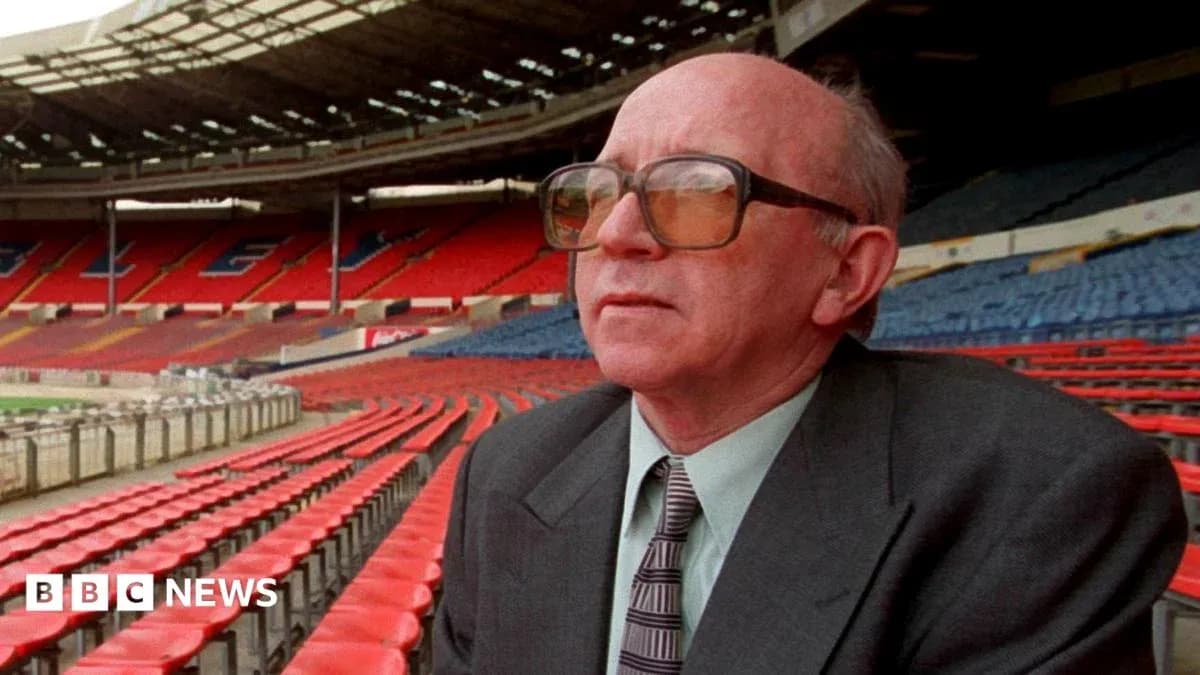
Nobby Stiles, the toothless terrier of England’s 1966 World Cup triumph, died with a traumatic brain injury and chronic traumatic encephalopathy (CTE), a court has heard, as a coroner ruled that an inquest into his death must finally be held.
Stiles, a fierce defensive midfielder who embodied the grit of both Manchester and Manchester United, died in 2020 aged 78. Only now is the full weight of what happened to him being examined in a courtroom.
A World Cup Hero, a Troubled Decline
Born in Manchester in 1942, Norbert “Nobby” Stiles played nearly 400 times for Man Utd and won 28 caps for England. His tackling was uncompromising, his heading fearless. That fearlessness is now at the centre of a legal and medical reckoning.
Stiles’ family has long argued that football “killed” him. They say the damage came from a lifetime of heading heavy balls and the cumulative blows of a brutal era. They have campaigned relentlessly for football’s authorities to face up to what happened to their father and to so many of his generation.
He ended his life with dementia, forced to sell his World Cup and European Cup winner’s medals to fund his care. The image of one of England’s greatest servants auctioning off the symbols of his glory years still hangs over the sport.
Coroner: Traumatic Injury Means Inquest “Required”
At Stockport coroner’s court, area coroner for Greater Manchester South, Chris Morris, confirmed that Stiles had been diagnosed after his death with CTE, the degenerative brain disease increasingly linked to repeated head impacts.
His brain had been examined by neuropathology expert Dr Daniel du Plessis, who reviewed both the tissue and Stiles’ medical records. Dr du Plessis concluded that the primary cause of death was Alzheimer’s disease, but that it had been contributed to by high‑stage CTE, “stage three limbic predominant age related TDP-43” and small vessel cerebrovascular disease.
That combination changed everything.
“On the basis of that cause of death, particularly the inclusion of a traumatic injury included in the cause of death, I’m satisfied an inquest is required into the sad death of Mr Stiles,” Morris told the court.
He also revealed a troubling detail: for “reasons not entirely clear” to him, Stiles’ death had not been reported to the coroner’s office at the time. Only information later provided by the family triggered the current investigation. Now, a full inquest hearing has been scheduled for Wednesday at the same court.
Families Take the Fight to Football’s Authorities
Stiles’ son John, himself a former professional and now head of the Football Families for Justice (FFJ) group, has become one of the most forceful voices in this battle. FFJ is pressing football’s governing bodies to provide proper support for ex-players whose lives have been ravaged by neurodegenerative disease.
John Stiles is one of dozens of claimants in a major legal action against the Football Association, the Football Association of Wales and the English Football League. The lawsuit alleges the organisations were “negligent and in breach of their duty of care” to players by failing to protect them from the known risks of repeated head impacts.
Lawyers acting for the former players and their families argue that football’s authorities knew, or should have known, for decades that heading the ball in training and matches carried a serious risk of brain injury. They say the warnings were there. The protections were not.
Football’s governing bodies reject that accusation. In March, lawyers for The Football Association told the High Court that it has “not been established by science” that heading a ball or “occasional” concussion can lead to permanent brain damage. The science, they insist, is not settled.
A Pattern That’s Hard to Ignore
Yet case after case keeps surfacing.
In January, an inquest into the death of Gordon McQueen, the former Scotland, Man Utd and Leeds United defender, found that heading the ball was “likely” to have contributed to the brain injury that played a part in his death at 70. McQueen, like Stiles, was diagnosed with CTE.
His daughter, TV presenter Hayley McQueen, has spoken starkly of what she has seen. She said England’s 1966 World Cup winning team had now been “pretty much wiped out” by neurodegenerative disease. Those heroes of Wembley, once symbols of a nation’s pride, are now at the centre of a public health crisis.
The numbers add weight to the stories. In 2019, a study co-funded by The FA and the Professional Footballers’ Association (PFA) found that former professional footballers were three-and-a-half times more likely to die of neurodegenerative disease than people of the same age in the general population.
That statistic hangs over every training session, every academy, every youth game.
Football Starts to Change – But Is It Enough?
Under growing pressure, The FA has begun to adjust the game at its roots. It is phasing out all heading in youth football up to under‑11 level by 2026, a significant shift in how young players will learn the sport in England.
For the Stiles family, and for others walking the same painful path, that change comes too late. Their fathers, husbands and grandfathers played in an era when bravery was measured in blood and bruises, and nobody counted the cost to the brain.
Now, with a full inquest into Nobby Stiles’ death finally ordered and CTE formally recognised as a contributing factor, English football faces a sharper question: how many more of its greats will it lose before it decides that the way the game was once played can never be the way it is played again?