Hossam Hassan Claims Egypt's World Cup Dream Was Stolen After Argentina Fightback
LOS ANGELES – Egypt walked to the brink of history. Argentina dragged them back from it. The World Cup holders survived a 2-0 deficit and a missed Lionel Messi penalty to win 3-2 on Tuesday, but the story of the night belonged to a furious Hossam Hassan.
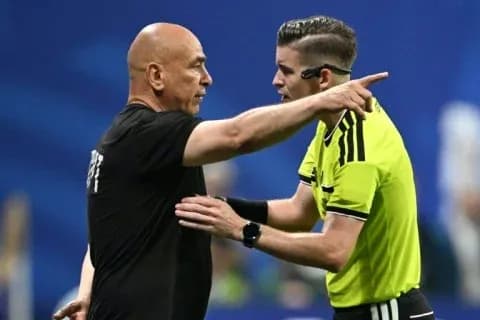
The Egypt coach emerged from the dressing room seething, insisting his team had been "cheated" out of a first-ever World Cup quarter-final.
"I do not want to put it nicely and talk about hard luck. We have been cheated unfairly today, we have suffered injustice," he snapped in an explosive press conference that crackled with anger and disbelief.
Egypt’s dream, VAR’s intervention
For a long stretch in Los Angeles, it looked like a seismic shock was coming.
Yasser Ibrahim’s header gave Egypt a deserved lead, and the Pharaohs thought they had seized total control when Mostafa Zico crashed in what appeared to be a second goal. The Egyptian bench erupted; the stadium felt the upset brewing.
Then VAR intervened.
Officials rolled the move back and picked out a foul on Lisandro Martinez much earlier in the build-up. The goal disappeared from the scoreboard, but not from Egyptian minds. Hassan would later call it “remarkable” that it was disallowed.
Zico refused to be silenced. He struck again, this time with no reprieve for Argentina, doubling the lead and putting Egypt on the cusp of the last eight for the first time in their history. The holders, rattled and trailing 2-0, looked vulnerable in a way they rarely have under this generation.
The pressure, though, began to tilt.
Messi misses, then ignites
Argentina were handed a lifeline when Nicolas Tagliafico tumbled in the box and the referee pointed to the spot. Up stepped Messi, the eight-time Ballon d’Or winner, staring down Mostafa Shobeir and the weight of his own World Cup penalty history.
Once again, the spot betrayed him.
Shobeir guessed right and pushed the effort away, adding another chapter to Messi’s uneasy relationship with World Cup penalties. He has now failed with four of his eight non-shootout spot-kicks at the tournament, including two in this edition alone.
For Egypt, it felt like fate. For Argentina, it was a warning.
The champions surged. Cristian Romero pulled one back, igniting the comeback. The tension rose with every Argentine attack, every Egyptian clearance. When Messi finally found his moment, he did it with brutal clarity – smashing in the equaliser, his eighth goal of the tournament, to drag his side level and flip the mood inside the stadium.
Egypt had gone from dreamland to survival mode.
The flashpoint before Argentina’s winner
The drama sharpened again as Argentina hunted a winner. Enzo Fernandez provided it, completing a turnaround that will be replayed for years in Argentine folklore.
In Egypt, they will replay something else.
In the build-up to Fernandez’s decisive strike, Egyptian players and staff screamed for a penalty at the other end of the pitch. They claimed Alexis Mac Allister had clearly pulled back Hamdy Fathy, a tug on the shirt that, in their eyes, should have halted play and handed them a spot-kick instead of allowing Argentina to flow forward.
"We haven't seen respect or fair play. There has not been respect or fair play," Hassan said, his voice hardening as he revisited the moment.
"A penalty was ruled out, was not even checked by VAR. A second goal was remarkably disallowed. There has not even been a VAR check when we have all seen the image of the (shirt) being pulled back."
The sense of grievance ran deep. To Hassan, the technology that was meant to bring clarity had only delivered chaos and suspicion.
‘Perhaps they wanted Messi to stay’
Hassan did not stop at individual decisions. He hinted at a wider force at play – the weight of the defending champions, the magnetism of Messi, the commercial and emotional pull of the sport’s biggest star.
"Perhaps they wanted to keep the world champions in the competition. Perhaps they wanted Messi to stay in the running," he told BeIn Sports.
"In football, there are sometimes external factors that go beyond the technical aspects. The world champions received support at every level."
He did not offer evidence beyond the decisions on the pitch, but his message was unmistakable: Egypt, in his eyes, had been on the wrong side of the World Cup’s power lines.
Fury at the schedule
Hassan’s anger stretched beyond officiating. He turned his fire on the schedule itself, blasting the decision to stage the match at noon local time (1600 GMT), just four days after both teams had come through draining round-of-32 ties.
"Whoever schedules those matches has never played football. You never schedule a game for 12pm. At noon you go for a walk or to eat brunch, you do not go to play football," he said, incredulous.
"When are the players supposed to eat? At 7.30am?
"There have been a lot of things to be questioned on and off the pitch."
For him, the timing compounded the injustice – another layer of disadvantage for a side already punching above its perceived weight.
‘This is my way of speaking up’
By the end, Hassan was not just venting. He was making a stand, or at least framing it as one.
He declared he would boycott the rest of the tournament as a viewer, so disgusted was he by what had unfolded.
"I am not going to continue following the matches of this World Cup, watching the matches of this World Cup," he said. "This is my own way of speaking up."
Egypt leave with no quarter-final place, no historic breakthrough, and no consolation in the narrative of a gallant underdog. They leave with a coach who believes the World Cup slipped away not through missed chances or tactical errors, but through forces he insists were stacked against them.
Argentina march on, scarred but alive, their title defence rescued by a furious comeback and the enduring brilliance of Messi.
Egypt, and Hassan, are left with a harsher question: when the biggest night of your footballing life ends like this, how long does the sense of injustice stay with you?