Guillermo Ochoa Retires: A Legendary Career in Mexican Football
Guillermo Ochoa has finally stepped off the stage.
On Tuesday, the goalkeeper who came to define an era of Mexican football announced his retirement from elite competition, ending a career that stretched across continents, generations, and six World Cups. For years he had circled 2026 as his last dance. Many still clung to the idea of one more short-term deal, one more season, one more improbable save.
There will be no encore.
Ochoa chose his own moment, delivering the news directly to supporters on social media with the same clarity that marked his best nights between the posts. He wrote that he had given everything “for my clubs and the national team” and that “today I hang up my gloves.” Then came the line that could double as a thesis for his entire career: being a goalkeeper, he said, means waiting 90 minutes for a single moment when everything depends on you — and when it comes, you cannot hesitate.
He rarely did.
A World Cup constant
Ochoa’s greatest statistic is not a clean sheet or a save percentage. It is time.
He stood in Mexico’s World Cup squads across six tournaments, a number matched only by Ronaldo and Messi. Early on, he was the apprentice, travelling more as a promise than a solution. Eventually he became the face of the position, owning the shirt as Mexico’s starting goalkeeper in Brazil 2014, Russia 2018, and Qatar 2022.
Those summers turned him from domestic star into global cult figure. The hair, the headband, the acrobatic saves, the way he seemed to grow as the pressure rose — he became the kind of goalkeeper neutrals remembered and forwards dreaded. For Mexico, he was not just the last line of defence. He was a constant in a footballing world that changed around him.
By 2026, the years had caught up, at least in selection terms. Raul Rangel had taken over the starting role, and Ochoa accepted a place as backup. But his story with El Tri was never going to end on a bench.
A farewell worthy of a legend
Javier Aguirre understood that. In Mexico’s final group-stage match against Czechia at the 2026 World Cup, with the result already secondary to the occasion, the manager turned to his veteran. With 13 minutes left, Ochoa stepped onto the pitch at the Estadio Azteca one last time.
The roar said everything.
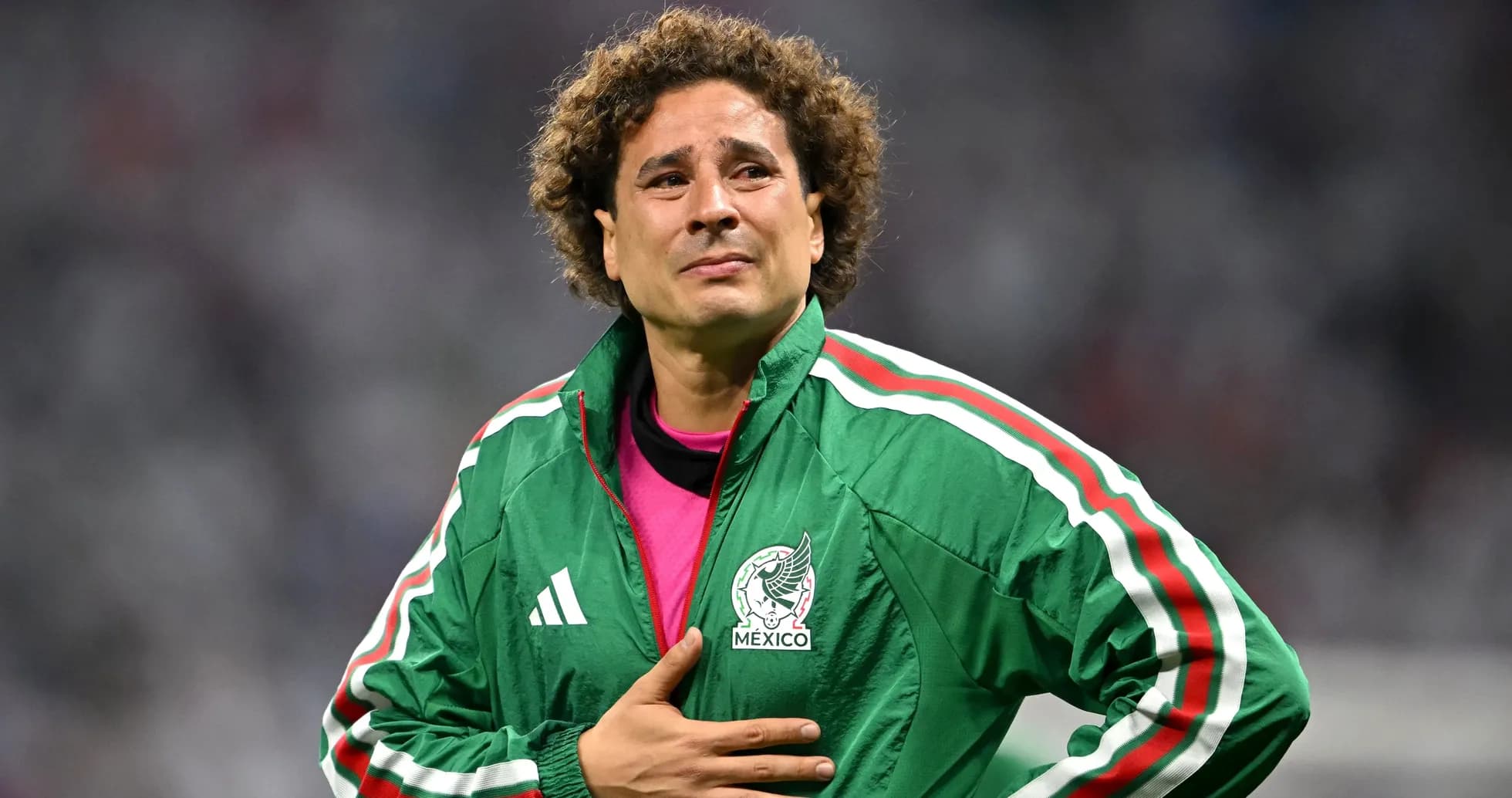
Every dive, every fingertip save, every heartbreak and celebration in green seemed to pour out of the stands. When the final whistle blew, Ochoa lingered. He kissed the goalposts, the same frame that had framed his debut years earlier, then dropped to his knees as teammates wrapped him in an emotional embrace.
Most players head down the tunnel after that kind of goodbye. Ochoa didn’t. Long after the crowd had drifted away and the lights began to dim, he walked alone to the centre circle, soaking in the silence of a stadium that had seen him grow from prospect to icon. It was a private farewell in a public arena.
From Mexico City to Europe and back
His journey had started far more modestly. A youth product in Mexico City, Ochoa made his top-flight debut for Club América in February 2004 and immediately looked different. The reflexes were electric. The composure, uncommon. Within seven seasons he had become a pillar of the Mexican giants, helping deliver a league title in the 2005 Clausura.
Then came the leap.
In 2011, Ochoa joined Ajaccio, becoming the first Mexico-born goalkeeper to play in Europe. It was more than a transfer; it was a marker. Mexican outfield players had crossed the Atlantic before, but a goalkeeper breaking that barrier carried its own weight. He embraced it.
His European career became a tour of different leagues and challenges. Ajaccio to Malaga. Malaga to Granada. Then to Standard Liege, where he lifted the Belgian Cup and added another trophy to a cabinet that never relied on volume so much as significance. Later came Salernitana, AVS Futebol, and AEL Limassol, each stop adding another layer to a career defined by resilience and adaptability.
Amid all that movement, one address kept pulling him back. From 2019 to 2022, Ochoa returned to Club América for a high-profile second spell, reclaiming the No. 1 shirt and reaffirming his status as a club legend. For many supporters, that homecoming mattered as much as any foreign adventure. It was proof that the bond between player and club had survived fame, distance, and time.
Leaving with peace
In his retirement message, Ochoa admitted he never imagined how far a childhood dream could take him. The boy from Mexico City had stood in some of the world’s biggest stadiums, faced the game’s greatest forwards, and carried the expectations of millions across two decades. Now he walks away, he wrote, with “the affection of millions and the peace of mind” that comes from knowing he gave everything for Mexico.
He leaves with a league title, a Belgian Cup, and a record that will sit near the top of any conversation about Mexican goalkeepers for years to come. But his legacy lives just as strongly in the images: the outstretched hand in a World Cup, the kiss on the Azteca goalpost, the solitary figure under fading lights in his final farewell.
Mexico will find another goalkeeper. It always does.
Finding another Guillermo Ochoa is a different question entirely.