Graham Potter's Revival: Sweden's World Cup Opener Dominance
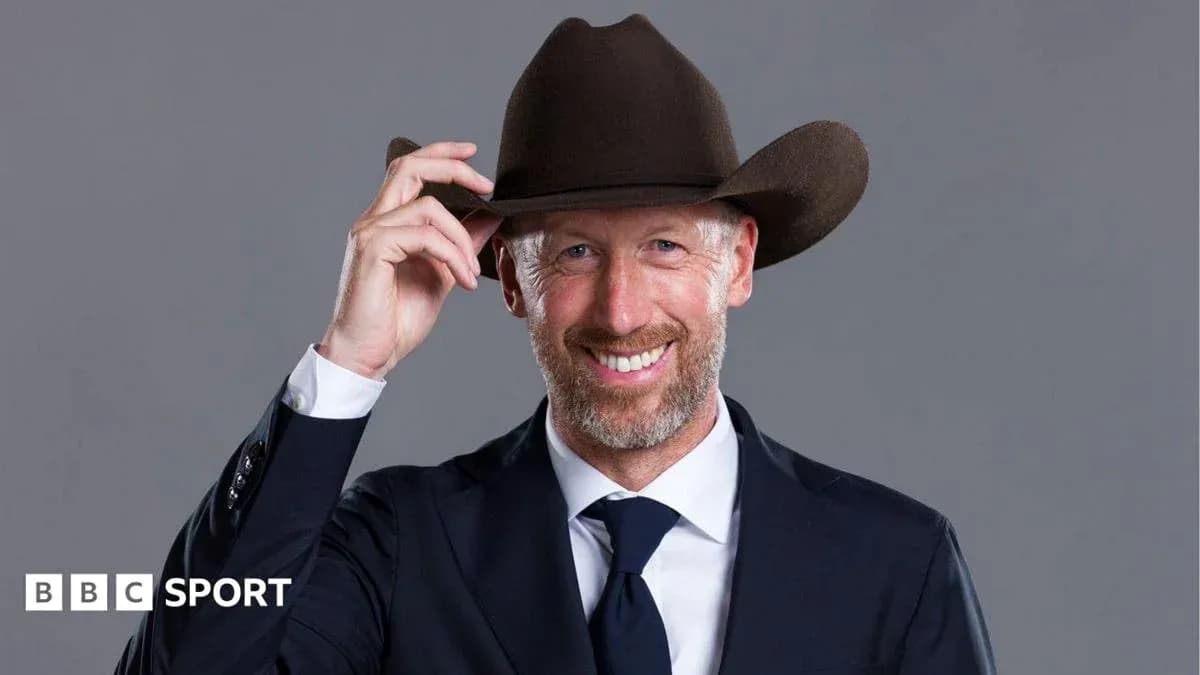
Graham Potter walked out to Sweden training in Texas last week wearing a Stetson. A joke, on the surface. A manager leaning into the World Cup’s American backdrop, playing the part.
For some, it also looked like a man stepping into the last-chance saloon.
Two sackings in 15 months, Chelsea then West Ham, had left his reputation bruised and his future uncertain. The Premier League had spat him out. The narrative was set.
Then came Monterrey.
At Estadio Monterrey in Mexico, the hat stayed in the suitcase but the statement came on the pitch. Sweden shredded Tunisia 5-1 in Group F, a ruthless, swaggering performance that cut straight through the doubts around their English coach.
Few imagined Potter would be opening this World Cup with a heavy win, let alone as the architect of a side playing with such clarity and purpose. He knew it too.
“You never know, that's the truth,” he said afterwards. “You never know how things are going to go. We were optimistic because we felt confident in the work. But until the game is played you don't know for sure. That's the beauty of sport. We are delighted with how we performed tonight and it's a great start for us.”
It was more than just a good start. Sweden scored more goals in 90 minutes against Tunisia than they managed across their entire qualifying group stage, when they mustered only four under former boss Jon Dahl Tomasson.
Under the Dane, automatic qualification slipped away. By the time Potter arrived in October, the damage was beyond repair. Sweden limped to the bottom of their group behind Switzerland, Kosovo and Slovenia, without a single win in six games.
They survived only through the back door: a play-off spot earned via their Uefa Nations League ranking of 34. It was hardly the grand entrance of a World Cup contender.
Yet that lifeline gave Potter his opening. A chance to drag Sweden to the tournament. A chance, too, to prove that Chelsea and West Ham were not the final word on his managerial ceiling.
He took it. Sweden beat Ukraine, then Poland in the play-offs. The road to Texas and Mexico suddenly felt less like a detour and more like a revival tour.
This was not how Potter imagined his season. He started it at West Ham, lasted until late September, and left with six wins from 23 Premier League matches. Before that, Chelsea had chewed him up, the job too chaotic and unforgiving even for a coach who had dazzled at Brighton.
In England, the pressure hardened him. The Solihull-born manager bristled with the media, his easy-going image replaced by a man visibly worn down by the grind.
Sweden has given him something else entirely.
This is the country where he first built a career, where he turned Ostersunds FK from a fourth-tier side into top-flight cup winners and European participants. Seven years of graft, growth and cultural immersion. It left a mark.
“I feel very Swedish when I'm working,” he told BBC Sport before the tournament. “I even look a bit Swedish. Two of my children were born in Sweden. I had seven unforgettable years at Ostersunds, with memories that will stay with me for life.
“I came from the fourth tier of Swedish football, which is quite low, and worked my way up through the system to the Allsvenskan.
“You almost become Swedish in a coaching sense because of the experiences you have. I think it has definitely helped.
“Now I'm working for the Swedish FA as head coach of the national team, so I feel very Swedish.”
His Instagram shows the softer edges: family trips into the forests and lakes, Nordic novels in hand, cultural events embraced rather than endured. But behind the romantic images, the work has been meticulous.
You could see it in Monterrey.
The return to full fitness of Alexander Isak, Liverpool’s £125m forward, has changed Sweden’s attacking horizon. His connection with Arsenal striker Viktor Gyokeres looked natural, dangerous, expensive in every sense.
Both scored. Both assisted the other. Exactly the kind of chemistry a coach dreams of but rarely gets so quickly on a major stage.
For a country back at the World Cup after missing Qatar 2022, that front line offers more than hope. It offers threat. If Isak and Gyokeres keep moving in tandem like this, they will trouble anyone.
Potter’s task now is to knit the rest of the squad around them. Experience is thin at this level. Only Victor Lindelof has actually played at a World Cup; goalkeeper Kristoffer Nordfelt was in Russia in 2018 but did not get on the pitch.
This is a group that will need guidance as the stakes rise. The format, though, gives them a cushion. A 5-1 win in the opener leaves them strongly positioned to reach the last 32.
Reality bites next.
Tunisia, ranked 56th in the world, will not be the hardest opponent they face. That honour arrives on Saturday against Netherlands, one of the tournament favourites.
“We just focus on what we can do, we focus on our performances,” Potter said in his post-match press conference. “It doesn't matter what people think from the outside or opinions.
“That's the beauty of the World Cup everyone has predictions and forecasts but we have to focus on our job and how we play as a team.
“We will meet another top team at the weekend who are one of the favourites for the competition.”
History offers its own twist. Sweden’s best World Cup finishes are two third places: in 1958, under another English manager, George Raynor, and in 1994, when the tournament also took place in the USA.
The omens are there for those who want them. An Englishman in charge. A World Cup touched by American soil. A team beginning to believe again.
For now, there is only the evidence on the pitch and a coach who looks, once more, like he belongs on it.
The cowboy hat might have started as a joke. It no longer feels like one.