Gotham FC Triumphs Over Washington Spirit Before Record Crowd
Ten years ago, a National Women’s Soccer League match at a baseball stadium meant trouble. It meant a shrunken pitch squeezed into a minor-league park, players fuming, stars calling it “shocking and embarrassing,” and a league still fighting to prove it belonged.
On Wednesday night in Queens, a baseball stadium meant something else entirely.
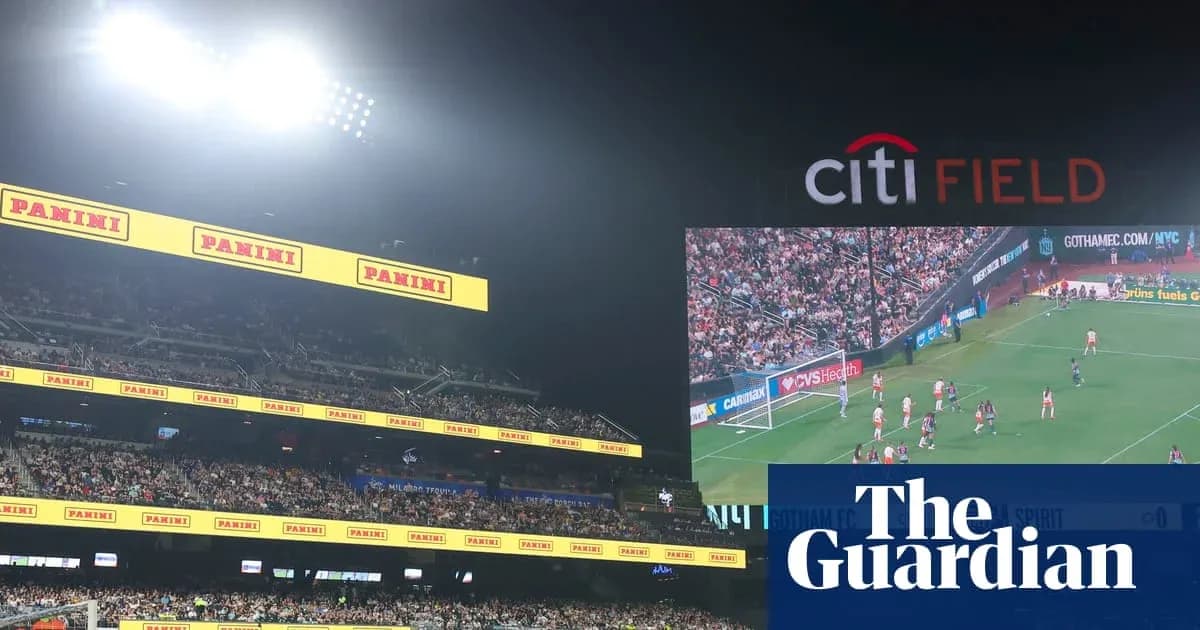
At Citi Field, home of the New York Mets, 42,175 people filed in through the turnstiles to watch Gotham FC edge the Washington Spirit 1-0 in the so‑called Queens Classic. It was the second-largest crowd in NWSL history and the biggest ever for a women’s sporting event in New York City. A decade on from those grainy images of a tiny field and sparse stands, the contrast could not have been starker.
A statement night in the standings
This was more than a novelty venue. It felt like a restart button for the season.
After a month-long pause for the men’s World Cup, the NWSL roared back to life on 3 July. Few fixtures could have framed the run-in better than a rematch of last year’s final between two of the league’s standard-bearers. San Diego still sit atop the table, but Gotham’s win pulled them level on points with both the Spirit and the Portland Thorns. Washington hold second on goal difference, yet there is now a logjam behind the leaders that hints at a chaotic sprint to the finish.
These two know that terrain well. Across the past three seasons, Gotham and Washington have combined for two NWSL championships (both Gotham), two runner-up finishes (both Spirit) and three more trophies in other competitions. They have become the league’s recurring subplot: different rosters, different coaches, same sense of occasion whenever they meet.
Citi Field fit that script.
Lavelle’s touch of class
On a hot, hazy night when the air itself felt heavy, one piece of quality separated the sides.
In the 37th minute, Rose Lavelle did what Rose Lavelle does. The Gotham playmaker, whose goal decided last year’s final, found a pocket of space and bent a superb curler beyond the Spirit goalkeeper for the only strike of the game. It was a moment of calm in a match that often felt frantic, a reminder that in tight contests the smallest window is enough for players of her class.
The crowd leaned heavily Gotham, but it was impossible to miss the scattering of No 2 Trinity Rodman jerseys around the ballpark. Rodman was electric in flashes, driving at defenders and firing off five shots, yet the final touch never came. On another night, with cleaner air and a cooler pitch, she might have walked away the hero.
The loudest roar, though, wasn’t for the goal.
It came in the 63rd minute, when Sam Kerr stepped onto an NWSL field again. The Australian striker, freshly arrived from Chelsea, made her first appearance for Gotham since signing last month. For the club’s older fans, it felt like a reunion. Kerr terrorized defenses in her previous spell with the franchise back when it was Sky Blue, scoring at will while the club battled off-field chaos and played in front of crowds that rarely reached 3,000. She left in 2018 as the league’s all-time leading scorer, a superstar trapped in a modest setting.
Now she returns to a different universe: big-money transfers, a stacked Gotham midfield featuring Lavelle, Denise O’Sullivan and Guro Reiten, and a club that expects to contend every year.
“I feel so spoiled to play at this club, because we keep bringing in incredible players,” Lavelle said, name-checking that recent influx. Rodman could only laugh about trying to spoil Kerr’s comeback, recalling how she told the striker on a corner, “Welcome back, but chill.”
From bare-bones to big stage
The transformation of Gotham is one of the league’s defining storylines.
When Kerr departed Sky Blue, the conversation was not about record crowds or marquee signings. It was about poor performances, training grounds without running water and a club scraping by on minimal resources. Those stories made headlines for all the wrong reasons.
That version feels almost unrecognizable now. Gotham have rebranded, retooled and risen. Results improved. Leadership changed. Colors changed. Ambition hardened.
Last week, the club announced another leap: a move into New York City proper in 2028, when they will relocate to the planned Etihad Park just around the corner from Citi Field. The buildup to Wednesday’s game carried the swagger of a franchise that understands its market. Subway ads. Local promotions. A $15 ticket initiative organized by Mayor Zohran Mamdani. The club said 70% of ticket buyers were “new fans.”
“It was really special just to see how many people were there that that was their first Gotham game,” midfielder Jaedyn Shaw said.
Washington, on the other sideline, offered a mirror image. The Spirit have also rebuilt from the bottom, embracing investment and ambition in a league whose structure can still make that difficult. Both clubs now stand as proof that spending, planning and patience can bend the arc of a franchise.
“In many ways, this is like a full-circle moment,” NWSL commissioner Jessica Berman said at half-time. “We know that with investment, if you build it they will come, and this is a proof point for that.”
Growth, with a cost
The NWSL is in a rush of expansion and attention. Over the past year, the league has set new marks for attendance, TV viewership and expansion fees. Nights like this, in a major league ballpark with a record crowd and a primetime ESPN slot, are the payoff.
They also expose the seams.
Almost exactly 10 years after that infamous tiny pitch at a minor-league ballpark, players and staff agreed the surface at Citi Field was serviceable but far from ideal. The dimensions were better, the stage grander, but it still looked like a soccer field grafted onto a baseball diamond. Lavelle summed it up with a shrug: “That’s showbiz, baby.”
The broadcast had its own misstep. The only goal of the night arrived while ESPN had the screen split for an interview, leaving commentators scrambling and stepping on each other as Lavelle’s shot rippled the net. A landmark moment, half-obscured.
Then there was the air.
New York spent the day under an air quality alert as smoke from Canadian wildfires drifted south. Temperatures hovered in the 80s and 90s Fahrenheit, the heat index pushed past 100, and an orange-brown haze settled over the ballpark as the sun went down. The smell of smoke never really left.
The league has postponed matches for air quality before, yet it has also faced sharp criticism for pushing ahead with showcase games in harsh conditions. The most glaring example came last year when a nationally televised meeting between the Orlando Pride and Kansas City Current went ahead in extreme heat, and more than a dozen spectators ended up in hospital.
This time, the numbers sat in a gray area. The air quality index climbed above 150, labeled “unhealthy” by the Environmental Protection Agency, but stayed below the NWSL’s delay threshold of 180–200 and the postponement trigger above 200. The league’s solution: two hydration breaks per half.
Spirit coach Adrián González made no secret of his frustration with the constant pauses, arguing that the breaks shattered the game’s rhythm even as he acknowledged they were necessary.
Rodman echoed the tension between safety and spectacle.
“I think on both sides, we were just like, ‘Damn, another break, another break, another break,’” she said. “If we have to have a hydration break every 15 minutes, then we shouldn’t be playing the game, and that’s my opinion. … But at the end of the day, there’s 40,000 people, it’s a whole event. So it is really tough. I think it was a really hard situation for everybody to work around.”
That is the tightrope the NWSL now walks: a league big enough that games are “events,” still young enough that its protocols and priorities remain under the microscope.
A night that rewrites the baseline
By the final whistle, the storylines piled up. Gotham’s title push. Washington’s missed chances. Kerr’s return. Lavelle’s latest big-game strike. The haze, the heat, the sheer size of the crowd.
What lingered most, though, was the scale of the shift.
The attendance at Citi Field more than doubled the total turnout across Gotham’s entire 12-game home slate in their debut season in 2013. Back then, nights like this felt like wishful thinking. Now, they feel like the baseline the league must protect and build on.
The NWSL has come a long way from cramped fields and training grounds without running water. It has not yet arrived at its final destination. Both truths can sit side by side without dulling the power of what unfolded in Queens.
As Spirit veteran Andi Sullivan put it, there is still a sense of wonder in all of this.
“It’s pretty cool when you’re out there and you realize that this is your job,” she said, “and that this is what your dreams looked like, or maybe what they haven’t looked like along the way.”
On nights like this, those dreams feel less like fantasy and more like the new reality the league will be judged against from here.