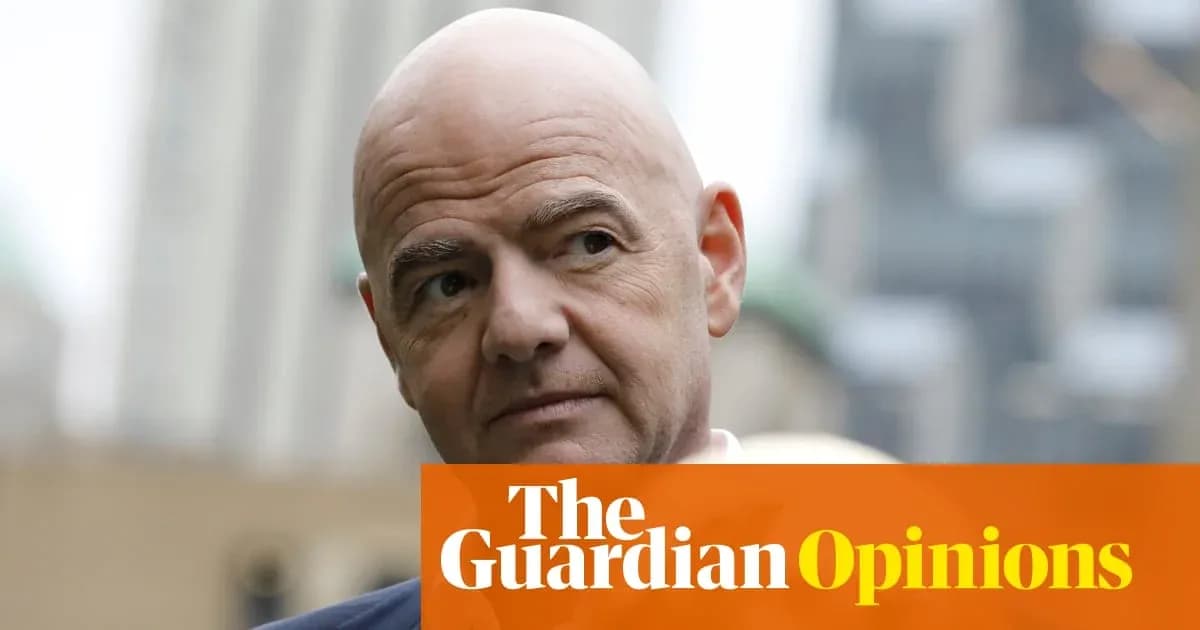
Gianni Infantino's Controversial Fifa Presidency and Commercial Ambitions
Gianni Infantino once sold himself as the man who would clean up football’s biggest institution. Eight years on, the sales pitch looks very different.
When he won the Fifa presidency in 2016, it felt like a jolt to the system and a break from the toxic Sepp Blatter era. Infantino talked about restoring “the image of Fifa”, about accountability, about transparency. He also told his electorate to prepare for a “very significant increase” in funding. The applause, he said, would come from “everyone in the world”.
The message was clear even then, if you were listening closely: the money would flow. The jets, too. There were already whispers about how often he used private planes.
Back then he was painted as a diligent, slightly grey Swiss technocrat. No one uses that description now. Senior figures in the game have a different line: “He thinks he’s running a nation state.”
That comparison has rarely felt sharper than this week, with Fifa unveiling – without consultation – a plan to sell a slice of the World Cup’s commercial rights to outside investors. It is pure Infantino: a bigger machine, a broader reach, more revenue. The longer he has stayed in office, the more he has fused his own authority to this relentless drive for expansion.
The pattern has been building for years. In 2016, barely settled into the job, he floated the idea of enlarging the World Cup. He also began pushing for an expanded Club World Cup. Two years later came the notion of a global Nations League, to be delivered by a new corporate vehicle funded by external money. That project collapsed under pressure, but the ambition did not.
By 2017, the 48‑team World Cup for 2026 was confirmed. In 2021, as the European Super League exploded and then imploded, it emerged that the 12 rebel clubs had expected Fifa to back their breakaway. That backing never came, but at the end of the same year Infantino unveiled plans for a biennial World Cup. Another attempt to stretch the calendar, the product, the cash.
The tempo only increased after Covid-19. Football emerged from the pandemic nursing heavy financial wounds, and Fifa stepped in with money from its Forward Programme. At the same time, the organisation began rolling out a blizzard of new ventures and tweaks.
A 32‑team Club World Cup was launched, with talk of further growth almost as soon as the ink was dry. The 2034 World Cup went, suddenly and unchallenged, to Saudi Arabia. The 2030 edition was stretched across three continents and six host nations, and there is already chatter about taking that tournament to 64 teams. Even the micro-detail of the sport has not been spared: mandatory hydration breaks arrived late last year.
Inside the game, the same question keeps circling: what is driving this? What is eating at Infantino that makes “bigger” the only acceptable answer?
One explanation, and the most common, is raw patronage. Expanded competitions bring more revenue. More revenue means more money to hand back to Fifa’s 211 member associations. Those cheques, in turn, make for a loyal electorate when the time comes to renew a mandate. Infantino has already rewritten the rules on presidential term limits; his third full term, effectively guaranteed, will also be his last under the new framework.
There is a catch with that theory, though. He has already, in effect, tripled Fifa’s revenues since 2016. In political terms, that ought to be more than enough to keep the voting bloc onside. So why keep pushing the accelerator through the floor?
The latest commercial scheme has prompted another line of thinking. Reports in the Times have suggested that Infantino could move from president to chief executive of the new World Cup rights venture once his spell in office ends, taking a salary more in line with a corporate boss than the head of a non‑governmental body. Fifa has flatly denied any such conversations. Even if such a landing spot does eventually materialise, it still feels like only part of the story. It does not fully account for the sheer volume and scale of what has gone before.
That leads to a third, more blunt reading: Infantino is captivated by status and power. The Italian kid from a working-class family in wealthy Switzerland, teased for his ginger hair, now sits among presidents and princes. The contrast is stark, and he seems in no hurry to step away from the glare.
His tastes as an adult have been consistent: the high life, the big stages, the famous faces. In 2016 he enlisted a dozen former stars – now packaged as Fifa Legends – to support his campaign. As president he has moved on to a different level of company. Vladimir Putin. The emir of Qatar. The crown prince of Saudi Arabia. The US president, Donald Trump. Infantino has not just met them; he has tried on their mannerisms, their posture, their sense of scale.
That proximity has brought him real authority, or at least the impression of it. Inside Fifa and across the sport, he has been able to ram through structural change with barely a murmur of organised resistance. But alliances at that level are rarely built on sentiment. They are transactional, unstable, and expensive.
The bill, some in football now fear, is arriving. One senior figure, looking at the new commercial plan, framed it not as Infantino’s grand design at all, but as something closer to a debt being called in.
“Gianni has got in way over his head with Trump,” they said. “He is now extracting his share of the World Cup rewards.”
The question for the rest of the game is simple: if the World Cup itself has become a bargaining chip, how much of football’s future is already on the table?