
Ghana's World Cup Challenge: Key Strategies Against England
Ghana escaped. That is the blunt truth.
Ranked 73rd in the world, 39 places below Panama, the Central Americans were supposed to be fodder for the Black Stars in their World Cup opener. Instead, Ghana laboured, suffered, and clung to a 1-0 win that owed as much to Carlos Queiroz’s in-game tweaks and his players’ sheer will as it did to any coherent plan.
They survived Panama. England will be something else entirely.
The group favourites are next, in what will be the first competitive meeting between the two nations after a 1-1 friendly draw at Wembley back in 2011. Queiroz has very little time to solve some very big problems.
The Jordan Ayew Question
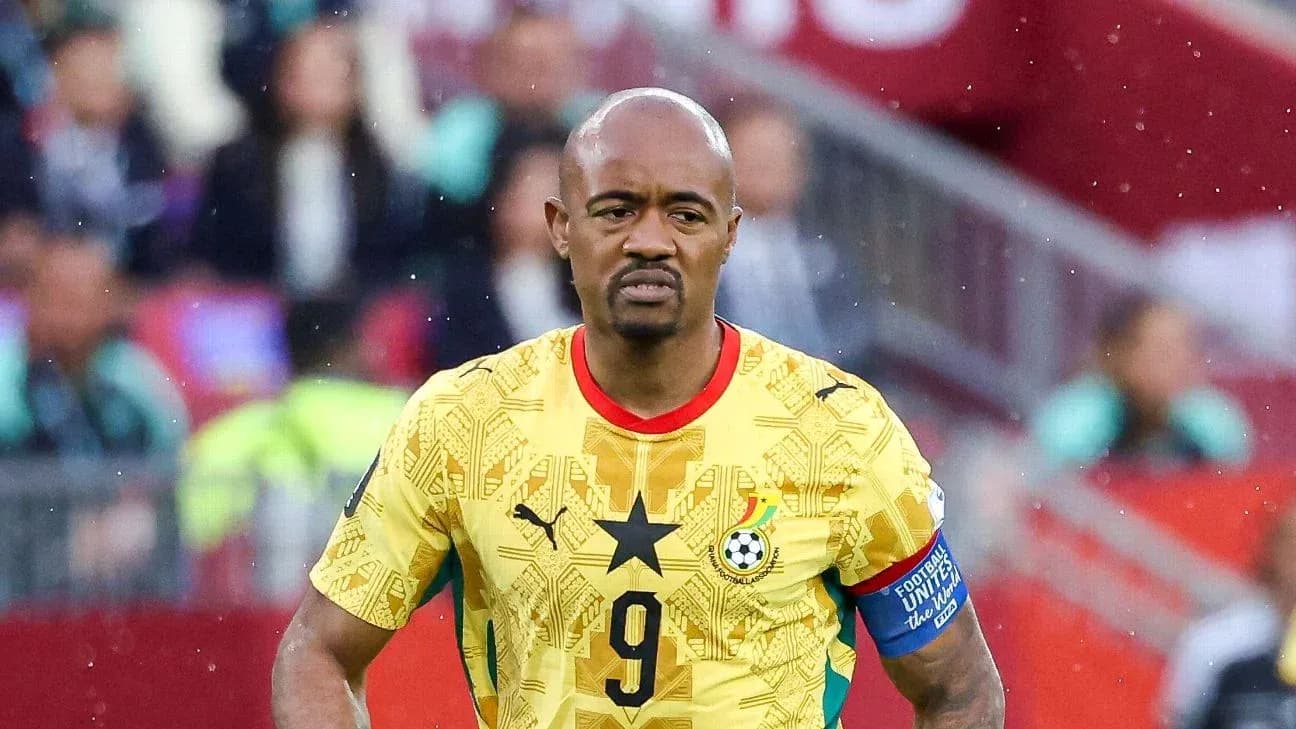
Jordan Ayew is the heartbeat and the headache of this team.
He is the captain, the most experienced player in the squad, a man with more than 100 caps and the kind of institutional memory that comes from being Abedi Pele’s son and a veteran of three World Cups. When he led Ghana out against Panama, he joined an elite group of only four Black Stars to appear at three tournaments.
On paper, he is undroppable.
On the pitch against Panama, he looked anything but. His lack of pace was ruthlessly exposed. When he did find the ball, his decisions often dragged Ghana backwards.
One moment summed it up. Antoine Semenyo slipped him a pass with space to attack. Semenyo burst forward, begging for the return. Ayew had time, options, a clear lane. Instead, he drove straight into traffic and lost the ball. Against Panama, it was a frustration. Against England, it will be a gift.
Calls for him to be benched against England are not knee-jerk. They are logical. A slow centre forward will be easy prey for an England back line that, for all its flaws, will not allow him the luxury of turning in tight spaces.
Yet leaving Ayew out altogether strips Ghana of their leader in the one game where they will need every ounce of composure and know-how. Starting him again as the spearhead would be a repeat of the same mistake.
The compromise is obvious, and Queiroz hinted at it without quite committing: move Ayew back. Make him the advanced midfielder, not the nine.
When he drifted deeper against Panama and linked play instead of trying to run beyond defenders, Ghana looked more coherent. From that pocket between the lines, his reading of the game can knit midfield and attack, and his lack of raw speed becomes less of a liability.
Imagine Ayew floating behind a front line of Semenyo and one of Brandon Thomas-Asante or Abdul Fatawu. Semenyo can bully and run the channels. Thomas-Asante, who set up Caleb Yirenkyi’s winner, brings speed and aggression. Fatawu offers directness from wide areas. Ayew’s job then becomes to feed runners into space, not to be the runner.
It is not a sentimental compromise. It is the only way to preserve his leadership without sacrificing the team’s attacking edge.
Partey’s Return Is Non-Negotiable
The Panama game exposed another issue: the hole in the middle.
Elisha Owusu was swallowed by the contest. The shape around him in the first half did him no favours, but he struggled to cope with Panama’s midfield. Ghana chased, reacted, and rarely dictated.
That cannot happen against an England side that just put four past Croatia, with Jude Bellingham and Declan Rice running the show.
Thomas Partey has to come back in. No caveats.
Alongside the impressive Caleb Yirenkyi, he gives Ghana something they simply did not have in the opener: control. With those two sitting and screening, Ghana can slow England’s rhythm, block the central lanes Bellingham loves to surge into, and force Rice to think more about defending than stepping forward to dictate.
With Partey anchoring, Ayew can occupy the half-spaces higher up rather than dropping into his own half just to get a touch. The team stops firefighting and starts managing passages of play.
Ghana will not dominate the ball against England. But with Partey and Yirenkyi, they can at least choose when to breathe and when to bite.
Where England Can Be Hurt
England’s 4-2 win over Croatia sent a message. So did the two goals they conceded.
Their full-backs looked vulnerable. Reece James lost his man on one of Croatia’s strikes. On the opposite side, Nico O’Reilly offered plenty going forward but was described as “a work in progress” defensively. That is a polite way of saying there are gaps to attack.
Those are the spaces Ghana must live in.
Semenyo’s direct running can drag James or O’Reilly into uncomfortable one-on-one duels, especially if he pulls wide and isolates them. Thomas-Asante’s pace and physical edge can force errors when defenders turn to face their own goal. Fatawu and Ernest Nuamah can stretch the pitch, attack from wide angles and test England’s recovery runs.
Croatia found joy when they attacked quickly, before England’s back line could reset. Ghana have the tools to do the same: speed, strength, and enough guile to punish any loose touch or slow transition.
The trap would be to sit off, respect the names on the England team sheet, and wait. That is how you invite Kane, Bellingham and company to pick you apart.
No More Slow Starts
Against Panama, Ghana spent an hour pinned back.
The Central Americans dictated tempo, enjoyed the better chances and forced the Black Stars into a reactive, nervous game. Only when Queiroz pushed Semenyo centrally and cranked up the press with second-half substitutions did Ghana finally seize control.
That kind of slow burn will not survive contact with Thomas Tuchel’s England.
Croatia showed the way. When they pressed England high in the first half, they rattled them, forced mistakes, and scored twice. But England also struck twice before the break. They do not need many clean looks to punish you.
If Ghana retreat into the shell they showed against Panama, this contest could be over before Queiroz has time to adjust. England have the firepower to turn a cautious opening 20 minutes into a damage-limitation exercise.
The Black Stars must start at the tempo they finished with against Panama and sustain it for as long as legs and lungs allow. This has to become a battle of endurance, a game where England are dragged into a physical and mental grind rather than allowed to stroll through rehearsed patterns.
Suffer, as Queiroz put it, but suffer on your own terms.
Survive the Dead Ball
There is one more danger, and it is as old as tournament football itself: set pieces.
On the opening matchday, England generated the highest non-penalty expected goals and the most shots on target from dead-ball situations. Harry Kane’s second against Croatia came from a simple, brutal truth: he was left unmarked on a Declan Rice corner and punished it.
Ghana cannot afford that kind of lapse.
Whether Lawrence Ati-Zigi recovers from the first-half collision that forced him off against Panama or Benjamin Asare keeps the gloves, the message is the same: every runner must be tracked, every block anticipated, every second ball attacked.
The first step is not to invite trouble. That means cutting out the cheap fouls around the box and closing the central gaps that Panama exploited. This is where Partey’s positional sense becomes vital again, plugging spaces before England can force defenders into desperate tackles.
Inside the area, concentration has to be absolute. No ball-watching. No lost markers. No free headers for Kane.
And if the worst happens and a penalty is conceded, Ghana’s goalkeepers must be ready for Kane’s psychological games on the run-up. He studies them. They must study him.
After the Panama win, Queiroz spoke of the price of a result at this World Cup. “We have to suffer; there is no other way,” he said. The bill for England will be higher.
The question now is simple: can Ghana pay it without breaking?



