Genoa vs Como: A Harsh Serie A Lesson
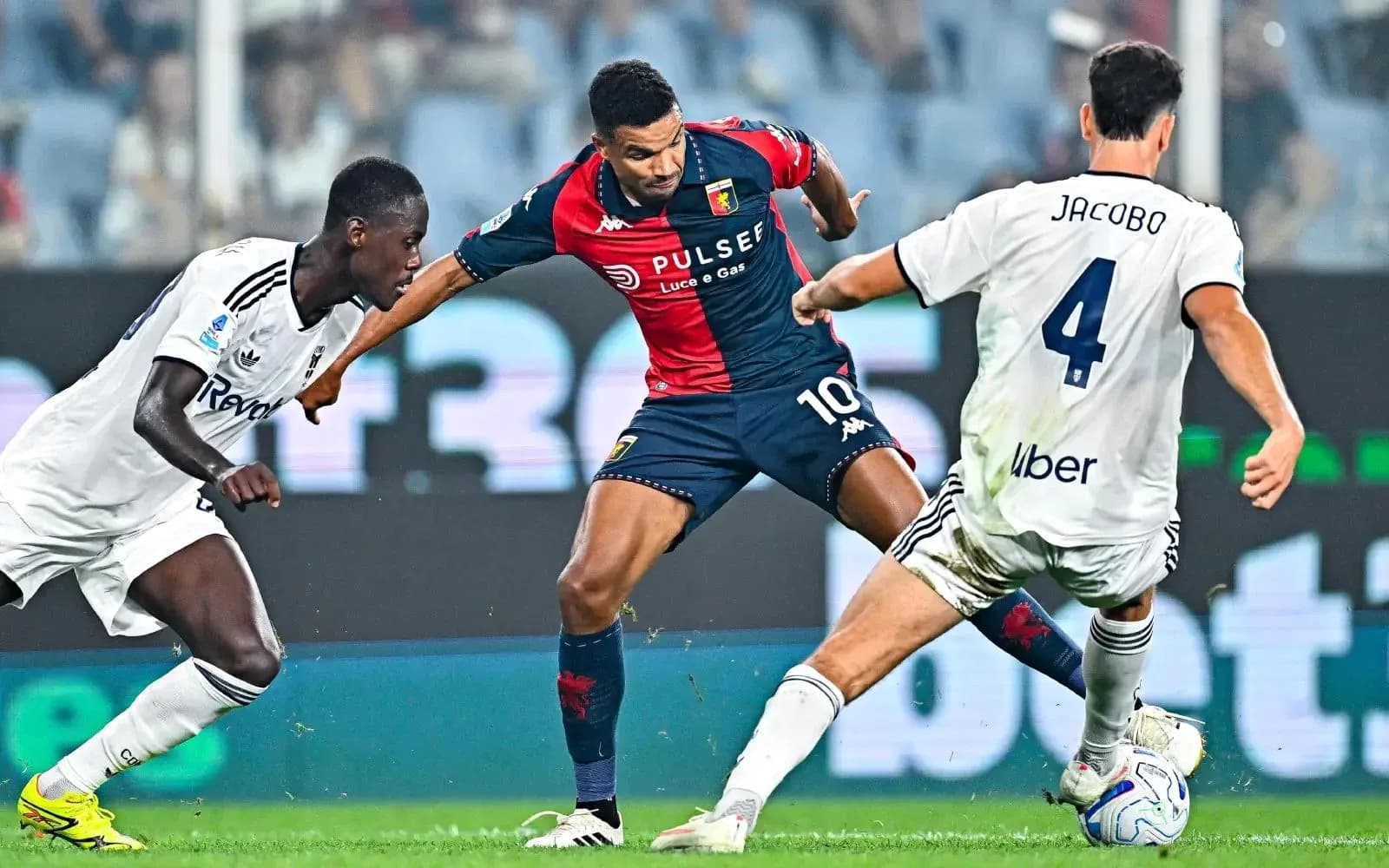
Under the lights of Stadio Luigi Ferraris, this was supposed to be the night Genoa steadied themselves. Instead, it became another harsh lesson in Serie A reality. Como, travelling with the swagger of an unbeaten side, dismantled the hosts 4–1, a result that crystallises the early-season narratives on both sides of the table.
Following this result, the standings tell a blunt story. Genoa sit 19th with 0 points from 3 matches, a goal difference of -6 built from just 1 goal scored and 7 conceded overall. At home, they have played 2, lost 2, scoring 1 and conceding 6. Como, by contrast, are up in 3rd on 7 points, unbeaten with 2 wins and 1 draw, their overall goal difference a healthy +4 from 7 scored and 3 allowed. All three of Como’s matches have been on their travels, and they have turned those away days into a statement: 7 goals scored and only 3 conceded away, an average of 2.3 goals for and 1.0 against on their travels.
I. The Big Picture – Systems, Intent and the Early Collapse
Daniele De Rossi doubled down on his back-three identity, rolling out a 3-4-1-2 that leaned on J. Bijlow behind a line of A. Marcandalli, L. Østigård and M. Ellertsson. The wing lanes were entrusted to S. Sabelli and M. Frendrup, with D. Sow and J. Vásquez inside, while T. Baldanzi was asked to knit play between the lines behind the front pair of L. Colombo and M. Osmajić.
On paper, it was a structure meant to give Genoa central stability and two forwards to press Como’s build-up. In practice, the shape became stretched and fragile. Genoa’s season numbers already flagged the risk: in total this campaign they average just 0.3 goals for per match and 2.3 against. At home, that gulf is even starker – 0.5 scored versus 3.0 conceded. This match simply followed the established pattern.
Cesc Fàbregas, meanwhile, kept faith with Como’s now-familiar 4-2-3-1. J. Butez anchored a back four of Yan Couto, Jacobo Ramón Naveros, T. Chalobah and Álex Valle. In front, the double pivot of M. Perrone and L. da Cunha gave structure, freeing a fluid attacking trio of Assane Diao, N. Paz and M. Baturina behind lone striker T. Douvikas.
This is a system that maximises Como’s technical core. Baturina, already on 2 goals and 1 assist in total this season, arrived in Genoa as one of Serie A’s early standouts. Assane Diao and Douvikas also came in with 2 goals each overall, giving Como three different players capable of deciding a match. Against a Genoa side that had failed to score in 2 of their 3 games in total, the imbalance was glaring.
II. Tactical Voids – Absences and Discipline
Genoa’s squad was thinned by the absences of C. Drameh (inactive), E. Havel (thigh injury) and L. Venturino (knee injury). While none are central to the current starting XI, their unavailability shrinks De Rossi’s options to change games from the bench or adjust system mid-match.
Como had their own notable absentee in J. Addai, sidelined by an Achilles tendon injury. Yet Fàbregas’ depth in advanced roles – with players like A. Lahdo and Jesús Rodríguez among the substitutes – meant the attacking structure remained intact.
Discipline has quietly become a structural issue for Genoa. Across the season, their yellow cards are spread but persistent: 16.67% of their bookings come in each of the 0–15, 31–45, 61–75 and 91–105 minute windows, with a further 33.33% falling into an unspecified range. L. Østigård already has 3 yellows in total, while Alexsandro Amorim and D. Sow have 1 each. These are not isolated incidents; they hint at a side repeatedly forced into recovery tackles and late interventions as their shape breaks.
Como, by contrast, have only one recorded yellow in the league this season, coming between 46–60 minutes. That relative cleanliness mirrors their control in games: they dictate tempo rather than chase it.
III. Key Matchups – Hunter vs Shield, Engine Room vs Engine Room
The “Hunter vs Shield” duel here was less about a single marksman and more about Como’s multi-headed attack probing a fragile Genoa back line. Douvikas, with 2 goals and 9 shots in total this season, occupies centre-backs physically and relentlessly. Assane Diao, also on 2 goals and 1 assist overall, adds verticality and direct dribbling – 12 attempts with 6 successful so far. Baturina, again on 2 goals and 1 assist, links and finishes, his 90 total passes at 87% accuracy underpinning Como’s possession play.
Genoa’s “shield” was led by Østigård, who has 4 tackles, 4 interceptions and 4 blocked shots in total this campaign, plus 23 duels contested with 13 won. Those numbers speak to a defender constantly in the firing line. Yet they also betray the systemic problem: when your centre-back is asked to put out that many fires, it usually means the midfield screen is porous.
In the engine room, D. Sow and J. Vásquez were tasked with containing Perrone and L. da Cunha while also supplying Baldanzi. Sow’s season data – 91 passes at 91% accuracy and a willingness to engage duels – suggests a metronome who can hold his own. But against a Como side that, in total, average 2.3 goals for and only 1.0 against, Genoa’s double pivot was repeatedly overloaded.
On the other side, Perrone and da Cunha provided the platform for Como’s creators. Their job was to funnel the ball into Baturina’s feet and into the channels for Diao, while ensuring Genoa’s counters died early. With Genoa having failed to score in 2 of their 3 league matches in total, Como could afford to keep a slightly higher line, trusting their structure and the calm of Butez behind them.
IV. Statistical Prognosis – Where the Numbers Lead
Strip away the emotion and the numbers are ruthless. Genoa’s overall record after three matches: 0 wins, 0 draws, 3 losses, 1 goal scored, 7 conceded. No clean sheets, and they have failed to score in 2 of those 3 games. Their home profile – 2 defeats, 1 goal for, 6 against – suggests that Ferraris is offering no sanctuary.
Como, meanwhile, are building something serious on the road. On their travels they have played 3, won 2, drawn 1, lost none, scoring 7 and conceding 3. Their average of 2.3 goals for and 1.0 against both away and in total is the hallmark of a side with balance: enough firepower to win games, enough defensive solidity to absorb pressure.
In xG terms – even without the exact values here – the patterns are clear. A team creating just 1 goal in 3 matches in total is not generating high-quality chances consistently. A side scoring 7 in the same span, with three different players already on 2 goals each, almost certainly is. Add in the absence of any penalties taken or missed for either side, and Como’s output is coming from open play and structured attacks rather than set-piece variance.
Following this result, Genoa’s tactical path is narrowing. De Rossi may need to reconsider the balance of his back three and the protection in front of it, perhaps leaning more on the control of Alexsandro Amorim in midfield and the link play of Colombo, who already has 1 assist in total and 4 key passes. Como, on the other hand, can look at Ferraris as confirmation that their 4-2-3-1 is scalable: Baturina as the creative compass, Diao and Paz as runners, Douvikas as the reference point, all protected by a disciplined double pivot and a back four comfortable in possession.
The scoreboard read 4–1, but the deeper verdict was about trajectories. Genoa are searching for a way to stabilise a leaking structure; Como are quietly, efficiently, playing like a side that belongs near the top of Serie A.