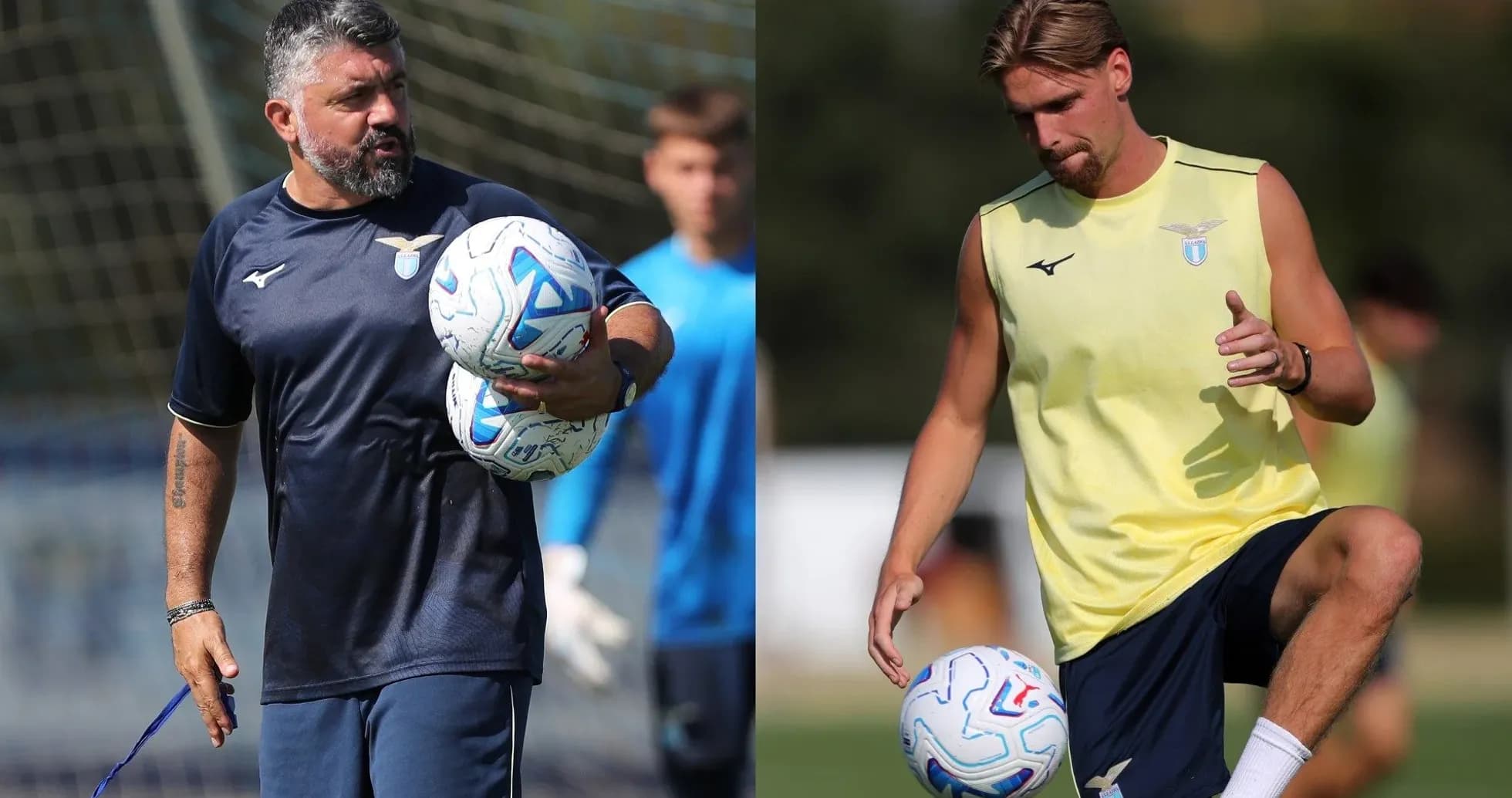
Gennaro Gattuso on Team Spirit and Franco Baresi's Legacy
Gennaro Gattuso did not bother with a slow build-up.
Fresh from a 6-3 friendly win over Avellino, he stepped in front of the microphones and immediately cut through the noise surrounding his recent clash with Taylor, determined to put the story back in its box.
The issue, he stressed, had already been buried.
“The other day someone enjoyed writing about Taylor, but that’s part of the game,” he said, via Alfredo Pedullà. “Those who know me know how I think, what my style is. For me it was all over after thirty minutes, and you saw that again this afternoon. We have to have this spirit.”
No lingering drama. No extended fallout. In Gattuso’s version, it was handled and gone within half an hour, the response on the pitch against Avellino serving as the only answer that mattered.
High line, high energy
With the off-field questions swatted away, Gattuso’s focus snapped back to what he really cares about: structure, aggression, and a team that mirrors his own combative personality.
“The team is starting to do what we want,” he explained. “High pressure, a high line, going man to man. There’s enthusiasm, we’re working well, and it’s a pleasure to coach them.”
That is the blueprint. A side pushed up the pitch, hunting in packs, daring opponents to play through them. A 6-3 scoreline in pre-season can hint at looseness, but for Gattuso it also signals a group buying into a demanding, front-foot idea of football.
The performance, not the friendly tag, seemed to energise him. The words “pleasure to coach them” do not come lightly from someone who has never hidden his intolerance for half-measures.
A captain remembered
Then the tone changed.
Gattuso closed his remarks not with tactics or selection hints, but with a raw, personal tribute to a man he revered: Milan icon Franco Baresi, who passed away on Friday.
He spoke not as a coach dissecting a match, but as a former player saluting a captain who shaped an era.
“Condolences to the family,” Gattuso said. “When I spoke to him I stood to attention: he was the captain, a man who spoke and smiled little, but those few words he said were never wrong.”
You could hear the old dressing room hierarchy in that description. Respect earned, not demanded. Authority expressed in a glance or a single sentence rather than a speech.
Reflecting on Baresi’s legacy, Gattuso did not reach for clichés. He reached for history.
“He was unique, a legend. He left us too soon, but he’s gone to keep company with many great champions. He’ll remain in the history of world football, he’d have deserved a Ballon d’Or for his career for the way he changed the libero role.”
It was a striking line: a Ballon d’Or for a defender whose greatness was often framed in tactical diagrams rather than individual awards. In Gattuso’s eyes, Baresi did not just play the libero role; he redefined it for modern football.
On a day when his own team showed flashes of the intensity he demands, Gattuso still chose to end by looking back at the standards set by a different generation. High line, high press, man to man – all of it, in some way, chasing the level of a captain who, in his view, never once chose the wrong word.